Dimensions for a 45-Inch TV: Exact Width, Height, and Depth
Learn exact footprint measurements for a 45-inch TV, including width, height, depth, bezel influence, and stand footprint to plan your space with confidence.


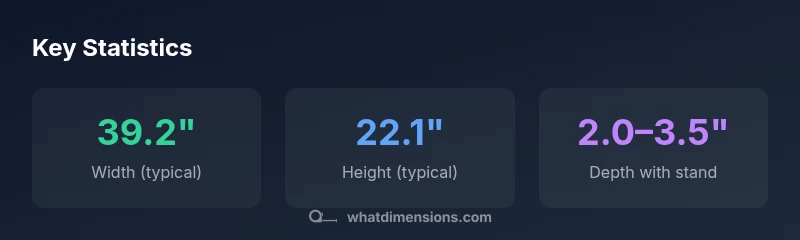
Dimensions for a 45-inch TV refer to the screen’s diagonal, not the outer footprint. A typical 45" display in a 16:9 format translates to a width of about 39.2 inches and a height of about 22.1 inches. Depth varies by model and stand, commonly around 1.5-2.0 inches without a stand and 2.5-3.5 inches with a stand. Bezel and mounting hardware add to the total footprint as well.
What dimensions mean for a 45 inch TV
When shoppers talk about a 45 inch TV, they’re referring to the screen’s diagonal, not the outer footprint. A 45" display in a typical 16:9 format translates to a specific width and height, but the final footprint depends on bezel thickness and any stand or feet. According to What Dimensions, precise size references matter for planning furniture layouts, wall spaces, and seating arrangements. In practice, you’ll want to distinguish between the screen’s measurements and the total footprint you’ll actually occupy. This distinction helps ensure your TV fits on a stand, wall mount, or cabinet without crowding adjacent devices or cutting into walking space. By focusing on the overall footprint, designers and homeowners can avoid mismatches between anticipated and real-world fit. We’ll walk through the math and practical considerations that turn diagonals into actionable room measurements.
Calculating width and height from diagonal
Dimensions of a 45-inch TV are most meaningful when you translate the diagonal into width and height using the 16:9 aspect ratio. The general formulas are W = D × a / sqrt(a² + b²) and H = D × b / sqrt(a² + b²), where D is the diagonal, a is the horizontal component, and b is the vertical component. For 16:9, a = 16, b = 9, and D = 45 inches. Plugging in the numbers yields an approximate width of 39.2 inches and a height of 22.1 inches for the active screen without bezel. Bezel and mounting hardware add to this footprint. This calculation aligns with industry expectations and is a helpful sanity check when comparing models. What Dimensions Analysis, 2026, emphasizes using exact model specs for final measurements and planning.
Bezel and stand: how they alter the footprint
Bezel width contributes to the total width and height of the setup, often by fractions of an inch to over an inch per side depending on design. While the active screen remains the same, the surrounding frame adds visible inches to the overall dimensions. Stand design can add even more depth to the footprint, especially if the TV uses a curved or pedestal base. When you’re measuring placement for a console, shelf, or wall alcove, include the bezel and stand in your clearance estimates. If you’re mounting, verify the VESA pattern and consider the mounting bracket’s depth, which can push the total footprint forward slightly. In practice, two identical 45" models can feel different in a room because one uses a slim bezel while another uses a larger frame.
Depth and mounting considerations
Depth—where the TV sits on a surface or wall bracket—affects room flow more than you might expect. Without a stand, many modern TVs sit around 1.5 to 2 inches deep; add a table stand, air flow channels, or a soundbar underneath, and depth can reach the 2.5 to 3.5 inch range. When mounting on a wall, the important dimension is the overall depth with the chosen bracket, as it adds to how far the screen protrudes from the wall. If you plan to mount under cabinets or above low furniture, ensure there’s enough clearance for ventilation and cable management. The tactic is to calculate the total footprint, not just the screen size, to prevent obstructions and ensure accessibility to ports.
Measuring your space accurately
To prepare a space for a 45-inch TV, start by measuring width, height, and depth of your intended location. Include the stand (if you’ll use one) and account for furniture in front of the screen. Use painter’s tape to mark the footprint on the wall or shelf to visualize fit, then test clearance by walking through the seating area. Don’t forget to measure cable routing space and ventilation clearances behind or around the set. What Dimensions recommends documenting all measurements in a simple sketch or checklist so you can compare options across models with confidence.
Viewing distance and seating layout
Optimal viewing distance depends on both screen size and personal preference. A common guideline is 1.5 to 2.5 times the diagonal, which for a 45-inch TV translates to roughly 5.6 to 9.4 feet. If you sit closer, you may perceive more noticeable pixel structure; sitting farther away can reduce the perception of detail. Consider your room’s layout, seating angles, and potential glare from windows or lighting. This section aligns with widely accepted guidelines from industry sources and What Dimensions analyses.
Practical tips for choosing the right 45-inch model
Compare both the active screen size and the physical footprint in product listings. Look for exact width, height, and depth values on specification sheets, and don’t rely on marketing photos alone. If you expect to place the TV on a stand, measure the stand’s footprint and confirm it fits with any media equipment. For wall mounting, verify VESA compatibility and bracket depth. Students and designers often need precise specs for project layouts, so keep a running table of measurements for multiple models to simplify the decision process.
Common mistakes to avoid when planning a 45-inch TV setup
Ignore the bezel in planning; always add it to the footprint. Forget to factor in cable management space behind the TV. Assume the wall mount will hide all cables; plan for additional clearance for power cords and AV connections. Finally, don’t select a model solely based on screen size. The physical footprint can be substantially different depending on design choices and accessories, affecting placement and airflow.
Quick reference: dimension benchmarks and checklists
This concise reference is designed to help you compare 45-inch models quickly and avoid setup surprises. For a 16:9 45-inch panel, the active screen width is roughly 39.2 inches and height about 22.1 inches, assuming no bezel. Bezel width varies by model; add that to your overall footprint. Depth without a stand generally ranges from 1.5 to 2.0 inches; with a stand or a more robust base, plan for 2.5 to 3.5 inches. If you’re wall mounting, remember that the bracket adds to how far the screen sits from the wall. Always verify the final footprint listed in product specs, including the total width, total height, and effective depth. Finally, map your space using a simple sketch or overlay with painter’s tape, so you can compare several candidate models side by side. This approach helps ensure the chosen TV not only fits but also aligns with seating, furniture, and cable management.
Footprint estimates for a 45-inch TV (16:9)
| Dimension | Estimated Value | Notes |
|---|---|---|
| Width (45" diagonal, 16:9) | 39.2 inches | Active screen width |
| Height (16:9) | 22.1 inches | Active screen height |
| Depth (no stand) | 1.5-2.0 inches | Panel depth |
| Depth (with stand) | 2.5-3.5 inches | With stand/base |
Quick Answers
What are the exact dimensions (width, height, depth) of a 45-inch TV?
An approximate active screen is 39.2 inches wide and 22.1 inches tall for a 45-inch diagonal at 16:9; depth varies by model and stand. Without a stand, expect about 1.5-2.0 inches; with a stand, 2.5-3.5 inches.
A 45-inch TV is about 39 inches wide and 22 inches tall, with depth around 2 to 3.5 inches depending on the model and stand.
Do dimensions change with bezel size?
Bezel adds to the footprint, adding width and height beyond the active screen. Size varies by design, so always check the total footprint in product specs.
Bezel size adds to the footprint, so check the total footprint on the model's spec sheet.
What is the recommended viewing distance for a 45-inch TV?
Guidelines suggest 1.5 to 2.5 times the diagonal. For a 45-inch screen, that translates to roughly 5.6 to 9.4 feet.
About 6 to 9 feet away is a comfortable distance for most people.
Is a 45-inch TV suitable for small rooms?
Yes, if the space supports the recommended viewing distance and furniture layout. Measure and plan before purchase to avoid crowding.
Yes, with proper space planning; measure to ensure comfortable seating.
How should I mount a 45-inch TV?
Check the VESA pattern, choose a compatible wall mount, and account for bracket depth. Wall mounting can save floor space but requires ventilation clearance.
Make sure your wall mount fits the TV's VESA pattern and allows for ventilation.
“Precise footprint measurements reduce layout errors and shopping regrets. Think in terms of the total footprint, not just the screen.”
Main Points
- Calculate width and height from diagonal for accurate footprint.
- Account for bezel and stand in overall dimensions.
- Use the 16:9 aspect ratio to compute width and height.
- Check mounting specifics like VESA patterns.
- Plan viewing distance around 5.6-9.4 feet for a 45-inch TV.