Toilet Dimensions: What You Need to Measure
Learn the essential toilet dimensions you must measure, including rough-in distance, seat height, footprint, and clearance. A data-driven guide from What Dimensions (2026) to help you plan a comfortable, code-compliant bathroom.


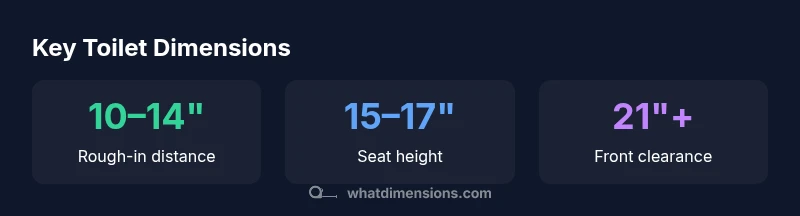
The dimensions you need for a toilet include rough-in distance (the distance from the finished wall to the drain center, commonly 10–14 inches), seat height (typical 15–17 inches), overall depth (about 27–30 inches), and width (roughly 14–15 inches). Plan for front clearance of at least 21 inches and side clearance around 15 inches. These ranges cover standard residential toilets and ADA-friendly layouts, according to What Dimensions.
Measuring the rough-in size
What many homeowners ask first is: what are the dimensions needed for a toilet? The answer starts with the rough-in measurement—the distance from the finished wall to the center of the waste pipe. This single dimension dramatically narrows your options because most toilets are built around one of a few standard rough-ins: typically 10, 12, or 14 inches. According to What Dimensions Analysis, 2026, identifying your rough-in size before you shop prevents ordering a unit that won’t fit without costly remodeling. To measure, use a tape measure from the finished wall (not the baseboard) straight to the drain center. If you are replacing an old toilet, verify this distance in place rather than relying on memory, since renovations can shift plumbing slightly.
In practice, always record the rough-in distance in inches and note any obstructions (baseboard trim, molding, or tile). If your wall is uneven, take multiple measurements at different heights and choose the most common distance. When you’re uncertain between two sizes, treat the larger option as your baseline and confirm with the manufacturer’s specifications.
Understanding the toilet footprint: length, width, depth
Beyond rough-in, you’ll want to understand the overall footprint of the toilet—the space the unit occupies in your bathroom. The typical depth from the back of the tank to the tip of the bowl ranges roughly from 27 to 30 inches, with elongated bowls adding a little extra length over round bowls. Width usually sits around 14 to 15 inches at the widest point of the bowl. Seat shape matters here: elongated bowls generally feel more comfortable for adults but occupy more space than round bowls. When comparing models, check both the seat width and the total depth to ensure the unit fits the allotted space without intruding on the sink, shower, or door swing. The footprint also indirectly affects behind-the-wall clearance for connection hoses and supply lines.
If you’re retrofitting a small bathroom, you may prioritize a shorter depth over width. If you’re designing a master bath, you can prioritize a more comfortable seat shape and stable access around the toilet. Remember to cross-check dimension labels on product pages with your rough-in and available floor area.
Seat height and user comfort
Seat height is a critical comfort parameter that directly impacts ease of use, especially for children, taller users, seniors, or people with limited mobility. Most residential toilets have a seat height in the 15 to 17-inch range from floor to seat, which balances comfort and compatibility with standard plumbing. For households where accessibility matters, consider higher-height (often called right-height or comfort-height) models that place the seat around 17 to 19 inches. If you’re shopping for a shared bathroom, you may want both options in the same home or plan a layout that favors accessibility without sacrificing style. When measuring, remind yourself to account for rug thickness, flooring, and any adjustable-height toilet seats if you anticipate future changes in user needs. What Dimensions notes that height versatility is a growing preference among buyers.
Clearances and space planning for bathrooms
Clearance around the toilet ensures safe use and comfortable movement. The most commonly cited guideline is front clearance of at least 21 inches, with additional space in front for legroom and door swing. Side clearance around the toilet should be sufficient to accommodate a person seated in a typical posture, usually around 15 inches or more to one side wall, depending on the bathroom layout. In tight spaces, you’ll need to balance the rough-in, footprint, and clearances while maintaining functional access to the sink, vanity, and stalls. For families with young children or pets, consider adding a small buffer zone—an extra 2–3 inches on each side can make a surprising difference in daily use. What Dimensions emphasizes planning for a comfortable “clearance envelope” around the fixture.
How to measure your existing rough-in and why variations occur
Homes built before standardized codes often show variations in rough-in spacing. If you’re evaluating a used home or a renovation in an older bathroom, carefully verify the distance from the finished wall to the drain center in multiple spots. Tile thickness, trim, and baseboards can subtly alter measured distances, so measure at the actual drain center rather than guessing from the wall. If you find two different measurements, rely on the most common distance and confirm in the toilet’s installation guide. Some buildings have been updated or retrofitted with unconventional rough-ins; in these cases, a flexible-height toilet or a custom-install model might be necessary. What Dimensions cautions that even within common ranges, exact specs differ by model, so always cross-check with the product’s installation sheet.
Choosing a toilet model based on dimensions
When shopping, you’ll encounter toilets with 10–14 inch rough-ins, round bowls versus elongated bowls, and varying depths. A quick screening step is to confirm the rough-in distance first, then compare the footprint and seat height. Elongated bowls provide more seating surface but demand more space than rounded bowls. If you’re replacing a toilet in a tight bathroom, a compact or 10” rough-in model can be a space saver, but you must ensure that it aligns with your existing plumbing and floor plan. For new builds, planning ahead to accommodate higher-height seats or ADA-compliant options can future-proof the bathroom and reduce remodeling costs later.
Accessibility considerations and ADA guidelines (general)
For households prioritizing accessibility, consult local codes and ADA guidelines for minimum clearances and mounting heights. In practice, you’ll look for models with higher seat heights and more generous forward space to accommodate mobility devices, caregivers, and assistive devices. While the exact numerical requirements vary by jurisdiction, the core idea is to create a bathroom layout that minimizes bending, reaching, and tight navigation around the toilet. What Dimensions reiterates that thoughtful dimension planning from the outset reduces retrofit costs and helps ensure a comfortable user experience for everyone in the home.
Common mistakes and quick fixes
Common mistakes include assuming a standard toilet fits all bathrooms, failing to confirm rough-in, and overlooking clearances. A quick fix for tight spaces is to replace a standard-depth toilet with a shallower model or switch to a compact elongated option if room permits. Another frequent error is rough-in mismeasurement caused by tile thickness or baseboard trim. Re-measure with the toilet flange exposed and verify the exact distance to the drain center. Finally, don’t forget to account for future accessibility needs—design in extra clearance wherever possible.
Practical measurement workflow: step-by-step example
Here is a practical workflow: (1) measure rough-in distance from finished wall to drain center; (2) measure floor-to-wall clearance and door swing; (3) determine preferred seat height; (4) evaluate width and depth; (5) check clearances in front and on both sides; (6) compare results to model specs and choose options that maximize comfort and fit. Keep a simple checklist and a clean diagram of measurements to compare side-by-side with product pages. What Dimensions recommends documenting each measurement with photos and notes for easy reference during shopping.
Key toilet dimension ranges for common residential setups
| Dimension Category | Typical Range | What to Measure | Notes |
|---|---|---|---|
| Rough-in distance (wall to drain center) | 10–14 inches | distance from finished wall to drain center | varies by model and home age |
| Seat height | 15–17 inches | top of seat to finished floor | ADA options exist for higher seats |
| Overall depth | 27–30 inches | tank to front of bowl | footprint affects bathroom length |
| Bowl width | 14–15 inches | widest point of bowl | elbow room and foot space |
| Front clearance | 21 inches minimum | space in front of toilet to obstacle | greater for accessibility |
Quick Answers
What are rough-in sizes and why do they vary?
Rough-in sizes refer to the distance from the finished wall to the drain center. They vary by model and installation, with common options ranging from about 10 to 14 inches. Always measure to confirm fit.
Rough-in sizes are the distance from the wall to the drain; they vary by model, so measure before buying.
What is the standard seat height?
Most toilets have a seat height in the 15 to 17-inch range from floor to seat. If accessibility matters, consider higher-height models around 17 to 19 inches.
Most toilets sit about 15 to 17 inches high; consider higher options if accessibility matters.
How do I measure width and depth of the toilet?
Measure width at the bowl's widest point and depth from the back of the tank to the front of the bowl. These dimensions help confirm fit within bathroom geometry.
Measure the bowl width and the tank-to-front depth to ensure proper fit.
Can I replace a 12-inch rough-in toilet with a 10-inch rough-in?
Only if the rough-in position aligns with the new unit. A mismatch often requires plumbing adjustments or a new floor/wall arrangement.
Only if the drain center lines up; otherwise, adjustments may be needed.
Do elongated bowls take more space than round bowls?
Yes. Elongated bowls are typically longer and offer more seating surface but require more room. Round bowls fit in tighter spaces.
Elongated bowls give more comfort but need more room than round bowls.
What spacing is needed for accessibility?
Accessibility guidelines emphasize sufficient forward and lateral clearance around the toilet. Check local codes for exact numbers, but plan for generous space.
Ensure forward and side clearance around the toilet; consult local codes.
“Accurate toilet dimensions are foundational to a comfortable, accessible bathroom. Start with rough-in sizing, then validate the footprint and clearance before selecting a model.”
Main Points
- Measure rough-in before shopping
- Know your seat height needs
- Check clearances in front and sides
- Consider elongated vs round bowls for space
- Always verify local codes and ADA guidelines