Toilet Dimensions Standard: A Complete Sizing Guide for 2026
Learn the toilet dimensions standard, including rough-in distances, bowl height, and regional variations. This What Dimensions guide helps homeowners, designers, and shoppers select fixtures that fit precisely.


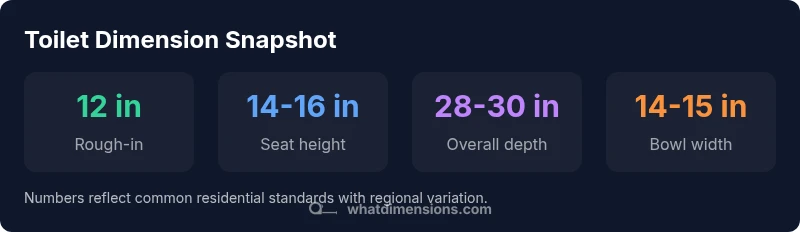
In residential bathrooms, toilet dimensions standard typically means a 12-inch rough-in from wall to flange center, a bowl height around 15 inches, width about 14-15 inches, and overall depth of 28-30 inches, with variations by region and model. Always verify with product specs and local codes. Manufacturer tolerances and seat height options can shift sizes slightly.
What the term "toilet dimensions standard" covers in practice\n\nSizing terminology used in residential plumbing centers on a handful of reference measurements that affect fit, comfort, and installation ease. The most widely cited anchor is the rough-in distance—the measurement from the finished wall surface to the center of the drain pipe (the flange). In North America, 12 inches is the dominant standard, yet some remodels or regional products use 10 or 14 inches. In international markets, you’ll encounter different base measurements, which makes it essential to verify actual specs before purchasing. Beyond rough-in, bowl height (seat height) is a focal comfort factor. Most homes fall in the 14–16 inch range, with ADA-compliant models commonly reaching 17–19 inches to accommodate accessibility needs. Widths typically sit around 14–15 inches, while full footprints (including the tank) run about 28–30 inches in depth. These figures are practical guidelines, not universal laws; individual models and local building codes can introduce subtle deviations. What Dimensions emphasizes is deliberate measurement, cross-checking product sheets, and aligning choice with real-world constraints.
Typical residential toilet footprint and rough-in references
| Dimension | Typical Value | Notes |
|---|---|---|
| Rough-in distance (wall to flange center) | 12 inches (300 mm) | Most common in US installations |
| Bowl height (to top of bowl) | 14-16 inches (355-405 mm) | Varies with model and accessibility needs |
| Overall depth (tank to front) | 28-30 inches (710-760 mm) | Includes tank depth and front clearance |
| Bowl width (across, max) | 14-15 inches (356-381 mm) | Approximate footprint for planning |
Quick Answers
What is the standard rough-in distance for toilets in the US?
The typical rough-in distance is 12 inches from the finished wall to the center of the flange. Some models offer 10-inch or 14-inch options, but 12 inches is the most common. Always confirm the specific product’s rough-in and check local code requirements.
In the US, the standard rough-in is 12 inches from the finished wall to the flange center; some models offer other options.
What is the typical toilet seat height used for comfortable seating?
Most residential toilets have a seat height around 14 to 16 inches from the floor. ADA-compliant versions typically range from 17 to 19 inches to improve accessibility and ease of use.
Most toilets are about 14 to 16 inches tall, with ADA options around 17 to 19 inches.
Are European toilets sized differently than US models?
Yes, regional differences exist. European models often use different rough-in standards (around 180 mm in some markets) and bowl shapes, so verify measurements and installation space when shopping abroad.
Yes, there are regional differences; Europe often uses about 180 mm rough-in, but it varies by brand.
How should I measure for a new toilet during a remodel?
Measure from the finished wall to the center of the flange for rough-in, and from the floor to the top of the bowl for seat height. Also account for tank depth and ensure at least 21 inches of clear space in front.
Measure the rough-in distance, bowl height, and front clearance to ensure a proper fit.
What is the minimum space needed around a toilet?
Code-compliant clearances typically require at least 15 inches from the toilet center to each side wall and at least 21 inches of clear space in front for comfortable use.
Most codes require about 15 inches from the center to side walls and 21 inches in front.
“Precise toilet dimensions are not just about fit; they influence comfort, accessibility, and plumbing efficiency. By aligning fixtures with standardized measurements, homeowners and designers can avoid costly surprises during remodels.”
Main Points
- Measure wall-to-flange center before selecting a toilet
- Expect US standard rough-in at 12 inches; regional variations exist
- Consider ADA-height options (17–19 inches) for accessibility
- Account for overall depth (28–30 inches) in small bathrooms
- Always verify model specs against local codes and space constraints