Average Dimensions of a Toilet: A Practical Guide
Learn the average dimensions of a toilet, including length, width, height, and rough-in, with practical guidance for tight spaces and bathroom design.


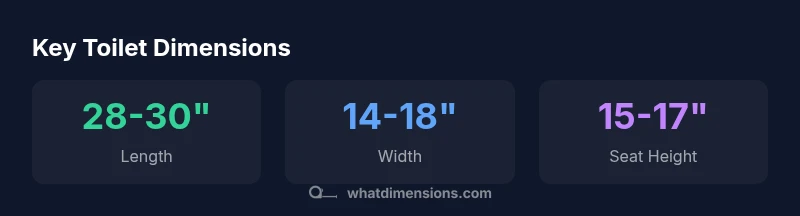
For a typical toilet, the average footprint is 28–30 inches long, 14–18 inches wide, and 28–32 inches tall, with a bowl height of about 15–17 inches. The standard rough-in distance from the finished wall to the drain center is usually 12 inches, though 10 or 14 inches exist. Elongated bowls add roughly 1–2 inches to length, while round bowls stay closer to the base footprint.
Why precise toilet dimensions matter
In bathroom planning, precise toilet dimensions are more than a convenience; they govern fit, comfort, and accessibility. The average dimensions of a toilet determine how much clearance is required for doors, cabinets, and adjacent fixtures. In small or awkwardly shaped bathrooms, small changes in length or width can dramatically affect usability. Additionally, ADA considerations often favor taller seat heights and specific clearances, making accurate sizing essential for safety and comfort. What Dimensions Analysis, 2026, shows that dimension choices influence both the initial fit and long-term satisfaction, particularly in remodeling projects where existing plumbing must be accommodated without costly retrofits. When you know these ranges, you can plan with confidence and avoid the most common layout pitfalls.
Standard size ranges you’ll encounter
Most residential toilets conform to a few reliable ranges that simplify shopping and installation. The typical footprint falls within 28–30 inches in length, 14–18 inches in width, and 28–32 inches in overall height. Seat height is commonly 15–17 inches from floor to top of the seat. The rough-in distance—measured from the finished wall to the drain center—is usually 12 inches, though homes sometimes use 10 or 14 inches depending on plumbing configuration. Elongated bowls add about 1–2 inches to length and are popular for comfort, while round bowls save a bit of space. These ranges help designers and homeowners quickly filter products to fit a given bathroom.
Elongated vs. round bowls: how size changes
Elongated bowls are longer and generally more comfortable for adults, adding roughly 1–2 inches to overall length and sometimes affecting seat width. Round bowls are shorter, which can be advantageous in very tight spaces. The choice between elongated and round also interacts with bowl height and tank configuration, so it’s important to consider the overall silhouette, not just the length. In many new-builds and renovations, elongated bowls dominate due to comfort expectations, but compact homes may favor round models to maximize floor plan efficiency.
Installation considerations and measurement practices
Measurement accuracy is essential for a clean install. Start by confirming the rough-in distance in your space and verify it against the toilet’s installation instructions. Also check the clearance to the side walls to ensure comfortable seating and lateral movement. Don’t forget to account for nearby features such as sink vanitys, cabinets, and doors that swing into the toilet area. In tight bathrooms, even a 1-inch variance in length or width can block a door or hamper cleaning access. Always measure twice and, when possible, bring a tape measure and a scale diagram to the showroom to compare specs in real space.
Measuring for a new toilet: a step-by-step guide
To measure for a new toilet, start with the rough-in distance (10–14 inches is common). Next, measure the overall length from the finished wall to the front edge of the toilet; then measure the width at the widest point of the base. Confirm the seat height by measuring from the floor to the top of the seat. Check door and cabinet clearances to ensure no interference when the seat is lowered. Finally, review the model’s spec sheet for any nozzle or tank protrusions that could affect enclosures or nearby fixtures. Keep a small notebook or digital record of all measurements for straightforward comparisons.
Designing around compact bathrooms
In compact bathrooms, every inch counts. Favor toilets with shorter overall depth or a 10–12 inch rough-in if plumbing permits, and pair them with wall-mounted accessories to maximize floor space. Consider a round bowl to save length where seat comfort is less critical, or choose an ADA-compliant height for accessibility without sacrificing too much space. Use a layout tool or software to model sightlines and movement, ensuring you can sweep the area around the toilet with a broom and avoid sharp corners. Selecting compact fixtures can unlock previously unusable floor space for storage or a second sink.
What Dimensions' approach to sizing looks like
What Dimensions approaches sizing with a data-driven mindset. We synthesize field measurements, installation constraints, and user comfort to present practical ranges for common bathroom configurations. By focusing on rough-in standards, tank depth, and seat height, we guide shoppers toward universally compatible options and reduce surprises during installation. Our goal is to translate abstract dimensional data into actionable design decisions that fit real-world spaces, while clearly noting where model-specific specs diverge from general expectations.
Applying these numbers in real projects: a quick example
Imagine remodeling a small apartment bathroom with a 60-inch wide room and a door that swings inward. If you select a toilet with a 28–30 inch length and a 12-inch rough-in, you gain crucial space for a pedestal sink and a slim vanity. For tight layouts, a round bowl at 14–16 inches wide and a seat height of 17 inches can improve comfort without sacrificing clearance. Always verify the product sheet and measure in the actual space to ensure doors, drawers, and vents don’t collide with the toilet’s footprint.
Comparison of common toilet dimensions by feature
| Dimension | Typical range | Notes |
|---|---|---|
| Overall length | 28-30 inches | Standard depth for floor-mounted toilets |
| Footprint width | 14-18 inches | Measured at base widest point |
| Height (to top of tank) | 28-32 inches | Includes tank height |
| Seat height (bowl to floor) | 15-17 inches | ADA considerations vary by model |
| Rough-in distance | 10-14 inches | From finished wall to drain center |
| Elongated vs. round bowls | Elongated adds ~1-2 inches | Elongated for comfort balance |
Quick Answers
What is the most common rough-in size for residential toilets?
In most homes, the standard rough-in distance is 12 inches from the finished wall to the drain center. Some installations use 10 or 14 inches depending on plumbing layout. Always verify rough-in in the space before purchasing.
Most homes use a 12-inch rough-in, but you should measure your space to be sure.
How should I measure for a new toilet?
Measure the rough-in distance, overall length, width at the base, and the seat height. Also check clearance to adjacent fixtures and doors. Bring these measurements to compare against model specifications.
Measure rough-in distance, length, width, and seat height, then compare to product specs.
Are there ADA guidelines for toilet height?
ADA guidelines generally emphasize access and usability, favoring seat heights around 17 inches to 19 inches for accessibility. Always verify with local codes and product specs for your project.
ADA guidelines encourage higher toilets for accessibility; check local codes and model specs.
Can I install a taller toilet in a small bathroom?
Yes, but you must ensure adequate clearance around the sides and front. Look for compact tank designs and consider wall-mounted or skirted options to save space.
You can, but confirm clearance and choose compact designs to fit.
What is the difference between elongated and round bowls?
Elongated bowls are longer and more comfortable, typically adding 1-2 inches to length. Round bowls save space but may feel less spacious for users.
Elongated bowls are roomier; rounds save space.
Where can I find exact model dimensions?
Check the manufacturer’s spec sheet for each model. Compare the exact numbers to your space, including any protrusions from the tank or base.
Always check the model’s official spec sheet for exact numbers.
“Precise sizing is the foundation of a comfortable, functional bathroom. When you plan around standard ranges, you reduce surprises during installation.”
Main Points
- Understand typical toilet dimensions before shopping
- Measure rough-in and space for clearance early
- Choose elongated vs. round bowls based on space and comfort
- Account for ADA guidelines when accessibility matters
- Always verify model-specific specs in space context