Toilet Seat Dimensions: A Practical Sizing Guide for Homes
Learn how to identify, measure, and replace toilet seat dimensions for round and elongated bowls. This guide covers sizing, mounting, ADA considerations, and practical tips with data-backed insights from What Dimensions.


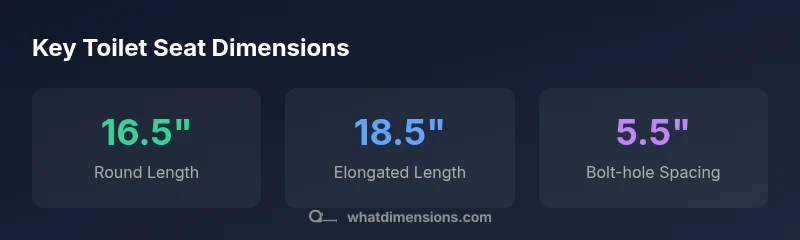
Toilet seat dimensions fall into two common shapes: round and elongated. Round bowls are typically about 16.5 inches long and around 14 inches wide, while elongated bowls run about 18.5 inches long and 14–15 inches wide. To ensure a perfect fit, measure your bowl from front edge to back and between the mounting holes, then match to a compatible seat shape.
Understanding Toilet Seat Dimensions
When you shop for a toilet seat, the most important measurements are the seat length, width, and the bolt-hole spacing that aligns with your toilet bowl. The term "toilet seat dimensions" covers more than just length; it also involves the mounting style, the curvature of the bowl, and how much room the hinge area provides for cleaning. For homeowners evaluating a replacement, knowing these dimensions helps prevent mismatches and awkward fits. In practical terms, you should know whether your bowl is round or elongated, the distance between mounting holes, and how much overhang the seat edge has at the front and back. This knowledge—combined with the What Dimensions Analysis data for 2026—empowers confident shopping and reduces the likelihood of return purchases.
The Two Main Shapes: Round vs Elongated
Most toilets fall into two standard shapes: round and elongated. Round seats are compact by design, roughly 16.5 inches long and about 14 inches wide, making them common in smaller bathrooms. Elongated seats are longer, around 18.5 inches, and typically 14–15 inches wide. The elongated shape often provides more sitting area and comfort for many users, but it requires a bowl that accommodates the longer footprint. When choosing a seat, prioritize the bowl shape and the bolt-hole spacing to ensure the hinge aligns with the holes on the toilet.
How to Measure Your Toilet Seat
To guarantee a proper fit, take three critical measurements: (1) length from the center of the front mounting hole to the center of the back hole (or the front edge to the back edge if your bowl has no rear holes), (2) width at the widest point of the bowl, and (3) bolt-hole spacing. Use a flexible tape measure for accuracy and record any irregularities such as integrated lids or soft-close hinges that may affect mounting. If you already own the seat, measure the existing hardware and compare with the replacement’s specifications. Remember, the goal is to match both the shape and the mounting geometry rather than relying on a single dimension.
Comfort Height, ADA, and Bidet Seats
Beyond length and width, consider seat height and accessibility. ADA guidelines emphasize seating heights in the 17–19 inch range from floor to top of the seat, which can influence your comfort and usability, especially for taller adults or individuals with mobility challenges. If you’re installing a bidet seat or a seat with added features, verify that the overall footprint fits within the bowl’s rim, and ensure clearances around the hinge area are sufficient for cleaning and maintenance.
Common Mistakes and Quick Fixes
Avoid common pitfalls such as assuming a universal fit, ignoring bolt-hole spacing, or mismatching round vs elongated shapes. Quick checks include: (1) confirm the bowl shape before purchasing, (2) measure bolt-hole center-to-center spacing and compare to the product spec, (3) verify that the seat edges won’t foul the tank lid or the bowl rim, and (4) test the seat’s hinge range to ensure it opens freely without rubbing the rim. If you’re unsure, opt for a seat labeled as compatible with both shapes or consult the product’s fit guide.
Replacements, Accessories, and Where to Look for Sizing
Replacement seating is best approached with three questions in mind: shape, dimensions, and mounting. When shopping, look for clear diagrams showing seat length, width, and hole spacing. Accessories such as mounting bolts, hinges, and soft-close lids should be compatible with your model. For unusual bowls or nonstandard spacings, consider universal mounting kits or universal-fit seats that specify adjustable length or extra-wide bolt-hole options. The goal is a stable, comfortable fit that aligns with your bathroom’s design and the user’s needs.
Common toilet seat dimension profiles
| Shape | Typical length | Typical width | Bolt-hole spacing |
|---|---|---|---|
| Round | 16.5 inches | 14 inches | 5.5 inches |
| Elongated | 18.5 inches | 14-15 inches | 5.5 inches |
Quick Answers
What are the standard toilet seat sizes?
There are two main shapes to know: round seats (roughly 16.5 inches long) and elongated seats (roughly 18.5 inches long). Width commonly sits around 14 inches. Always match the shape and bolt-hole spacing to your bowl for a proper fit.
Most toilets use either round or elongated seats. To replace, pick the same shape and check the bolt-hole spacing.
How do I measure for a replacement seat?
Measure the distance between bolt holes (center to center), the overall length from front to back, and the maximum width at the widest part. Compare these three data points with the seat specifications before purchasing.
Measure the bolt holes, the length, and the width to find a matching seat.
Can I replace a round seat with an elongated seat?
In most cases, no. Elongated seats require a longer bowl with the same mounting hole spacing. Check your bowl’s shape and hole spacing before attempting a swap.
Usually you should stick to the same shape as your toilet bowl.
What does ADA height mean for toilet seats?
ADA height refers to the seat height from floor to top, typically in the 17–19 inch range. This matters for accessibility and comfort, especially for tall or mobility-impaired users.
ADA height helps with accessibility and comfort; check your bathroom needs.
Do bidet seats change dimension requirements?
Bidet seats can add depth to the footprint, so verify total seat depth and hinge clearance. Ensure the bidet attachment aligns with bolt holes and does not obstruct the flush mechanism.
Bidet seats can add size, so check depth and clearance before buying.
“Precise toilet seat dimensions matter to ensure a proper fit and user comfort. Accurate measurement reduces returns and guarantees compatibility with mounting hardware.”
Main Points
- Measure your bowl before buying a seat
- Choose round or elongated to match your toilet shape
- Match bolt-hole spacing and mounting style for compatibility
- Consider ADA height if accessibility matters