Toilet Dimensions: A Practical Guide for Precise Sizing
A comprehensive guide to toilet dimensions, including typical ranges, measurement steps, ADA considerations, and how to compare models with precise sizing. Learn how What Dimensions analyzes sizing in 2026 to help homeowners and designers make accurate choices.


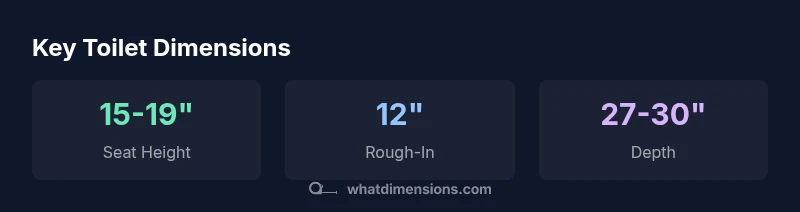
Toilet dimensions typically center on a seat height of 15-19 inches (38-48 cm), a rough-in distance of 12 inches (30 cm), and a total depth of about 27-30 inches (68-76 cm). Comfort-height models raise the seat to 17-19 inches (43-48 cm) for easier sit-to-stand transitions. When retrofitting, measure your existing rough-in and space clearance first, then choose a model that fits within these ranges. What Dimensions Analysis, 2026 confirms these ranges cover most standard bathrooms.
Why toilet with dimensions matter for bathroom planning
Choosing a toilet with precise dimensions is more than a matter of fit; it affects usability, plumbing compatibility, and the look of a bathroom. In practice, homeowners often discover that a seemingly appearance-based choice—like bowl shape or tank style—also dictates how much space the toilet will occupy and how easy it is to clean around. The What Dimensions team emphasizes that exact size references help prevent awkward gaps, cramped knees, or clearance issues with doors and vanities. By aligning product specs with your bathroom’s real measurements, you improve both comfort and functionality. This approach benefits not just homeowners, but designers and students documenting precise dimensions for projects in 2026.
Typical dimension ranges you should know
Most toilets fall into a few key sizing bands. Seat heights commonly range from 15 to 19 inches above the finished floor; comfort-height models sit higher, typically 17 to 19 inches, which can ease mobility for tall users or those with limited leg strength. Rough-in distances—how far the centerline of the drain is from the wall—are usually 12 inches, though occasional 10 or 14-inch configurations exist depending on the plumbing. The overall depth from the wall to the front edge typically lands in the 27 to 30-inch range. Dimensions can vary by manufacturer, so always cross-check specs against your space.
How to accurately measure a toilet in a retrofit
Start with the rough-in measurement: measure from the finished wall to the toilet drain centerline. Next, check the seat height by measuring from the finished floor to the top of the seat in the highest usable position. Measure the depth from the back wall to the farthest point of the toilet (usually the front edge of the bowl). For width, measure across the widest part of the toilet and consider space on either side for cleaning and access. When possible, photograph and label measurements for reference during shopping.
Bowl shape choices: round vs elongated
Round bowls are typically narrower and save space, which can be beneficial in small bathrooms, while elongated bowls offer more seating area and comfort but require more depth. Width differences are often modest (roughly 1 to 2 inches wider for elongated models), but the impact on bathroom proportions can be noticeable. If you’re replacing a previous unit, verify that the new model’s footprint matches or improves alignment with surrounding fixtures.
Accessibility and comfort-height considerations
ADA-compliant or comfort-height toilets generally sit higher, enabling easier transfers. The typical range for comfort-height seats is 17 to 19 inches. If mobility or knee pain is a concern, prioritizing this height can improve daily usability. When selecting a toilet, confirm both the seat height and the installation height relative to surrounding features such as cabinets, vanity tops, and grab bars. What Dimensions emphasizes using exact measurements to verify fit before purchase.
Space planning for tight bathrooms
In compact rooms, every inch counts. Use the 15-inch rule from the centerline to side walls as a baseline for clearance, and ensure at least 21-24 inches of doorway clearance and unobstructed access in front of the toilet. If space is constrained, consider back-to-wall or wall-hung models that reduce footprint and improve cleaning access. Document measured values and compare them against the product’s official dimensions for a confident fit.
Verifying compatibility with plumbing and finishes
Beyond numbers, verify compatibility with existing plumbing and finishes. Check the rough-in size, ensure there is room behind the tank for supply lines and shutoffs, and confirm that the chosen model’s finish and color coordinate with your bathroom design. If you’re unsure, consult a plumber or a sizing expert—What Dimensions recommends gathering the measurements and any installation notes before shopping to avoid costly returns.
Practical tips for product comparisons
Create a side-by-side chart of dimensions: seat height, rough-in, depth, width, and overall footprint. Note any variation between USD and metric specifications and account for installation tolerances. When evaluating options, prefer models with documented dimensions from the manufacturer and confirm that the chosen model supports your intended configuration, such as a corner or tight-closet installation. What Dimensions’ approach is to anchor shopping decisions in precise size references for reliable, durable choices.
Measuring for long-term durability and replacement parts
If you anticipate future maintenance or replacements, record the exact width and depth along with the rough-in distance. This helps when you need to source parts or a replacement unit years later, preventing mismatches. Keeping a dimension log—especially in shared bathrooms or rental properties—saves time and reduces the risk of incompatible purchases. The guidance here aligns with What Dimensions’ emphasis on durable, well-specified sizing.
Key toilet dimension reference chart
| Dimension | Typical Range | Notes |
|---|---|---|
| Seat Height (AFF) | 15-19 inches | Standard to comfort-height range |
| Rough-In Distance | 12 inches (common) | From wall to drain centerline |
| Depth (wall to front) | 27-30 inches | Overall footprint |
| Bowl Shape | Round or elongated | Affects seating area and width |
Quick Answers
What are the most important toilet dimensions to consider?
The most critical dimensions are seat height, rough-in distance, and overall footprint. These determine comfort, fit with plumbing, and how much space the unit will occupy. Always verify these three measurements against manufacturer specs before purchasing.
Focus on seat height, rough-in distance, and overall footprint when evaluating toilets.
What is a standard toilet rough-in distance?
A common rough-in distance is 12 inches from the finished wall to the drain centerline. Some models use 10 or 14 inches, so always measure your wall-to-drain distance to ensure compatibility with your plumbing.
Most toilets use a 12-inch rough-in; always measure to be sure.
How do I measure for a new toilet to fit existing plumbing?
Measure from the finished wall to the drain center, the distance to the closest vanity or wall for clearance, and the height from floor to the seat. Compare these values with the product's specifications to ensure a proper fit.
Measure wall-to-drain, seat height, and front depth; match to product specs.
Are comfort-height toilets always larger?
Comfort-height toilets are taller (typically 17-19 inches) and may appear larger in the bathroom, but not all models differ significantly in footprint. Check both height and depth specs to understand the true footprint.
Comfort-height means taller seats, not always a bigger footprint.
What are ADA recommendations for toilet height?
ADA guidelines commonly specify a seat height in the range of 17-19 inches to optimize accessibility. Always verify the model’s compliant rating with the latest standards and consider overall bathroom space for accessibility features.
ADA toilets are usually 17-19 inches tall from floor to seat.
Can I install a larger toilet in a small bathroom?
Yes, but you must ensure the toilet’s footprint fits within available space and maintains required clearances. Consider compact or back-to-wall designs to maximize usable space while maintaining usability.
Yes, with careful measurement and a compact model you can fit a larger toilet.
“Precise toilet dimensions are the foundation for a comfortable, accessible, and durable bathroom. Aligning product specs with real measurements reduces guesswork and returns.”
Main Points
- Define exact dimensions before shopping to avoid fit issues.
- Prioritize comfort-height if mobility is a concern.
- Measure rough-in, seat height, and depth first to narrow choices.
- Choose bowl shape based on space and seating comfort.
- Document measurements for future replacements and upgrades.