Shower Bench Dimensions: A Practical Sizing Guide
Learn essential shower bench dimensions—seat height, depth, and length—for optimal comfort and accessibility. What Dimensions Analysis provides practical ranges to guide homeowners and designers.


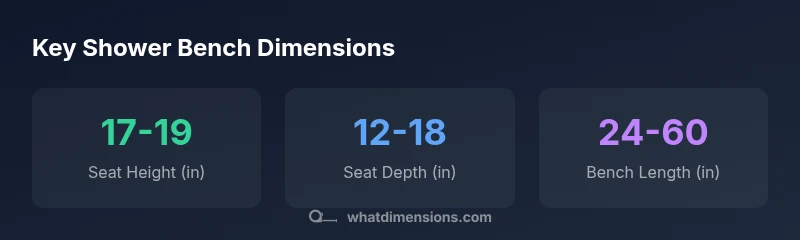
According to What Dimensions, typical shower bench dimensions start with a seat height of 17 to 19 inches, a depth of 12 to 18 inches, and a length that ranges from 24 to 60 inches for linear benches. These ranges help ensure comfort, accessibility, and proper water drainage for various shower sizes.
Seat Height and Accessibility
Seat height is the single most important dimension for comfort and safety when using a shower bench. An ergonomic height reduces knee strain during sitting and makes transfers to and from a shower seat easier for a wide range of users. What Dimensions recommends aiming for a seat height in the 17–19 inch range as a starting point. If you’re shopping for a shared bathroom or a household with mixed-height users, consider a bench with a modest height range or an adjustable option to accommodate different needs without compromising stability. In built-in configurations, verify that there is at least a small clearance beneath the seat to allow for cleaning and airflow, which also helps prevent moisture buildup that can lead to mildew. For accessibility-focused installations, many designers target the mid- to upper-teen range to align with common seating heights used in universal design guidelines.
When measuring your space, start from the finished floor up to the top of the seat while counting any tiling offsets or curb heights. Document knee clearance at the opposite leg and ensure there’s room for comfortable pivoting when seated. In short, precise seat height supports both comfort and safety, especially for daily routines like showering, shaving, and cleaning.
Depth, Width, and Comfort
Depth influences how much knee space you have while seated and how far your feet extend when you stand. A depth of 12–18 inches covers most users without intruding into the shower’s interior space. For deeper seating or benches that double as a towel rack, some designs extend toward 18–20 inches, but this extra depth may constrain shower head placement and water flow. Width is often dictated by the shower footprint; a thinner bench can be comfortably used in narrow stalls, while wider benches provide more seating and back support in larger showers. Corner benches typically run shallower than wall-mounted options due to space optimization, whereas linear benches can be made to match longer wall lengths. Consider back support and splash zones when selecting depth and width—an overly shallow bench can force awkward seating positions, while excessive width can make movement around the shower awkward.
As you decide, sketch a simple layout showing the bench’s location relative to doors, handles, and soap niches. This helps ensure that turning radius and water dispersion aren’t hindered by the bench’s footprint. The combination of depth and width should support stable seating while leaving enough room for leg movement and standing up without banging knees or elbows.
Length and Layout Considerations
Length determines how many people can use the bench at once and how it fits within the shower’s geometry. Linear benches typically range from 24 to 60 inches in length, with longer designs suiting larger showers and shorter designs suiting compact spaces. Corner benches, by contrast, optimize a compact footprint and are common in small or angled showers. When choosing length, measure the linear wall length available for the bench, account for shower door swing, and check for any built-in shelves or niches that could encroach on seating space. If you have a wide shower, you might opt for two shorter benches instead of one long seat to improve accessibility and cleaning. Remember to factor in headroom and the possibility of a standing area next to the bench so users can pivot safely. In practice, a 36–48 inch bench works well for many medium-sized showers, while 60 inches is ideal for larger enclosures and for households with multiple users.
Materials, Finishes, and Waterproofing
Materials influence durability, mounting methods, and thickness, which can subtly affect usable dimensions. Common choices include water-resistant composites, PVC, aluminum frames, and solid woods treated for moisture resistance. Thick materials require robust mounting anchors to maintain stability, which can slightly alter the effective depth or leg clearance if installed flush against a wall. Waterproof finishes help prevent warping and deterioration that could alter seating height over time. For tile or stone benches, ensure the seating surface is properly sealed and that grout lines are sealed to prevent moisture infiltration. A well-sealed bench also minimizes maintenance and preserves dimensions by reducing movement or warping. When selecting a finish, balance aesthetic preferences with durability and maintenance needs. Clear-coated, moisture-resistant materials tend to hold dimensions more consistently over time than unfinished wood or porous composites.
Corner vs Linear Benches: Pros and Cons
Corner benches maximize space efficiency in tight showers and are often easier to integrate into existing bathrooms without sacrificing comfort. They can be easier to install if you have a rounded corner or a niche, and they typically require less floor space than a long, linear bench. Linear benches offer generous seating and better water drainage along the length of the wall. They can double as towel or accessory surfaces and are generally easier to customize for different heights along the same wall. When deciding, consider your shower’s footprint and your daily routines: do you primarily sit while shaving, or do you prefer more seating length for added comfort during long showers? If space allows, a combination of both configurations can offer flexibility and improved accessibility.
Installation Scenarios: DIY vs Pro
Installing a shower bench involves evaluating wall structure, waterproofing, and proper mounting. Wall-mounted or floating benches require sturdy studs and appropriate anchors to support weight, plus careful waterproofing around the mounting points. Corner benches often rely on a combination of adhesive backing, screws, and a supporting frame for rigidity. If you’re tiling, you’ll need precise cutouts for the bench seating and a plan for sealing joints. For DIY enthusiasts, ensure you have the right tools, level, and waterproof membranes. For complex layouts or heavy materials, consider hiring a professional to ensure that dimensions stay consistent after installation and that the bench remains stable under regular use. A careful balance of accuracy and technique keeps the bench dimensionally reliable over time.
Measuring Tips and Common Mistakes
Accurate measurement begins with clear reference points: floor level, finished tile height, and the intended seating surface. Use a laser level to align the bench front edge and measure twice before drilling. Common mistakes include not accounting for tile thickness, shower curb height, or swing space for doors. Always re-check seat height after tiling, as grout lines can add small offsets. When in doubt, start with the standard 17–19 inch seat height and 12–18 inch depth, then adjust based on user feedback and bathroom geometry. Documenting the exact measurements and mounting positions helps ensure consistent results if you replace or modify the bench in the future.
Shower bench dimension quick-reference
| Bench Type | Seat Height (in) | Seat Depth (in) | Bench Length (in) | Notes |
|---|---|---|---|---|
| Wall-mounted | 17-19 | 12-18 | 24-36 | Requires studs and mounting hardware |
| Corner/curved | 17-19 | 14-20 | 24-48 | Fits corner shower niches |
| Linear/floor-mounted | 17-19 | 14-18 | 36-60 | Best for larger showers |
Quick Answers
What is the standard seat height for a shower bench?
Most showers benefit from a seat height of 17 to 19 inches, which aligns with typical seating standards for comfort and safety. This range can be adjusted for individual needs, but starting here minimizes the risk of awkward seating and excessive bending. Measure from the finished floor to the seat surface and test for knee clearance while seated.
Aim for 17 to 19 inches high for most users; adjust slightly if needed after testing.
Can I install a bench in a small or corner shower?
Yes. Corner benches are space-efficient and fit tightly in smaller showers, while wall-mounted benches save floor space and simplify cleaning. Both options can be customized to optimize comfort without compromising access. Always verify door swing clearance and precipitation patterns to avoid water pooling.
Absolutely. Corner and wall-mounted benches work well in tight spaces.
What materials affect the dimensions and durability of a shower bench?
Material choice mostly affects thickness and mounting needs, which can influence usable depth or leg clearance slightly. Durable, moisture-resistant materials help maintain dimensions over time and reduce maintenance. Select composites, aluminum frames, or treated wood designed for damp environments.
Material choice affects mounting and longevity more than standard dimensions.
Is an adjustable-height bench worth the extra cost?
Adjustable-height benches add flexibility for households with varying needs or accessibility concerns. They require robust mounting and may increase installation complexity. If your bathroom needs vary or you anticipate multiple users, they can be worthwhile; otherwise, fixed height is typically sufficient.
If you need adaptability, consider adjustable height; otherwise, fixed height usually suffices.
How should I measure for a corner shower bench?
Measure the corner radius, available wall length, and desired seat width. Start with 17–19 inches seat height and 12–18 inches depth. Mark mounting points and verify clearance for doors and shelves to avoid interference.
Take precise corner measurements and map mounting points before installation.
“Accurate shower bench sizing integrates user comfort with bathroom geometry; precise measurements prevent awkward seating and water pooling.”
Main Points
- Prioritize seat height between 17–19 inches for comfort and accessibility
- Depth of 12–18 inches works for most users without crowding the shower
- Length should match shower footprint; consider 24–60 inches for flexibility
- Choose materials and mounting methods that preserve dimensions over time
- Corner benches optimize small spaces, linear benches maximize seating