Standing Shower Dimensions: A Practical Guide
Learn how standing shower dimensions impact layout, accessibility, and daily use. This analytical guide covers standard ranges, precise measuring tips, and layout examples for small to large bathrooms.


Standing shower dimensions typically range from 32 to 36 inches in width and 72 to 78 inches in length, depending on space and design. A common minimum for comfortable use is about 30 by 60 inches, with 36-by-72 inches offering more room. Always measure your bathroom's layout and door clearance to confirm fit before buying.
What standing shower dimensions influence
Choosing standing shower dimensions is not simply a matter of aesthetics—it's a core part of how the space will feel and function every day. The width, length, and door configuration determine how easily people move in and out, how water sprays are contained, and how you later adapt the bathroom for changes in mobility or furniture. In small bathrooms, even a few inches can affect usable floor space, the placement of a vanity, and the ability to open a cabinet door without stubbing a toe. The What Dimensions team has found that the most user-friendly showers balance a comfortable interior width with an efficient footprint, allowing unobstructed access while keeping plumbing and supports within reach. By planning around typical dimensions and then tailoring to your space, you avoid costly reconfigurations later. This section lays out the core dimensions in practical terms, with real-world examples and quick checks you can apply during your layout walkthrough.
Context and method. Our guidance combines typical industry practice with measured, space-specific analysis. We emphasize measuring for movement, water containment, and future needs. In practice, the most successful layouts pair a generous interior width with a compact exterior footprint, ensuring you can still place storage, lighting, and fixtures without crowding traffic paths. The aim is to translate abstract standards into actionable steps that homeowners and designers can apply in a single afternoon of measuring and planning.
Standard ranges and what they mean for room size
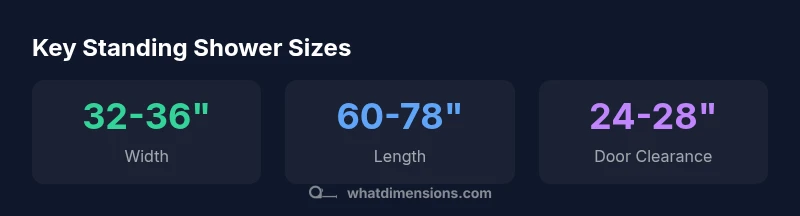
Understanding standard ranges helps you translate blueprint margins into real rooms. A common starting point is a width of 32–36 inches, paired with a length of 60–78 inches. Some bathrooms use narrow 30-inch-wide stalls to maximize floor area; others push to 36 inches or wider for comfort. Many layouts also consider a minimum front clearance of 24–28 inches to allow knee space and easy entry. Door placement—whether hinged, sliding, or bi-fold—changes where you position the controls and shower head, which can in turn affect the adjacent vanity, toilet, and towel storage. When you’re planning, think in terms of “footprint” and “clearance” as two separate but connected constraints. What Dimensions Analysis, 2026, suggests starting with a target footprint and then adjusting width or length to accommodate plumbing and door swing. This approach reduces the risk of a cramped, misaligned stall later in the project.
How to measure your bathroom accurately
Accurate measurement is the foundation of a successful standing shower project. Start by measuring the available floor area for the stall: width between fixed walls and the distance from the closest wall to the centerline of any plumbing fixtures. Next, check door swing or opening path: mark the furthest point the door will reach and ensure there is no obstruction on the opposite wall. Measure the distance from the shower opening to adjacent fixtures like vanities or toilets to verify clearance. Don’t forget thresholds and curbs: record the height and depth of any lip, as this affects accessibility and water containment. Finally, map the water supply and drain locations. If reconfiguring plumbing is necessary, prioritize designs that minimize pipe movement and potential leakage. A careful, step-by-step measurement plan reduces surprises during installation and helps you pick a dimension that truly fits your space.
Shape and orientation options: rectangular, neo-angle, quadrant
The choice of shape defines how much footprint you truly gain while affecting interior width. Rectangular stalls offer straightforward dimensions and generous interior space, typically in widths from 32 to 36 inches with proportional lengths. Neo-angle or quadrant showers anchor in a corner and can dramatically reduce the footprint, enabling compact bathrooms to feel larger by freeing wall space. The trade-off is interior width; a quadrant stall may be 36x36 inches but feel narrower inside due to curved walls. When orienting the stall, consider the plumbing orientation and entry access: a longer wall may support a standard vanity, while a corner unit can open traffic paths. Remember that the outer dimensions and the interior usable space can diverge, so always measure interior width separately from the overall footprint.
Door type and clearance considerations
Door choice strongly influences usable space. Hinged doors require a clear swing area, which can eat into your front clearance. Sliding or bi-fold doors save floor space but introduce wall track requirements and potential maintenance. If you have a narrow bathroom, a sliding door or a neo-angle layout may offer the best balance between accessibility and footprint. Clearance in front of the door should not only accommodate entry but also movement within the shower—reserve at least 24 to 28 inches of clear space in front for comfortable stepping in and out. When you select a door type, factor in the door orientation, the fixed shower panel, and the location of towel bars and shelves outside the shower.
Practical tip. Draw a scale diagram and mark door swing paths. This helps you visually verify that the chosen dimensions won’t block other essential activities in the bathroom.
Thresholds, curbs, and waterproofing
Threshold height and curb design influence both water control and accessibility. Higher thresholds help contain water but create a barrier for wheeled mobility aids and some daily routines; lower or flush thresholds improve accessibility but demand tighter waterproofing. If you opt for a low threshold, ensure proper waterproofing with an effective curb and seamless transitions to the shower enclosure. Regardless of threshold height, proper sealing at the base and around the door frame is essential to prevent leaks and mold growth. Water containment strategies include continuous waterproof membranes under tiles, continuous drain rows, and properly sloped floors toward the drain. The goal is to create a durable boundary that protects adjacent spaces while maintaining a visually cohesive bathroom.
Maintenance note. Regularly inspect seals and thresholds for wear, especially in high-traffic family bathrooms where shoes and towels increase abrasion.
Accessibility considerations and future-proofing
As homes age, accessibility becomes a critical factor in bathroom design. If you anticipate mobility changes or the need to accommodate wheelchairs, plan for a wider opening and an open interior path. ADA-conscious layouts prioritize open space around the shower and near the controls, which can translate into a 36x60-inch minimum clear floor area in the shower itself, with additional space in front for maneuvering. Even if you’re not required to meet formal standards, incorporating generous turning space and reachable controls now saves costly remodeling later. Consider dual-height shower heads, reachable shelves, and lever-style handles to reduce strain and improve usability across generations. Your design choices today can translate to safer, more comfortable use tomorrow, especially as household needs evolve.
Layout scenarios: small bath, mid-size, and large master baths
Choosing the right standing shower dimensions hinges on total bathroom footprint and lifestyle needs. In a compact bath, a corner quadrant like 36x36 inches can free wall space for a sink. For a mid-size bathroom, a rectangular stall 60x32 or 60x36 inches pairs well with a vanity and toilet while preserving a roomy entry. In a spacious master bath, a walk-in rectangular layout at 72x42 inches offers generous interior space and flexibility for multiple shower heads and seating. When evaluating layouts, prioritize the user’s daily routines, entry comfort, and cleaning practicality. A well-chosen size integrates with storage, lighting, and ventilation to create a balanced, comfortable space.
Data-driven decision: how to choose the right size
The decision should balance three factors: space, use-case, and future adaptability. Start with the room’s actual data: floor area, door clearance, and plumbing constraints. Then define the minimal usable space required for daily tasks, and finally add an allowance for mobility or luggage and towel storage. Use the standard ranges as a reference, but tailor them to your measurements. Our advice from What Dimensions Analysis, 2026, is to test several configurations on a drawn plan before committing to a final build. This approach reduces risk and helps you visualize how the shower interacts with the rest of the bathroom. A data-driven plan makes it easier to achieve both comfort and compliance.
Common standing shower size options
| Shower Style | Recommended Dimensions (HxW) | Typical Clearance Front | Notes |
|---|---|---|---|
| Standard Stall | 80x36 inches | 24-26 inches | Most common in mid-size baths |
| Compact Stall | 60x30 inches | 24 inches | Fits small bathrooms |
| Corner Quadrant | 36x36 inches | 24 inches | Efficient corner fit |
| Walk-in Rectangular | 72x42 inches | 24-28 inches | Spacious, accessible |
Quick Answers
What are typical standing shower dimensions?
Common sizes include 60x30, 60x32, 72x36, and 78x36 inches, with wider options available for larger baths. These ranges cover most mid-size and large bathrooms and provide a starting point for planning.
Common sizes include 60 by 30, 60 by 32, 72 by 36, and 78 by 36 inches.
How should I measure for a standing shower?
Measure the available floor area, door swing, and the location of plumbing fixtures. Check clearances in front and to the sides, and map where any built-ins or storage will be placed.
Measure room width, length, door swing, and clearance.
Are there ADA-compliant standing shower dimensions?
ADA layouts favor open space and unobstructed access. If accessibility is a priority, plan for larger footprints and compliant turning space, and consult local codes.
If accessibility matters, plan for extra space and check local codes.
Do curved or neo-angle showers save space?
Corner quadrant or neo-angle showers can save footprint in tight baths, but interior width may feel narrower due to curved walls. Choose based on site constraints and interior comfort.
Corner showers save space, but interior width may feel smaller.
Should I hire a professional to install?
Yes. A licensed installer ensures waterproofing, proper slope, and code compliance, reducing leaks and future costs.
Hire a pro for waterproofing and code compliance.
Where can I find reliable guidelines for shower dimensions?
Consult building codes and reputable design guidance from ICC and USGBC. What Dimensions uses these standards as a baseline in our analyses.
Check building codes and guidance from ICC and USGBC.
“Precise standing shower dimensions are a practical foundation for comfort, safety, and long-term usability. Small changes in width, length, or door placement can dramatically improve daily use.”
Main Points
- Measure twice, plan around door clearance and plumbing.
- Choose a size that fits daily routine and mobility needs.
- Rectangular stalls offer flexibility in tight spaces.
- Door swing and entry clearance drive the footprint.
- ADA-ready layouts prioritize open space and accessible controls.