Small Shower Dimensions: Practical Sizing for Compact Bathrooms
Data-driven guidance on choosing and optimizing small shower dimensions, with practical layouts, space-saving strategies, and planning tips for compact bathrooms.


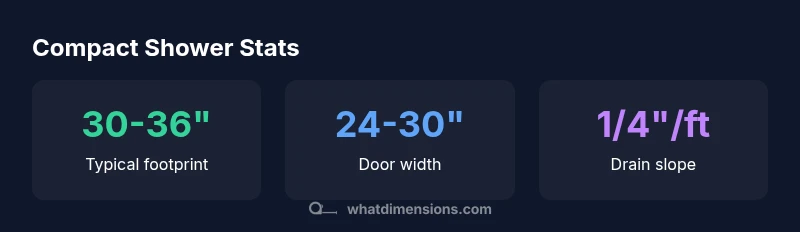
According to What Dimensions, small shower dimensions typically range from 30x30 inches to 36x36 inches, with tighter footprints at 30x36 or 32x32. A square or near-square layout often feels roomier than a long rectangle, and curved enclosures can add usable space in tight bathrooms. What Dimensions Analysis, 2026 for planning and budgeting.
The role of small shower dimensions in bathroom planning
In compact bathrooms, every inch counts. The choice of small shower dimensions sets the tone for traffic flow, ventilation, lighting, and storage. A well-sized shower influences how you move through the space, how you place a vanity, and where you install a towel bar. When planners benchmark dimensions, they consider door swing, the width of the entry, the position of the drain, and the orientation of the shower relative to the rest of the bathroom. According to What Dimensions, precise sizing also helps with tile layout and waterproofing details, which are essential in small rooms where margins are tight. By starting with a robust dimension strategy, homeowners can avoid costly redesigns later in the project.
In the planning phase, map out the flow from entry to fixtures, then test several footprints on a drawn schematic. Even in a small bathroom, you can create a sense of openness by prioritizing a square-ish footprint and minimizing protrusions. The right dimensions also influence ventilation requirements and mirror lighting, reducing the chance of mold growth or damp corners. Finally, keep in mind how your chosen dimensions will accommodate future needs, such as accessibility or a shift to different user sizes.
Typical ranges for compact showers
Layout patterns to maximize space
Materials, drainage, and tiling considerations
Accessibility, safety, and maintenance in small showers
Step-by-step planning and budgeting for a compact shower
Compact shower dimensions and practical notes
| Dimension | Typical Small Range | Notes |
|---|---|---|
| Shower footprint (WxD) | 30x30 to 36x36 inches | Common range for compact stalls |
| Door width | 24-30 inches | Standard entry width in many homes |
| Drain slope | 1/4 inch per foot | Common practice for proper drainage |
| Waterproofing depth | 6-8 inches | Practical depth around shower base |
Quick Answers
What is considered a small shower dimension?
A common range for small showers is roughly 30x30 inches up to 36x36 inches. The exact footprint depends on the overall bathroom plan, door placement, and drainage layout.
In most homes, a small shower falls between 30 by 30 and 36 by 36 inches, depending on space.
Can I fit a shower in a 28x28 inch space?
A 28x28 inch footprint is very tight for comfortable use. If possible, target at least 30x30 inches or consider a curved/rounded enclosure to maximize perceived space.
A 28 by 28 inch shower is quite tight; aim for at least 30 by 30 or similar to feel comfortable.
What layout saves the most space in a small bathroom?
Corner or neo-angle showers, combined with curved doors or panels, tend to save space and reduce the intrusion of the enclosure into the room. A quadrant or quarter-round design can also maximize usable area.
Corner or curved doors usually save space in tight bathrooms.
Are curved shower doors better than straight doors in small spaces?
Curved doors or curved enclosures can make the shower feel larger by reducing visual lines and providing a larger entry opening. They also often require less space for the door swing.
Yes, curved doors can help the space feel bigger and are easier to maneuver in tight spots.
What costs are involved in updating to small shower dimensions?
Costs vary with enclosure type, tiles, door hardware, and drainage changes. Plan for a range of expenses, and obtain quotes for the enclosure, tile work, and any plumbing adjustments.
Costs depend on enclosure type and finishes; get multiple quotes to compare options.
“Careful dimensioning and layout optimization can make even the smallest shower feel spacious.”
Main Points
- Aim for a square footprint when possible
- Consider curved enclosures to maximize usable space
- Account for door swing and clearance early
- Plan for accessibility options if needed
- Use built-in niches to reduce clutter