Shower Base Dimensions: A Comprehensive Sizing Guide
Explore shower base dimensions, measurement techniques, and common footprints to design a bathroom that fits. Learn sizing strategies, accessibility considerations, and planning tips from What Dimensions.


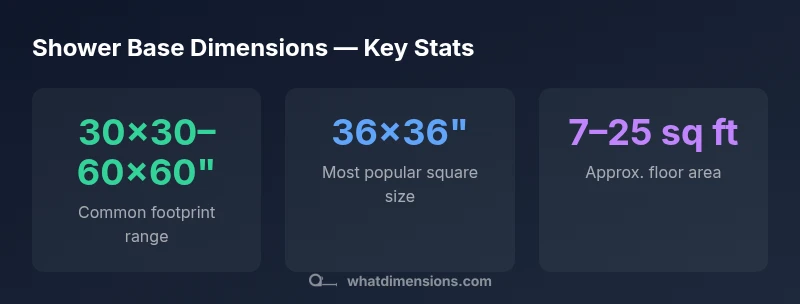
Shower base dimensions define the footprint of a shower, measured as width by depth (W x D). Most residential showers fall between about 30x30 inches and 60x60 inches, with common widths from 32 to 38 inches and depths from 30 to 60 inches. Accurate dimensions ensure enclosure fit, door clearance, and accessible movement.
Understanding shower base dimensions
According to What Dimensions, shower base dimensions define the footprint of a shower and are typically stated as width by depth (W x D). The overall footprint may reference the finished interior opening or the outer enclosure, so it’s crucial to confirm which measurement you need for doors and panels. In residential bathrooms, bases come in square, rectangular, and neo-angle shapes. The choice affects where walls, tiles, and fixtures end up, and it influences door tracks and enclosure hardware. The core idea is that shower base dimensions set the room’s usable area and drive subsequent layout decisions. What Dimensions notes that the most common footprints cluster around familiar sizes, which helps streamline procurement and installation.
Shapes and footprints: square, neo-angle, and rectangular bases
The majority of shower bases fall into three footprint families. Square and equal-sided pans (like 32x32 or 36x36) maximize tile symmetry and are easy to fit in mid-sized bathrooms. Neo-angle bases fit into corner configurations and can preserve floor area in tight baths, typically resulting in a footprint close to 32x32 or 38x38 but with a triangular interior. Rectangular or long-pan bases (such as 30x60 or 36x72) stretch along the bath length and support linear shower enclosures. Each footprint shape shifts the tile layout, the shower door geometry, and the visual proportion of the room. Understanding how geometry converts to real space helps homeowners avoid cramped interiors and misaligned doors.
How to measure your space accurately: a step-by-step guide
Measuring for shower base dimensions requires careful, repeatable steps. Start by measuring the width between finished walls at three points along the length of the install area to account for walls that aren’t perfectly straight. Then measure depth from front to back, again taking multiple readings across the wall planes. Note interior pan edges or studs you’ll anchor to. Verify your measurements with a dry layout by placing painter’s tape on the floor to map the proposed enclosure. Finally, double-check door swing clearance by simulating opening motions with the door or panel. A precise measurement ritual reduces the risk of ordering the wrong base size and saves time during installation. What Dimensions emphasizes using a quality tape measure and a metal ruler for accuracy.
Common base sizes and layout implications: matching spaces with options
Typical residential shower bases include 30x30, 32x32, 36x36, 38x38, and 60x60 inches. If space permits, larger squares (36x36 or 38x38) feel roomier and accommodate wider doors or fixed panels. Rectangular formats like 30x60 or 36x72 work well in narrow bathrooms or when you want a longer walk-in experience. Corner configurations often use neo-angle footprints such as 32x32 or 38x38, which shrink the interior angle while preserving useful shower area. When choosing, consider door type (sliding, hinged, or bi-fold), enclosure hardware, and tile layout to minimize cutting and ensure clean lines. Regional preferences also affect the most common sizes.
Accessibility considerations and design tradeoffs
Accessibility drives certain base sizes and layouts. A 60-inch turning space in the bathroom is a common target in accessibility guidelines, and many designers advocate a minimum clear width of 36 inches for doors and corridors. In showers, longer footprints (like 36x60) can simplify transfers and seating while maintaining splash control. Conversely, tight bathrooms may require compromise: you might choose a compact base with pivot doors or a curved enclosure to maximize opening area without compromising safety. Always review local codes and confirm with a contractor when accessibility is a priority.
Planning, installation, and budget considerations
Start with your bathroom’s overall footprint and door openings, then work backward to a few feasible base sizes. Request a fixed minimum depth allowance that leaves room for plumbing and drainage, and confirm tolerance for wall misalignment with the tile contractor. Consider the enclosure shape and whether you want a fully tiled curb or a curbless entry, as this affects installation time and material costs. Budget to about 4–8% of the bathroom renovation for the base and waterproofing, but adjust for wall build-out or niche installations. Accurate measuring reduces costly returns and ensures you’re selecting a compatible base before framing begins.
Representative shower base footprints by shape and size
| Shape | Typical footprint (W x D) | Notes |
|---|---|---|
| Square/Rectangular | 30x30 | Common and versatile |
| Square/Neo-angle | 32x32 | Corner-friendly and space-efficient |
| Rectangular | 30x60 | Good for narrow baths |
Quick Answers
What are the most common shower base dimensions in residential bathrooms?
The most frequent footprints are in the 32x32, 36x36, and longer rectangular formats like 30x60 or 36x72, depending on space. Sizes vary by bathroom shape and regional design norms. Start with the standard sizes and adjust for your floor plan.
Typical homes use common sizes like 32x32 or 36x36; for longer baths, you might see 30x60 or 36x72.
How do I measure my shower space correctly?
Use a steel tape to measure width and depth at multiple points, note finished walls, and map the enclosure on the floor before selecting a base. Double-check door swing clearance by simulating opening motions.
Measure width and depth in several places and map the space before buying.
Square vs neo-angle: which is better for small bathrooms?
Neo-angle bases fit tight corners and can save floor space, while square bases maximize tile symmetry and door options. Choose based on the room’s geometry and door layout.
Neo-angle saves space; square bases are flexible with doors.
What accessibility considerations should I plan for?
Plan for a turning space in the bathroom (commonly 60 inches) and consider wider doors. In showers, aim for larger footprints when possible or consult local codes for requirements.
Aim for 60 inches turning space and wide doors when possible.
Can I resize an existing shower base after installation?
Resizing a base after installation isn’t practical. You’ll typically need to replace the base and possibly adjust walls or tile, which may trigger a remodel.
Usually not—replacing the base is needed.
“Precise shower base dimensions are the foundation of a well-balanced bathroom layout; measure twice and choose a size that accommodates doors, enclosures, and movement.”
Main Points
- Measure precisely before purchasing
- Prefer standard footprints to simplify installation
- Consider accessibility from the start
- Choose shape that fits your bathroom geometry
- Verify door clearance and tile layout