Walk-In Bath Dimensions: Precise Sizing You Can Trust
Learn precise walk-in bath dimensions, including doorway widths, tub footprints, seat depth, and required clearance. Our data-driven guide covers measurement techniques, typical ranges, and planning tips to help you choose a safe, accessible bath.


Walk-in bath dimensions refer to the essential measurements you must verify before purchase: doorway width, tub length and width, seat depth, and the required clearance around the enclosure. According to What Dimensions, confirming these figures—plus bathroom space and door swing—helps ensure a comfortable, accessible fit that works with your layout.
Why walk-in bath dimensions matter for accessibility and layout
When planning a bathroom update that includes a walk-in tub, the exact dimensions drive both comfort and safety. Doorways must accommodate the tub opening, the overall footprint must fit within existing walls, and surrounding space must allow unobstructed access for transfers. According to What Dimensions, the most impactful dimension categories are doorway width, tub footprint (length and width), and clearance around the enclosure. Failing to align these measurements with your bathroom layout can result in cramped transfers, difficult cleaning, or the need for expensive remodeling. This section explains how to think about walk in bath dimensions not as abstract numbers, but as constraints that shape your design decisions, fixture placement, and long‑term usability.
Key measurements you need to know
Before you shop, list the primary measurements that affect walk in bath dimensions. Door width, door swing direction, tub length, tub width, seat depth, and minimum clearance in front of the tub are non‑negotiable. If you plan dual access or side loading, you may also consider the location of nearby fixtures (vanities, toilets) and the floor slope. It's helpful to categorize them as fixed (do not change) versus flexible (subject to model choice). Provide rough room dimensions as context; record ceiling height to ensure washdowns and door clearance don't brush the ceiling. This planning mindset aligns with What Dimensions’ data-driven approach, which emphasizes measurable inputs over assumptions.
How to measure your bathroom for a walk-in tub
Step-by-step measurement process: 1) Mark the primary rough-in area where the tub will sit, 2) measure the length and width of the available floor space, 3) measure the doorway width and the door swing, 4) measure the clearance in front of and around the tub, 5) measure ceiling height and any overhead obstructions, 6) measure wall studs or plumbing lines that could affect installation, 7) note the location of existing faucets and outlets. Tools: measuring tape, level, pencil, and a square. Double-check every dimension twice. If your bathroom layout is irregular, sketch a floor plan to visualize model footprints. Remember to consider future accessibility needs such as enclosure doors, seats, and grab bars. What Dimensions recommends compiling these measurements into a simple diagram for model comparison.
Typical dimension ranges by model type
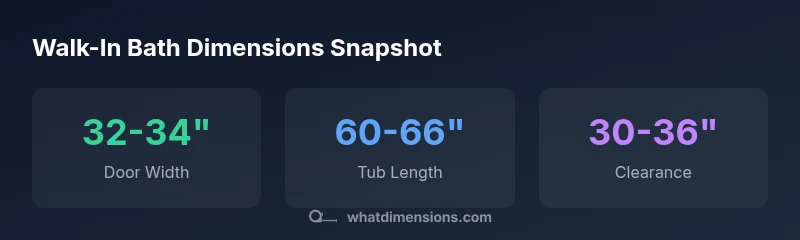
Walk in bath dimensions vary by model. For standard width, expect 30–34 inches; typical lengths fall around 54–66 inches; seat depth commonly ranges from 16–20 inches. Door widths are often 32–34 inches to allow a comfortable entry, though some compact models use 30 inches. Height is typically around 38–40 inches exterior, with interior depth governed by the tub's seating and configuration. These ranges help you quickly filter options in shopping lists and installers. Note that installation tolerances, wall thickness, and plumbing layout can shift the final footprint by a few inches. Use these ranges as a baseline, then verify exact dimensions from product specifications. This practical anchor is central to aligning walk in bath dimensions with your home’s constraints.
Clearance, accessibility, and safety considerations
Beyond the tub footprint, clearance matters for safe transfers and routine cleaning. Plan for at least 30 inches of unobstructed space in front of the tub, plus additional clearance along the entry side for a walker or wheelchair. Grab bars, handrails, and built‑in seating affect usable interior width, so confirm seat width and depth before selecting a model. Consider the door style: a hinged door may require more swing clearance than a sliding door. Floor access and non-slip surfaces are also critical; ensure the bathroom can support the tub’s weight and that the floor is adequately reinforced. In tight bathrooms, you may prioritize compact walk in bath dimensions with a smaller footprint but equal accessibility features. A careful assessment now reduces retrofit costs later.
Installation constraints and planning tips
Before ordering, coordinate measurements with your installer or contractor. Structural framing, waterproofing, and tile thickness affect final dimensions. Show them your measurement diagram and product spec sheets; ask about tolerance allowances and installation flexibility. If space is tight, you might need to relocate plumbing or adjust vanity placement. For multi‑user homes, consider adjustable or universal seating options to accommodate varying body sizes. Ensure you have a realistic timeline that includes permits (if required) and testing. What Dimensions’ approach emphasizes seeing dimension inputs as actionable constraints that inform tradeoffs between features, accessibility, and aesthetics.
Choosing a model: a practical checklist
Use a checklist to compare walk in bath dimensions across models. Confirm doorway width, tub footprint, seat dimensions, clearance, and installation allowances. Verify weight ratings, door hardware, and hydromassage or faucet options are compatible with your space. Create a side‑by‑side matrix of your measurements against product specs, and add notes on any required renovations or reinforcements. With precise walk in bath dimensions, you can narrow choices quickly and avoid costly back-and-forth with suppliers.
Dimension benchmarks for common walk-in bath configurations
| Model Type | Door Width | Tub Length | Tub Width | Seat Depth | Clearance |
|---|---|---|---|---|---|
| Walk-In Tub (Door) | 32-34 inches | 60-66 inches | 30-34 inches | 16-20 inches | 30-36 inches |
| Compact Walk-In Tub | 30-32 inches | 54-60 inches | 28-32 inches | 16-18 inches | 28-32 inches |
| Standard Tub (Non-Walk-In) | N/A | 60-72 inches | 28-30 inches | N/A | N/A |
Quick Answers
What is the standard doorway width for walk-in baths?
Most walk-in baths require a doorway width in the 32–34 inch range to allow comfortable entry. If space is tight, consider compact models with narrower doors, but always verify floor space and swing clearance.
Most walk-in baths need about 32 to 34 inches for entering comfortably.
How should I measure my bathroom for a walk-in tub?
Start with the tub footprint area, then measure the available floor space, doorway width and swing, plus front and side clearances. Document measurements in a simple diagram to compare with product specs.
Measure the space, door swing, and the clearances, then compare against model specs.
What clearance is recommended around a walk-in tub?
Aim for at least 30 inches of unobstructed clearance in front of the tub, with additional space for accessories and cleaning. Adjust based on doorway and storage needs.
Plan for about 30 inches of space in front of the tub.
Are built-in seats standard in walk-in baths?
Many walk-in models offer built-in seating; always verify the seat depth and width to ensure comfort for all users. If needed, look for adjustable or accessible seating options.
Check seat depth and width when shopping.
Can a walk-in tub fit in a small bathroom?
Yes, with compact models and careful layout changes. A professional can help optimize space by reconfiguring fixtures and plumbing where needed.
Yes, with the right model and layout tweaks.
What are common dimensions for popular walk-in models?
Dimensions vary by model, but typical ranges include door widths around 32–34 inches, tub lengths around 54–66 inches, and widths around 28–34 inches. Always check the exact specs for the model you’re considering.
Expect door ~32–34 inches, length ~54–66 inches.
“Precise walk-in bath dimensions are the foundation of a safe, comfortable bathroom upgrade.”
Main Points
- Define doorway width before shopping
- Measure bathroom length and clearance accurately
- Prioritize seat depth and entry width
- Confirm installation tolerances with your contractor
- Use dimension ranges to filter models early