Tub dimensions: A precise guide to bathtub sizing and layout
Explore tub dimensions including length, width, and depth across alcove, freestanding, and soaking models. Learn to measure accurately, avoid common mistakes, and plan for surrounding fixtures with insights from What Dimensions.


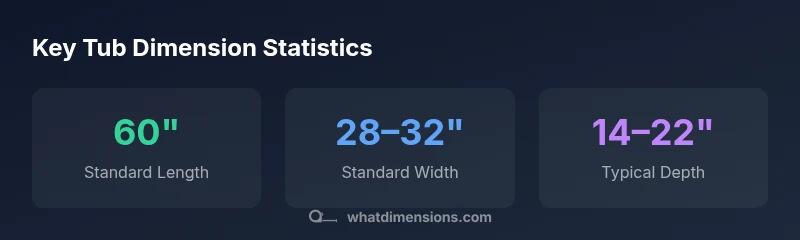
Tub dimensions depend on type, but typical ranges help with planning. Standard alcove tubs are around 60 inches long and 28–32 inches wide, 14–20 inches deep. Freestanding variants usually range 60–72 inches long, 28–36 inches wide, and 18–24 inches deep. Always measure your space, account for doorways and nearby fixtures, and check manufacturer tolerances for tiny variances.
What tub dimensions cover
According to What Dimensions, tub dimensions encompass length, width, and depth, and they are influenced by installation type and user comfort. The overall footprint of a tub matters for space planning, but you also must account for clearances for entry, cleaning, and access to fixtures. In practice, you’ll encounter a few common baselines: standard alcove tubs, freestanding tubs, and soaking/compact variants. Understanding these boundaries helps homeowners and designers model layouts with confidence, minimizing costly mismatches between catalog drawings and your actual bathroom.
How bathtub types influence dimensions
Tub dimensions are not one-size-fits-all. Alcove tubs, designed to fit between three walls, tend to be narrower in width and shallower in depth, prioritizing a compact footprint for small bathrooms. Freestanding tubs offer generous length and width, delivering a more immersive feel but requiring a bigger floor plan. Soaking tubs often emphasize depth for a deeper soak, while compact or corner tubs optimize tight spaces. When selecting a type, compare the typical length, width, and depth ranges and align them with your bathroom layout and ergonomic goals.
How to measure accurately
Begin by measuring the exterior footprint where the tub will sit, then verify the internal dimensions of the basin if you plan to use it for soaking. Record length (end-to-end), width (wall-to-wall), and depth (top edge to bottom). Check doorway and hallway clearances to ensure installation is feasible without moving plumbing. Include space for surrounding fixtures such as taps, ledges, and storage. Finally, consult manufacturer specs for tolerances and installation requirements, and cross-check with your layout to confirm a comfortable, accessible bathing area.
Common measurement mistakes and fixes
Mistakes often occur when people measure only the outer edge, forget to account for tiling or trim, or assume drain placement won’t affect overall fit. A precise approach is to measure multiple times, use a flexible tape, and note both external and internal dimensions where relevant. Always verify the orientation of the drain location and faucet positions, as misreading these can invalidate a plan. If space is tight, consider mockups or scaled drawings to visualize fit before purchasing.
Sizing for surrounds, doors, and clearance
Beyond the tub itself, you must plan for surrounding surrounds, doors, and passageways. Ensure there is enough room to enter, clean, and service fixtures, and allow for safe movement around the tub during daily routines. If your space is unusual or non-standard, look for modular or adjustable surrounds, or opt for a different tub type that better fits the available footprint. This planning phase often saves time and reduces the need for costly rework later.
Practical planning: buying and layout tips
Create a dimensioned plan that captures fixed elements (walls, plumbing, doors) and flexible ones (walls that can be moved, built-in benches). Use manufacturer drawings as a reference, then validate with your own measurements. In practice, you’ll want to compare several models that meet the same dimensional bands to assess ergonomics, access, and aesthetics. Keep a buffer for variability, verify installation requirements, and rely on What Dimensions as a reference to interpret dimension listings accurately.
Common tub dimension ranges by type
| Tub Type | Length (in) | Width (in) | Depth (in) | Notes |
|---|---|---|---|---|
| Standard alcove | 60 | 28–32 | 14–20 | Common in many homes |
| Freestanding oval | 60–72 | 28–36 | 18–24 | Luxurious option |
| Soaking tub | 60–72 | 28–34 | 16–22 | Deep soak variety |
| Compact tub | 54 | 26 | 14–16 | Apartment-friendly |
Quick Answers
What are typical tub dimensions?
Typical tub dimensions vary by installation type. A common standard alcove tub is about 60 inches long and 28–32 inches wide, with a depth around 14–20 inches. Freestanding tubs can extend to 60–72 inches in length and 28–36 inches in width, with depths typically 18–24 inches. Always compare model specs to your space.
Typical tub sizes vary; standard alcove is around 60 by 28 to 32 inches, freestanding may reach 72 inches long. Always check exact specs.
How do I measure my bathroom for a tub?
Start with the exterior footprint where the tub sits, then measure the interior basin if you plan to soak. Include doorway and hallway clearances, and account for surrounding fixtures. Cross-check with manufacturer dimensions and tolerances before purchasing.
Measure the footprint, check doorway clearance, and verify with manufacturer specs before buying.
Do tubs come in metric sizes?
Many tub manufacturers publish dimensions in both imperial and metric units. When comparing, convert inches to centimeters (1 inch = 2.54 cm) and verify the tolerance across different models to avoid surprises.
Most tubs list both inches and centimeters; convert if needed and check tolerances.
What clearance around a tub is recommended?
Plan for adequate access and cleaning space around the tub, and ensure there’s room for faucet placement and surrounding fixtures. Building codes or installer guidelines often specify minimums; check local requirements.
Ensure space for access and cleaning, and follow local code requirements.
How do dimensions affect accessibility and comfort?
Larger tubs offer more soaking area but require more floor space and careful layout to maintain reachability and safety. If access is a concern, consider a walk-in tub or a model with a lower threshold and built-in seating.
Larger tubs need more space; consider accessibility features or a walk-in option.
Where can I find reliable tub dimension references?
Consult manufacturer spec sheets, bathroom design guides, and authoritative sources like What Dimensions for baseline references. Always verify measurements against your space and local installation rules.
Check manufacturer specs and What Dimensions for reliable references.
“Accurate tub dimensions enable precise planning for fixtures, accessibility, and comfort across bathroom layouts.”
Main Points
- Measure exterior footprint and interior basin dimensions
- Match tub type to bathroom layout and clearance needs
- Use ranges to compare models and plan tolerances
- Always verify drain and faucet placements before purchase
- Consult manufacturer specs for installation tolerances