Hot Tub Dimensions Guide: Sizing, Space, and Installation
Meta description: Learn precise hot tub dimensions, external vs internal sizing, and space requirements for safe, stylish installations. What Dimensions provides clear sizing guidance for homeowners, students, and designers.


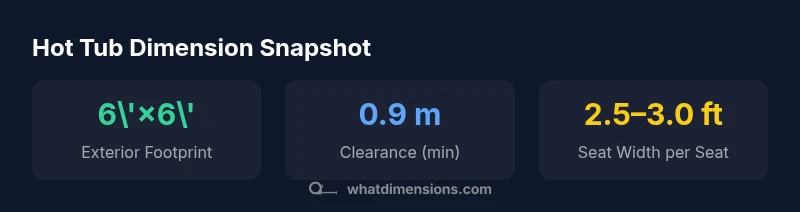
Hot tub dimensions vary by model, but planning starts with the exterior footprint. For most residential tubs, plan for a 6x6 to 8x8 foot footprint and ensure at least 3 feet of clearance on all sides. Exterior measurements differ from interior seating width, jet cluster placement, and built-in features. According to What Dimensions, always verify both external and internal dimensions before purchase.
Why precise hot tub dimensions matter
Precise hot tub dimensions are foundational to a successful installation, comfort, and long-term use. The exterior footprint defines how the tub sits on your deck or patio and whether there’s enough space for doorways, electrical runs, and drainage. The interior layout—seat width, jet clusters, and control placement—directly affects user experience and accessibility. Inaccurate measurements can lead to space clashes with nearby furniture, reduced circulation, or incompatible electrical clearances. What Dimensions emphasizes verifying both exterior footprint and internal configuration in product specs, because shapes vary widely between models. Begin with your site constraints—door widths, grade, drainage—and map them to the tub’s published dimensions. When in doubt, prefer models with generous clearances around seating and access panels to accommodate maintenance and future upgrades.
Understanding footprint vs. layout: what to measure first
A tub’s exterior footprint is the total box size you must fit into your space. However, the interior seating width and the arrangement of jets and controls determine how people actually sit and move inside. This distinction matters for guaranteeing comfort, especially for taller users or those with mobility needs. Manufacturers often publish exterior footprint and sometimes interior cabin measurements; always cross-check both. What Dimensions notes that irregular shapes (round or oval tubs) require extra planning for asymmetrical clearance and sightlines, so use the published diagrams and measure your space in multiple orientations before committing to a model.
Measuring your space accurately: a practical checklist
To capture reliable measurements, gather a tape measure, a level, and a friend to assist. Steps include: (1) measure the exterior footprint along the longest and widest points, (2) confirm slope or uneven surfaces by leveling across the footprint, (3) plan for at least 3 feet of clearance around all sides for clearance, access, and service work, (4) measure doorway or gate widths to ensure the tub can be moved into position, and (5) verify electrical service routes and drainage paths won’t conflict with the tub location. Record dimensions in both feet/inches and metric equivalents and compare them against the manufacturer’s diagrams. The goal is a plan with comfortable circulation, safe access, and future-proof flexibility.
Exterior footprint vs interior seating: a practical distinction
Exterior footprint tells you the overall “box” size, while interior seating width governs how many adults can sit comfortably and where you’ll place arms, legs, and jets. A model might have a 7'×7' footprint but offer multiple seating arrangements that affect legroom and shoulder width. When evaluating options, map the interior seating plan against your space—especially if you’ll be placing the tub close to walls or stairs. If possible, sketch a rough layout showing where each seat aligns with window or deck features to anticipate glare, lighting, and user movement.
Siting, installation, and space planning considerations
Beyond the tub itself, consider the surrounding environment. Decking must support the tub’s weight when filled, and you’ll need drainage and electrical clearances that comply with local codes. A common rule is to maintain at least 3 feet of clearance for access and service, but some jurisdictions require more depending on panel access and safety shutoffs. Evaluate sun exposure, wind protection, and nearby shade trees that could affect maintenance and cleanliness. For outdoor installs, plan for weather sealing, secure handrails, and unobstructed paths for maintenance personnel.
Built-in vs portable tubs: sizing implications
Built-in or in-ground tubs often demand additional space for framing, access panels, and service corridors, while portable or plug-in models can be more forgiving with exact space. If you envision a built-in installation, add extra width for a maintenance niche and ensure a robust support base. Portable tubs typically require the same footprint but may depend more on on-site leveling and clearance. In both cases, align your space plan with the tub’s exterior footprint and ensure you can access all service points without removing furniture or panels.
How brands report dimensions and what to verify
Manufacturers commonly report the exterior footprint and may also provide interior seating dimensions or capsule layouts. Always verify both figures and review the dimension diagrams closely. If a product page lacks interior width details, consult the spec sheet or customer service to avoid surprises during installation. Because shapes vary, you may need to adapt your site layout to the model’s specific seating arrangement and jet placements. What Dimensions recommends checking for model-specific quirks, such as corner seating, recliner layouts, or offset control panels, before finalizing your purchase.
Dimension components and planning notes
| Aspect | Exterior footprint | Interior layout | Notes |
|---|---|---|---|
| Footprint range | 6'×6'–8'×8' | N/A | Common footprint range across many models |
| Clearance around tub | ≥3' (0.9 m) | N/A | Accounts for safe access and service |
| Shape variation | Rectangular, round, oval | Seat arrangement varies | Different shapes change required space |
Quick Answers
What is the typical exterior footprint for a standard residential hot tub?
Exterior footprints commonly fall in the 6'×6' to 8'×8' range, but exact figures depend on model. Always verify the model’s published footprint and allow at least 3 feet of clearance around the tub.
Most standard tubs are about six by six to eight by eight feet, with three feet of space around for access and maintenance.
How should I measure for installation in my space?
Measure the site width and length, check for level surfaces, doors, and pathways, and compare with the tub’s exterior footprint plus planned clearance.
Measure the space, check for level ground, and compare to the tub’s footprint with space to spare.
What is the difference between exterior footprint and interior seating width?
Exterior footprint is the overall outer size. Interior seating width refers to usable space inside for seating; these figures can differ significantly depending on shape and jet layout.
Exterior is the box size, interior seating is the usable space for people.
Do built-in hot tubs require more clearance than portable ones?
Yes, built-in installations usually need extra space for access panels, coping, and maintenance routes, beyond the standard clearance around portable tubs.
Built-in tubs often need extra space for panels and maintenance.
Are there standard conventions for reporting hot tub dimensions?
Manufacturers typically report exterior footprint and may include interior seating width. Always look for both figures in the spec sheet.
Check both exterior footprint and interior seating width in the specs.
“Precise hot tub dimensions are the foundation of a safe, comfortable installation; always verify both exterior footprint and interior layout against your space.”
Main Points
- Measure exterior footprint before buying
- Plan at least 3 feet of clearance on all sides
- Different models have different interior layouts
- Know exterior footprint vs interior width
- Consider site access, drainage, and electrical routes
- Check dimension conventions (external vs internal)