Bathroom Tub Dimensions: A Comprehensive Sizing Guide
Discover standard bathroom tub dimensions, how to measure for replacement, and tips to choose the right tub size for your space—alcove, freestanding, and corner models.


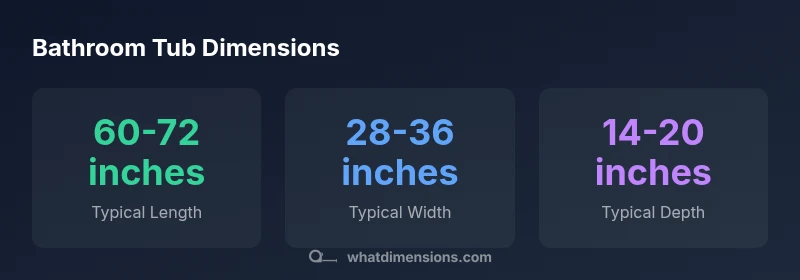
Typical bathroom tub dimensions center on three measurements: length, width, and depth. According to What Dimensions, most residential tubs run about 60 to 72 inches long, 28 to 36 inches wide, and 14-20 inches deep. For alcove installations, standard footprints are around 60 inches by 30 inches with a 14-16 inch depth. Always verify manufacturer specs and measure your space before purchasing.
Why tub dimensions matter
Choosing the right bathroom tub dimensions is more than a matter of preference; it directly influences usability, comfort, and the final look of a space. In small bathrooms, the wrong tub can crowd openings or impede door swings, while in larger baths, an undersized tub can feel out of place and underutilize the room’s potential. From a practical standpoint, accurate measurements prevent costly remodels, ensure proper clearance for plumbing rough-ins, and help plan for finishing materials such as tile, trim, and thresholds. According to What Dimensions, clear space around the tub supports safe entry and exit and reduces the risk of accidental bumps during bathing. This makes the upfront sizing phase a critical step in any bathroom project.
Beyond fit, tub dimensions also affect water perception and comfort. A longer tub can accommodate taller users or a reclining pose, while a wider tub enhances elbow room for two. Understanding typical ranges—60-72 inches in length, 28-36 inches in width, and 14-20 inches in depth—provides a baseline for evaluating options across alcove, freestanding, and corner configurations. In this phase, it’s essential to balance ergonomic needs with the room’s layout and the home’s plumbing footprint.
Standard tub types and their dimensions
Bath tubs come in several archetypes, each with distinct dimension profiles. Alcove tubs are the most space-efficient, commonly around 60 inches long and 30 inches wide, with a shallower depth to fit three-wall enclosures. Freestanding tubs offer broader range in length (roughly 60-72 inches) and width (28-36 inches), creating a sculptural focal point but often requiring more floor area. Corner tubs maximize corner space but may vary in length from 48 to 60 inches and commonly sit 36 inches wide, with depths around 14-18 inches. Soaking tubs emphasize interior depth for immersion, frequently delivering 18-20 inches of depth and 60-72 inches in length. When evaluating, compare exterior footprint against interior bathing depth to ensure comfort. The key takeaway is that type drives footprint, but individual product tolerances can shift measurements by a small margin.
To help visualize, most alcove configurations fit a standard 60
30
depth 14-16
but always verify exact factory specs. Remember that installation space, not just the tub’s nominal size, determines fit.
How to measure your bathroom for a tub
Accurate measurement begins with a careful plan. Start by outlining the rough opening or alcove where the tub will sit. Measure the length from the finished wall to the opposite finished wall, then measure the width across the niche, including any trim or lip. Don’t forget to check the space needed for door clearance, existing plumbing, and the faucet/fixture positions. For freestanding tubs, measure the overall footprint including any surrounding apron; for corner tubs, map the two walls forming the corner. Next, determine the tub depth by standing at the planned faucet position and noting the vertical clearance needed to comfortably recline. Finally, map the tile thickness and the height of any curbs or thresholds to ensure the tub aligns with flooring and shower doors. A good practice is to measure twice and cross-check with the manufacturer’s installation guide.
If you’re replacing an existing tub, measure the interior bathing space to ensure your replacement fits inside the existing opening. Record all measurements in inches and create a simple diagram. This systematic approach minimizes surprises during delivery and installation.
Choosing the right tub for a small bathroom
Small bathrooms demand compact, efficient solutions that still deliver comfort. Look for tubs marketed as space-saving or slimline, with waterline depths that maximize interior comfort without expanding the footprint. In narrow baths, consider a 60-inch length with a 30-inch width, or experiment with a corner unit that consolidates plumbing lines into a single wall. Another option is a modular or drop-in tub that can sit flush with surrounding cabinetry for a seamless look. Don’t overlook door swings and vanity clearance; even a few inches can influence flow. If you’re renovating, you can also shift some fixtures, such as swapping a sink vanity to free up precious inches for a larger tub.
Accessibility considerations and ADA-friendly options
Accessibility is a growing priority in bath design. When planning for accessibility, focus on clearances and ease of entry. A longer tub length can offer more internal space for seated bathing, while wider widths support stability and balance for users with mobility challenges. If your local codes require or encourage accessibility features, you may need to consider specialized design options like wide thresholds, zero-threshold entries, or built-in seating. Always consult local building codes and a licensed contractor to ensure compliance. If budget allows, pairing a tub with a walk-in door or integrated seating can dramatically improve usability for people of all ages.
Practical layout tips and installation notes
A successful tub installation balances form, function, and future needs. When planning layouts, sketch several configurations to visualize traffic flow between the tub, vanity, and shower. Flooring should support the tub’s weight and have a subfloor rated for wet areas. Plumbing rough-ins must account for the faucet location and drain slope; some dimensions may shift slightly due to wall thickness, tile thickness, or decoupling membranes beneath tile. Consider installing a framed wall surround or acrylic surround for easy maintenance. Finally, verify that your chosen tub’s exterior dimensions align with any built-in cabinetry and ensure that the chosen model leaves enough space for cleaning and maintenance access.
How to compare tub dimensions across manufacturers
Manufacturers often list length, width, and depth with slight tolerances. Compare the exterior footprint of freestanding tubs against alcove footprints to understand how they’ll sit in your space. Look for product specifications that note tolerances (for example, +/- 1/2 inch on length or width) and confirm the drain location, faucet positions, and overflow configuration align with your plumbing. Some brands offer adjustable or deep soaking variants that alter the depth, so double-check the interior dimensions regardless of exterior measurements. Finally, use a measurement tool or laser level during site visits to ensure accuracy and minimize surprises at install time.
Common tub dimensions by type
| Tub Type | Typical Length | Typical Width | Typical Depth |
|---|---|---|---|
| Alcove tub | 60-66 inches | 30 inches | 14-16 inches |
| Freestanding tub | 60-72 inches | 28-36 inches | 20-24 inches |
| Corner tub | 48-60 inches | 36 inches | 14-18 inches |
| Soaking tub | 60-72 inches | 28-32 inches | 18-20 inches |
Quick Answers
What is the standard length of a bathroom tub?
Most standard tubs are about 60 inches long, with longer options commonly available up to 72 inches. The exact length varies by model and installation type.
Most standard tubs are 60 inches long, with options up to 72 inches depending on the model.
How do I measure my tub for replacement?
Measure the interior bathing space (length and width), plus the exterior footprint and the distance to walls for clearance. Note the drain and faucet positions, and verify wall thickness and tile height.
Measure interior space, exterior footprint, and clearance; check drain and faucet locations.
Are there universal tub dimensions?
No universal standard exists. Dimensions vary by type and manufacturer, so always compare exact specs for each tub.
There isn’t a universal size; check each tub’s exact specs.
Can I install a larger tub in a small bathroom?
You can, but it may require reconfiguring the layout or choosing a compact model with a zero-clearance design. Evaluate door swings, vanity clearance, and plumbing routes before committing.
It’s possible, but you may need layout changes and a compact model.
What height should a tub rim be for comfort?
Rim height depends on user preference and accessibility needs. Aim for a comfortable reach and consider seating or grab bars if used by children or seniors.
Choose a height that’s comfortable for the user and add grab bars if needed.
Are ADA-compliant tubs larger or special shapes?
ADA-focused design centers on clearances and accessibility features. Check local codes and consider options with wider entry and seating built-in.
Check local codes; ADA options exist but vary by region.
“Tub sizes are not one-size-fits-all; precise measurements and space planning save time and prevent costly remodels.”
Main Points
- Measure your space before shopping
- Check door clearance and plumbing rough-ins
- Consider accessibility and user comfort
- Review manufacturer specs for exact tolerances
- Plan for evolving needs (ADA options, resale)