Two-Car Garage Dimensions: A Precise Size Guide
Explore precise two car garage dimensions with a clear footprint range (400-480 sq ft), door configurations, and layout options to optimize parking, storage, and workflow. Learn measurement steps, common layouts, and practical tips for reliable, future-proof designs. What Dimensions analyzes these factors for smarter space planning in 2026.


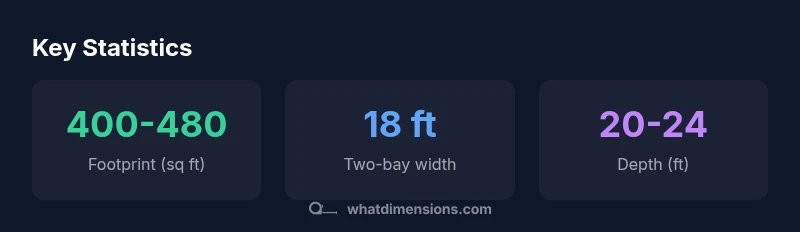
For a practical starting point, the typical two car garage footprint is 400-480 square feet, with 20x20 feet as a minimum and 20x24 feet as a comfortable standard. According to What Dimensions Analysis, 2026, most homeowners opt for 24x24 when space allows, ensuring room for doors, storage, and movement. This guide also covers measurements, layouts, and practical tips.
Why precise two car garage dimensions matter
When planning two car garage dimensions, you aim for a balance between parking width, door swing, and storage access. A space that’s even marginally undersized increases the risk of door dings and cramped movement, while an overly generous area can waste valuable land. Accurate size references help homeowners avoid costly remodeling down the line and ensure that everyday tasks—loading groceries, cleaning out the car, and reaching shelves—are easy and predictable. What Dimensions emphasizes that starting with a solid footprint, such as the common 400-480 square feet range, lets you tailor width and depth to your actual vehicles and gear. In practice, the distinction between a 20x20 and a 20x24 foot footprint often means the difference between a marginal setup and a comfortable workshop. What Dimensions Analysis, 2026, finds that many households upgrade to 24x24 when space allows, achieving a more ergonomic workflow without sacrificing parking. The broader takeaway is to couple exterior dimensions with interior layout so every square foot serves a purpose.
How to measure your space accurately
Measuring space accurately starts with the exterior envelope, then accounts for interior clearances and door swing. Start by capturing the overall width (left to right) and depth (front to back) and then measure the width of each garage door opening. Note obstructions such as storage alcoves, columns, floor drains, and HVAC components that could affect usable space. Use a tape measure for longer spans and a laser distance tool for precision; take measurements at multiple points if the walls aren’t perfectly straight. Record values in feet and inches and convert to decimal feet if you prefer. To translate measurements into a viable design, compare your numbers with the standard ranges for two car garage dimensions, and adjust for your actual vehicles’ widths plus a comfortable clearance. When documenting two car garage dimensions, be sure to include the door swing arc and a practical margin for storage and workspace. This disciplined approach reduces guesswork and makes it easier to evaluate layouts, door options, and future upgrades, such as additional shelving or a wall-mounted workstation.
Layout configurations: compact, standard, and spacious
Two car garage dimensions can be realized in several layouts, each balancing parking space with storage and workflow.
- Compact: roughly 20x20 feet. Pros: minimal land use and lower cost. Cons: limited storage and maneuvering room.
- Standard: roughly 20x24 feet. Pros: comfortable parking width plus space for a few cabinets or a small workbench. Cons: still compact for larger gear.
- Spacious: roughly 24x24 feet. Pros: generous movement, better storage options, and room for a full workbench. Cons: higher land cost.
Door configurations influence these layouts. Two 9-foot doors provide wide access to each bay, while a single large door (16–18 ft) reduces framing costs but demands precise alignment for parking. When evaluating layouts, start with your vehicles’ widths and desired storage area, then layer in clearances for door swing, cabinets, and aisles. The goal is a flow that minimizes back-and-forth movement while keeping every square foot purposeful.
Storage, workflow, and ancillary spaces
Storage is not an afterthought in two car garage dimensions—it’s a core driver of usability. Plan wall-mounted cabinets along one side to keep floor space clear for parking, and reserve an area for a workbench or recycling station. High shelves above the vehicles can store seasonal items, while pegboards and tool hangers free up drawer space. If you anticipate a laundry nook, charging station, or a small freezer, designate dedicated zones that won’t obstruct doorways or packing space. With precise dimensions, you can assign storage units by height, depth, and accessibility, ensuring you never reach over a car to grab a tool. In practice, a well-planned layout reduces clutter and makes daily routines predictable, which is a hallmark of quality design from What Dimensions.
Common mistakes and how to avoid them
The most frequent missteps in two car garage dimensions involve assuming too much and measuring too little. Don’t rely on rough estimates of width or door swing; measure every opening and verify that the swing arc clears shelving and cabinets. Avoid underestimating the required turning radius for larger vehicles, and never neglect the need for a comfortable aisle behind the cars—ideally 4–5 feet. Finally, account for future upgrades or changes in vehicle size. A short-sighted plan might require expensive reconfigurations later. By anchoring your design in verified measurements and a clear footprint, you’ll minimize surprises and maximize usability from day one.
Structured look at common two-car garage dimension options
| Aspect | Typical Size (ft) | Notes |
|---|---|---|
| Footprint (approx) | 400-480 | Depends on width and depth; use specific ranges above |
| Two-bay width | 18 ft total | Two 9 ft bays or one wide door |
| Recommended depth | 20-24 | Space for storage and a small workspace |
| Door configuration | Two 9 ft doors or one 16–18 ft door | Affects overall width planning |
Quick Answers
What is the standard size for a two-car garage?
There isn’t a universal standard; common options are 20x20, 20x24, and 24x24 feet. The best size depends on your vehicles, storage needs, and driveway access.
Most people choose 20 by 20 or 20 by 24 feet for two cars; 24 by 24 offers extra room for storage.
How much width should I allocate per car?
Aim for about 9 feet of width per car in a two-car configuration, which sums to around 18 feet total. Add 1–2 feet of clearance per doorway to allow for door swing and storage.
Plan roughly 9 feet per car, plus extra clearance for doors and cabinets.
Is a single large door better than two doors?
A single wide door simplifies exterior framing and can look cleaner, but two doors offer easier access to each bay and can be cheaper to replace hits and dents. Choose based on driveway layout and budget.
Two doors give easier access; a single door saves framing costs but may limit parking flexibility.
How can I add storage without shrinking parking space?
Use wall-mounted cabinets, overhead racks, and pegboards along the sides to free floor space. Consider recessed shelving or corner cabinets that don’t intrude into the vehicle path.
Wall shelves and pegboards keep floor space open for parking.
Can I convert a single-car garage to fit two cars?
Converting a single-car garage to fit two cars is possible by expanding width or depth, or by reconfiguring interior storage. It often requires permits and structural checks, so plan with a professional.
It’s possible but may require expansion and permits; plan carefully.
“Accurate measurements are the foundation of any reliable garage design. Starting with solid two car garage dimensions helps you plan doors, storage, and workflow with confidence.”
Main Points
- Know the footprint: 400-480 sq ft is a practical starting point
- Measure accurately: width, depth, door openings, and obstructions
- Choose a layout (20x20, 20x24, 24x24) that fits vehicles and storage
- Plan storage and clearance first to avoid future reconfigurations