Garage Door Dimensions: A Practical Sizing Guide
Learn standard and custom garage door dimensions, how to measure openings, and practical tips for selecting sizes that fit your space. A data-driven guide by What Dimensions.


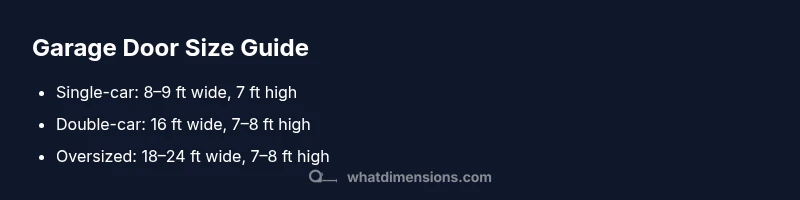
Garage door dimensions typically fall into standard ranges: single-car doors are about 8–9 ft wide and 7 ft high; double-car doors are about 16 ft wide and 7–8 ft high; for oversized or RV doors, widths can range from 18 to 24 ft. Precise measurements should also account for track clearance, headroom, and opener space.
Why Garage Door Dimensions Matter
According to What Dimensions, precise garage door dimensions matter for fit, function, and safety. The rough opening must accommodate the door panel, tracks, rollers, weathersealing, and space for weatherstripping without crowding the frame. This is not only about aesthetics; incorrect sizing can affect insulation, moisture control, and energy efficiency. Header clearance and headroom determine the type of opener and spring system you can install, while misjudging width can cause binding or improper seal. When dimensions are recorded with care, installation teams can plan framing tolerances, hardware placement, and weatherproofing ahead of time, reducing on-site surprises. Whether replacing an old door or upgrading to a taller, more insulated model, start with a reliable measurement strategy and reference industry standards from What Dimensions Analysis, 2026. A little upfront data saves time, money, and stress during installation.
Standard Ranges by Vehicle Type
Garage doors come in several standard widths designed to accommodate common vehicle sizes. For a single-car configuration, the typical opening is 8–9 ft wide and 7 ft high, with variations based on local building codes and space constraints. Double-car doors commonly measure 16 ft wide and 7–8 ft high, offering more reach for two vehicles or extra storage. When bigger vehicles or specialty uses are involved, widths can extend to 18–24 ft, with corresponding height adjustments if the rafters and tracks allow. Remember, these ranges are guidelines; always verify with your builder or retailer before purchasing. What Dimensions Analysis notes that choice depends on structural framing, insulation goals, and regional climate requirements.
Measuring for Your Opening: A Step-by-Step Guide
To ensure the best fit, follow a methodical measurement process. Start by measuring the rough opening at three points across the width (left, center, right) and across the height (top, middle, bottom). Record the smallest width and largest height to ensure the door will clear the existing framing. Check for level corners and vertical plumb on the sides, and measure track depth if you plan to replace tracks or install a different opener. Take note of headroom above the door for the ceiling-mounted components and ensure you have space for weather seals and any insulation. Always cross-check your measurements with manufacturer specifications and consider a pro inspection for accuracy. This approach minimizes substitutions, returns, and delays.
Common Components Affected by Sizing
Sizing isn’t just about the door slab. Tracks, springs, rollers, and openers must align with the door’s width and height. An undersized opening can stress tracks and cause premature wear, while an oversized frame can leave gaps that degrade insulation. Openers require adequate space for safe operation, and the chosen spring system (torsion or extension) depends on door weight and height. When dimensions are off, you may also face noise, misalignment, and uneven operation. Keep a precise record of the rough opening, the door’s finished dimensions, and the track layout to ensure compatibility with your chosen hardware.
Choosing Between Standard vs Custom: Pros and Cons
Standard doors are typically more affordable and faster to install, with reliable availability and proven performance. Custom doors offer exact width, height, panel design, and insulation ratings but can incur longer lead times and higher costs. If you have an unusual opening—perhaps due to nonstandard rough openings or a high attic space—custom sizing might be worth the investment to avoid awkward gaps or fit issues. Weigh convenience and price against future maintenance, as custom options may require specialized parts or service. What Dimensions Team recommends starting with standard sizes and only moving to custom if measurements reveal consistent gaps or the need for specialized features.
Practical Checklist Before Ordering
Before you order, compile a checklist: (1) measure rough opening at multiple points and record the smallest width and tallest height, (2) determine headroom for tracks and opener, (3) decide on insulation needs and panel style, (4) confirm track placement and hinge spacing with the installer, (5) verify local codes and warranty requirements, (6) keep a record of all measurements and manufacturer specs for future reference. This checklist helps ensure you select a door that matches your space, climate, and budget, while avoiding costly returns or ill-fitting installations.
Common garage door size ranges by type
| Door Type | Typical Width | Typical Height | Notes |
|---|---|---|---|
| Single-car | 8-9 | 7 | Standard residential size |
| Double-car | 16 | 7-8 | Wider opening for two vehicles |
| Oversized/RV | 18-24 | 7-8 | For larger vehicles and specialty uses |
Quick Answers
What is the standard width for a single-car garage door?
Most single-car doors are 8–9 ft wide and 7 ft tall. Variations occur by region and manufacturer, so always measure before ordering.
Most single-car doors are eight to nine feet wide and seven feet high.
What is the typical height for garage doors?
Common heights range from 7 to 8 feet. Taller options exist for higher ceilings or specific vehicle needs.
Garage doors are typically seven to eight feet tall.
How do I measure my rough opening?
Measure width at three points (left, middle, right) and height at three points (top, middle, bottom). Use the smallest width and largest height for ordering. Check level and plumb.
Measure width at the sides and middle, and height at the top and bottom to ensure a proper fit.
Can I install a different width than my existing opening?
Yes, but it may require reframing or a custom door. Consult a professional to assess structural changes and cost.
You can change width, but it usually needs reframing and a pro check.
What clearance is needed above the door for tracks and opener?
Headroom requirements vary by system, but most setups need several inches of space above the door for tracks and the opener.
Headroom varies by system; you’ll typically need a few inches above the door for tracks and equipment.
Are non-standard sizes available, and are they more expensive?
Yes, non-standard sizes are available but often cost more and take longer to manufacture and ship.
Non-standard sizes exist, but they usually cost more and take longer to get.
“Accurate garage door dimensions streamline installation and prevent costly adjustments later.”
Main Points
- Measure your rough opening before shopping to avoid sizing errors.
- Start with standard sizes to minimize cost and lead times.
- Check track, rail, and opener clearance in every measurement.
- Factor headroom and ceiling clearance for installation.
- Verify local codes and manufacturer specs for compliance.