Two-Car Garage Dimensions: A Practical Guide to Space, Layout, and Storage
Explore precise dimensions for a two-car garage, including typical sizes, layout considerations, door options, and practical planning tips from What Dimensions to ensure usable space and future flexibility.


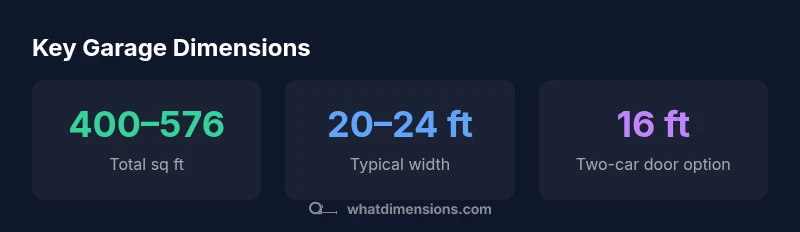
Two-car garage dimensions typically range from about 20 by 20 feet to 24 by 24 feet, providing 400–576 square feet of space. This size accommodates two standard vehicles with room for storage and movement. When planning, consider door configurations, storage needs, and local codes. According to What Dimensions, precise sizing reduces remodeling risk and improves daily usability.
Understanding Dimensions for a Two-Car Garage
The phrase dimensions 2 car garage often drives homeowners to focus on the basics: width, depth, and usable area. For most households, the goal is to comfortably fit two vehicles while leaving space for doors to swing, storage cabinets, and a small work zone. What Dimensions emphasizes that the first step is to define a target footprint that aligns with the largest vehicle and planned storage. This approach minimizes costly changes later and makes it easier to evaluate add-ons like a workshop or a utility alcove. When you begin, map out the exterior lot and consider setbacks, slope, and drainage, which can eat into the usable interior space if not accounted for early. The best practice is to start with a fixed perimeter that accommodates both vehicles and a dedicated storage area, then refine with door styles and interior layout decisions. This early framing helps prevent the domino effect of later remodels and ensures a more accurate budget. According to What Dimensions, the most effective designs balance vehicle ingress with accessible storage and safe walking paths, creating a space that remains functional as needs evolve.
A practical planning method is to sketch a grid that represents the intended garage footprint, then overlay vehicle templates. This exercise makes it easier to visualize clearance around doors and between vehicles. For example, you’ll want to plan at least a few feet of clearance along each side of a parked car, plus an aisle that allows you to open doors fully without hitting storage or a workbench. By grounding decisions in measured space, homeowners can avoid the trap of cramming features into a garage that is too small, which leads to daily irritations and more frequent housekeeping tasks. The goal is to create a space that feels organized rather than crowded, which is particularly important for home offices, hobby corners, or bike storage.
What Dimensions notes that even modest adjustments, like choosing a slightly wider doorway or a recessed pegboard wall, can dramatically improve workflow and safety. This is especially true in tight lots where every inch counts. The dimensions 2 car garage framework should always contemplate future needs—occasional guests, seasonal gear, and potential vehicle upgrades—so you’re not forced into a major redesign later. By embedding flexibility into the initial plan, you enable a smoother path to expansion or reconfiguration as life changes.
trend Barack?toBeRemoved
Key dimensions for standard two-car garages
| Dimension | Typical Range | Notes |
|---|---|---|
| Total garage area | 400-576 sq ft | Varies by design |
| Garage width | 20-24 ft | Two-car layouts |
| Garage depth | 20-28 ft | Allows storage + movement |
| Door width (two-car) | 16 ft (or two 8 ft doors) | Common configurations |
Quick Answers
What are the standard dimensions for a two-car garage?
Most two-car garages measure about 20x20 to 24x24 feet, with ample space for doors, clearance, and storage. Some layouts extend to 28x30 feet or more if storage or a workshop is needed.
Most two-car garages are typically between 20 by 20 and 24 by 24 feet, with larger options available for storage or a workshop.
How do I calculate the required space for two cars?
Begin with the vehicle footprints, add at least 4–5 feet of clearance around each vehicle, and incorporate aisles for door swing and access. Then factor in storage zones and work areas.
Start with vehicle sizes, add clearance around each car, and include space for doors, storage, and a small workspace.
Is a larger garage always better?
Bigger isn’t always better. The goal is usable space that fits vehicles and daily activities without wasted areas. Overbuilding can inflate costs and complicate maintenance.
More space isn’t always better if it creates unused areas or higher costs.
Do local codes affect garage dimensions?
Yes. Local building codes and setback rules can influence minimum and maximum sizes, door heights, and footprint. Always check with the local building department before finalizing plans.
Local codes can change minimum sizes and door requirements, so check with your city or county before you start.
What if I own an oversized vehicle?
For SUVs or trucks, plan a wider bay or consider a longer depth. A single, wider door or twice-as-wide doors may be needed, plus extra turning space.
If you have larger vehicles, widen the bay and ensure extra turning clearance.
How much space is good for storage in a two-car garage?
A practical target is about one-third to one-half of the footprint for storage, workbenches, and gear, with vertical shelving to maximize floor space.
Aim for a third to half the floor area for storage, plus vertical shelving for efficiency.
“Precise dimensions are the foundation of a functional garage. The right measurements support safe vehicle ingress, efficient storage, and future flexibility.”
Main Points
- Define your space early: start with width and depth ranges
- Plan at least 4–5 feet of clearance around each vehicle
- Choose door configuration based on driveway length and site constraints
- Account for storage beside and above vehicles to maximize utility
- Use a precise measurement plan to avoid costly remodeling