Standard Door Dimensions: A Practical Size Guide
Discover standard door dimensions for interior and exterior doors, how to measure openings, and practical sizing tips for remodeling and accessibility, supported by What Dimensions analysis for homes and commercial spaces.


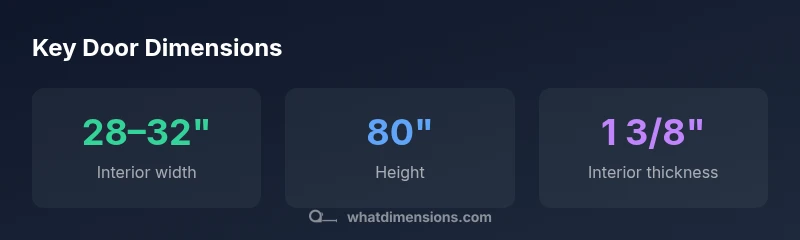
Interior doors typically measure 28–32 inches wide and 80 inches tall, about 1 3/8 inches thick, with exterior doors commonly 36 inches wide and 80 inches tall and thicknesses around 1 3/4 inches. These baselines help ensure proper clearances, hardware fit, and seamless remodeling projects, according to What Dimensions.
What standard door dimensions mean
Door sizing is the backbone of smooth renovations and reliable installations. When homeowners, designers, or students refer to standard door dimensions, they typically mean the conventional size ranges used in residential construction. According to What Dimensions, interior doors in many markets start around 28 inches wide and 80 inches tall, with common thickness near 1 3/8 inches. Exterior doors are often wider, commonly about 36 inches wide, and also around 80 inches tall. These baselines help create consistent in-building clearances, jamb depths, and hardware choices for most rooms. Understanding these baselines helps you compare products, plan openings, and communicate with suppliers with precision.
The shift toward accessible design has nudged some projects toward wider clear openings even when the door slab is the same nominal width. In practice, a door may be specified as 30 inches wide but provided with a jamb that creates a usable clear width closer to 28 inches if hinges and hardware reduce space. Therefore, always verify the actual clear width when measuring for a remodel.
Typical door sizes around the world
Door dimensions vary by region due to architectural traditions, building codes, and manufacturing standards. In the US, interior doors most commonly come in 28, 30, or 32 inches widths with a standard height of 80 inches; 34 inches exists for larger hallways or special rooms. Exterior doors frequently measure 36 inches wide and 80 inches tall, with thicknesses ranging from 1 3/4 inches to thicker options for security or insulation.
In Europe and other markets, door sizes can differ in how widths and heights are listed. Widths are often expressed in millimeters and heights cluster around 2050–2130 mm. Thicknesses and jamb configurations vary by country and by whether the door is interior or exterior. The pattern to remember is that local standards and product lines drive the exact numbers, so always confirm before purchase.
Measuring doors accurately: a step-by-step guide
Accurate measurements prevent mismatches and costly returns. Start by measuring width at three vertical points: top, middle, and bottom. Use the smallest measurement and note any bulges or bevels on the door edges. Measure height at three horizontal points: left, middle, and right, using the shortest reading. Next, measure the door thickness at the hinge side and the edge opposite the hinge. Jamb depth is another key metric; measure from the finished wall surface to the back of the jamb. Finally, confirm door swing direction by observing hinge placement and whether the door opens into or out of the room. Record all measurements in inches and millimeters for cross-checking with product specs.
Planning for renovations: rough openings and jambs
A door slab does not sit alone in a wall. The rough opening must accommodate the door plus a small clearance. Typical practice is to add about 1/2 inch to 1 inch in width and roughly 1/2 inch to 1 inch in height to the door size to determine the rough opening, plus additional space for shims and leveling. Jambs are installed to deliver a square, plumb opening; if the wall framing differs from standard, you may need to adjust the rough opening. When converting between interior and exterior doors, account for weatherstripping, threshold height, and potential dead space at the bottom of the frame. A precise plan reduces installation headaches and preserves finish quality.
Accessibility and building codes: ensuring compliant door sizes
Accessibility requirements often impose minimum clear widths rather than nominal door widths. In many jurisdictions, ADA guidelines require a minimum clear width of 32 inches for accessible doors when the door is open 90 degrees. This distinction means that a 32-inch door slab might not meet the required clear width if hinges or frame plates reduce the opening. Codes differ by region, so check local municipal or state standards. When designing for accessibility, consider wider doors or relocating hinges to maximize clear passage while maintaining aesthetics and hardware alignment.
Interior versus exterior doors: material and thickness considerations
Interior doors typically prioritize light weight and ease of operation, with common thicknesses of 1 3/8 inches to 1 3/4 inches. Exterior doors are thicker for security and insulation, often 1 3/4 inches to 2 inches. The choice of material—solid wood, hollow core, fiberglass, or steel—also influences practical dimensions. For example, a solid core interior door may be heavier but accepts more durable hardware, while hollow core variants save weight and cost. In all cases, verify that the chosen door matches the rough opening and jamb depth, and that the hinge placement aligns with the wall studs for stable operation.
Verifying dimensions before purchase: checklists and samples
Before committing to a purchase, create a simple dimension checklist. Confirm width, height, thickness, jamb depth, and swing direction. Bring a tape measure to the showroom and compare the actual door slab against the catalog measurements at multiple points. If possible, obtain a sample or mock installation to test fit with existing frames, hinges, and strike plates. Finally, document the store SKU and confirm manufacturing tolerances with the supplier. A methodical approach avoids surprises during installation and ensures compatibility with surrounding hardware.
Representative ranges for typical door dimensions by market
| Region/Type | Standard Width | Standard Height | Notes |
|---|---|---|---|
| Interior US (common) | 28–32 inches | 80 inches | Most common residential interior doors in the US |
| Exterior US (common) | 36 inches | 80 inches | Typical exterior door size |
| Interior Europe/UK (varies) | 600–850 mm | 2050–2130 mm | Width/height vary by country; check local standards |
| General note (varies by market) | varies | varies | Check local codes and product specifics |
Quick Answers
What are the most common interior door widths in the US?
Most residential interior doors in the US are 28, 30, or 32 inches wide, with a standard height of 80 inches. The 34-inch option exists for wider hallways and larger rooms. Always verify with product specs and local codes.
In the US, interior doors commonly come in 28, 30, or 32 inches in width with an 80 inch height.
Do international door dimensions differ significantly?
Yes, international dimensions vary by market and country. Widths are often listed in millimeters and heights can range widely. Always reference local standards and specific product tolerances when sourcing doors abroad.
Yes, dimensions differ by country; check local standards before buying.
How do I measure a door for replacement?
Measure width at top, middle, and bottom; height at left, center, and right; and thickness at the hinge and strike sides. Note any bow or warp and confirm swing direction. Use the smallest width and height readings for a safe fit.
Measure width and height at multiple points and check the swing direction.
What is the minimum door width for accessibility?
Many codes require a minimum clear width of 32 inches for accessible doors when opened to 90 degrees. This means the actual door width may need to be wider or hinges repositioned to achieve the safe passage.
Accessible doors typically need a 32 inch clear width when open.
Should I worry about door thickness for replacements?
Yes. Interior doors commonly range from 1 3/8 to 1 3/4 inches thick, exterior doors can be thicker for insulation. Match thickness to frame and hardware, and verify jamb depth.
Yes, thickness matters for fit with frames and hardware.
Do regional standards affect jamb depth?
Jamb depth varies by region and the wall construction. Ensure your rough opening accommodates both the door slab and the jamb with required clearance for shims and weatherstripping.
Jamb depth varies; plan rough openings with clearance in mind.
“Accurate door dimensions reduce installation challenges and ensure compatible hardware and framing across remodeling projects.”
Main Points
- Know the US baselines: 28–32 in wide interior doors, 80 in tall
- Exterior doors commonly use 36 in width and 80 in height
- Measure width, height, and thickness at multiple points
- Allow rough openings with generous clearance for easy installation
- Check local codes for accessibility and regional variations