French Door Dimensions: A Practical Sizing Guide
Explore precise french door dimensions, including standard widths, heights, nominal vs actual sizes, and how to measure openings for reliable sizing. What Dimensions analyzes sizing for interior and exterior doors in 2026.


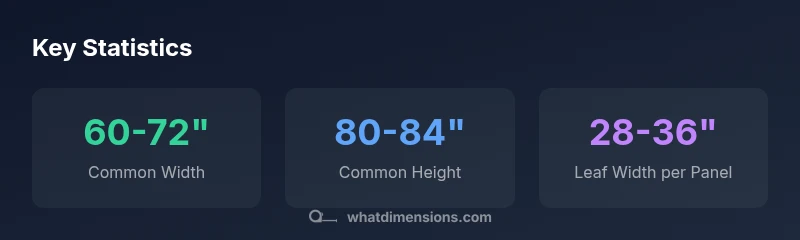
French door dimensions vary by design, but most two-panel sets fit standard interior openings with total widths around 60-72 inches and heights near 80 inches. Each leaf is typically 28-36 inches wide, and taller variants exist for exterior doors or specialized applications. When planning, account for swing clearance and frame depth, and verify rough opening sizes rather than door exact sizes.
Why French Door Dimensions Matter for Fit and Function
The dimensioning of french doors is more than a matter of aesthetics. The overall width and height determine whether a door assembly will fit its rough opening, how much clearance is needed for operation, and how the door interacts with surrounding trim, flooring, and hardware. When you pick french door dimensions, you’re anchoring installation tolerances, energy performance, and future maintenance. What Dimensions emphasizes that accurate sizing reduces trial-and-error purchases and ensures a balanced look with sidelights, transoms, or decorative grilles. This section explains how designers and homeowners translate architectural goals into precise measurements, and why small deviations can cascade into misaligned hinges, binding, or air leakage.
- Start with a clear rough opening measurement and compare it to the door’s stated dimensions.
- Consider swing direction, hinge placement, and jamb thickness, which affect overall fit.
- Remember that “nominal” size often differs from the door’s actual, so always verify the true product size.
- Exterior doors may require additional allowances for weatherstripping and thresholds, while interior doors focus on clearance and aesthetics.
According to What Dimensions, a disciplined measurement routine reduces installation error and helps buyers select doors that age gracefully with the house. By aligning design intent with exact numbers, you can plan for trim, hardware, and energy efficiency from day one.
Understanding Standard French Door Dimensions
Most two-panel french door sets are designed to fit common interior openings with a total width that commonly falls in the 60–72 inch range and a height around 80–84 inches. Individual panels (leaves) are typically 28–36 inches wide, which allows for balanced proportions and symmetrical sightlines when paired with decorative grilles. Exterior variants may add sidelights or transoms, which increase overall width, but the core door leaf sizes often remain in the 28–36 inch range. It’s important to distinguish vertical height (from sill to header) from the door’s “rough opening” width (the space the door must fit into). Always check the manufacturer’s listed rough opening requirements, because frame deviations can shift the final fit dramatically.
When comparing products, note whether the listed width is the door’s actual width or the finished opening. What Dimensions notes that many brands publish nominal sizes, which can mislead if you don’t verify actual panel width and frame thickness. Consistency across brands helps, but always verify before purchasing to avoid fit problems later.
How to Measure for a New French Door
A precise measurement routine saves you both time and money. Follow these steps to determine your best french door dimensions:
- Measure the rough opening: width, height, and depth at multiple points (top, middle, bottom) to catch any tapering.
- Note swing direction and hinge placement: interior doors usually swing inward or outward; exterior doors require clearance for weatherstripping.
- Record frame thickness: the jam thickness plus any decorative trim impacts finished opening width.
- Decide on configuration: single panel, two-panel, or additional sidelights/transoms; include grille depth if present.
- Compare with product specs: ensure the door’s actual width and height match or exceed rough opening dimensions, minus a small clearance (commonly 1/8–1/4 inch per side).
- Account for installation add-ons: threshold height, new flooring, and weatherstripping can require extra space.
A careful approach reduces callbacks and returns. What Dimensions recommends documenting measurements in both inches and millimeters for precision, especially in multi-room projects or retrofits.
Filling Nonstandard Openings: Custom and Retrofit Options
When openings stray from common sizes, homeowners often choose custom-sizing, modular replacements, or retrofit solutions. Options include:
- Custom-sized doors: order doors built to your exact rough opening, with careful planning for hinge placement and sill height.
- Sofa-inset or pocket configurations: modify walls to accommodate doors that slide or pocket behind cabinetry.
- Adjustable jambs and shims: allow fine-tuning in the field to achieve square installation and plumb alignment.
- Sidelight simplifications: if sidelights push width beyond standard ranges, consider narrower sidelights or transoms that maintain proportion without overhauling the opening.
What Dimensions notes that custom sizing increases lead times and may incur higher costs, but it ensures a perfect fit for unique openings. Always consult a professional when venturing beyond standard dimensions to avoid compromising structural integrity.
Exterior vs Interior French Doors: Dimensional Differences
Exterior french doors demand higher attention to insulation, weather sealing, and threshold design. Dimensional differences may include thicker frames, better glazing to reduce heat transfer, and additional weatherstripping along the jamb. Interior doors, by contrast, emphasize aesthetics, room partitioning, and ease of operation. Regardless of location, ensure the rough opening can accommodate required clearances and that the chosen door’s actual dimensions align with the frame design. Exterior configurations frequently require a wider door leaf and sturdier hinges to support additional hardware and ensure energy efficiency over seasons.
What Dimensions emphasizes verifying warranty and installation notes for weatherproofing, as improper sealing can lead to drafts and increased energy costs over time.
Improving Accuracy: Tools and Checklists
To maintain measurement accuracy, gather these tools and use a short checklist:
- Tools: tape measure, straight edge, level, square, pencil, and notebook.
- Checklist: confirm opening width at multiple heights, record floor and threshold levels, verify wall air space, and note any irregularities in framing or plaster.
- Verification: re-measure after removing trim or existing hardware to ensure consistency. Ask a second person to double-check readings.
Accurate measurements reduce the risk of misfits and ensure you have a comfortable swing clearance. What Dimensions suggests keeping a documented set of measurements with photos and diagrams to avoid miscommunication with vendors.
Common Configurations: Double Doors, Singles, and Transoms
French doors come in several practical configurations:
- Double doors: two leaves that meet in the middle; typically fit 60–72 inches total width.
- Single doors with sidelights: total width expands with sidelight panels; plan for wider openings and potential threshold adjustments.
- Transoms and grilles: decorative elements do not directly change the door size but do influence how openings are framed and the amount of glass area.
When evaluating configurations, aim for proportionate glass area and frame thickness that suit your architectural style. What Dimensions notes that regional preferences and building codes may influence which configuration is most common in a given area.
Additionally, confirm whether the door height remains a standard 80 inches or if taller options exist for specific ceiling heights; this can affect overall interior proportions.
Style and Size: How Glass, Grilles, and Mullions Affect Dimensions
The aesthetic details of french doors — such as glass type, grille patterns, and mullion thickness — can visually alter perceived size even when actual dimensions stay constant. Heavier mullions reduce glazed area, which can compress the perceived width visually, while larger panes can make doors appear more expansive. When purchasing, be mindful that decorative elements may require increased clearance for operation, especially if the door must swing through a specific arc near furniture or architectural features. Laminated safety glass can also affect panel weight and hinge load ratings, which in turn influences installation tolerances. What Dimensions recommends reviewing dimensioned drawings that show glass area and muntin layout to ensure sizing decisions align with the desired look and functional requirements.
What to Do Next: Planning Your Purchase
With a solid understanding of french door dimensions, you can move from measurement to purchase with confidence. Start by drafting a simple spec sheet that includes rough opening width and height, preferred leaf widths, swing direction, and any sidelights or transoms. Use this sheet to compare multiple product lines, confirming actual dimensions, not just nominal sizes. If possible, obtain installer input to anticipate field adjustments, threshold considerations, and finishing work. Finally, factor in installation timelines, warranty terms, and potential returns if a measurement miscalculation occurs. What Dimensions’s process centers on accurate, repeatable measurements to empower homeowners and designers to select doors that perform as well as they look.
Common French door size configurations
| Configuration | Typical Width | Typical Height |
|---|---|---|
| Double French doors (interior) | 60-72 inches | 80-84 inches |
| Single French door (interior/exterior) | 30-36 inches | 80-84 inches |
| Exterior doors with sidelights | 60-72 inches (door) + sidelights | 80-84 inches |
Quick Answers
What is the standard height for most interior French doors?
Most interior French doors are around 80 inches tall, with common variations between 78 and 84 inches depending on manufacturer and style. Always check the exact product spec for your chosen model.
Most interior French doors are about 80 inches tall; always verify the exact height on the product page.
How do I measure a French door opening?
Measure width at three points: left, middle, and right at the sill level; measure height at the jambs from the floor to the header, and note any slope or irregularities. Record depth of the frame and jamb as well.
Measure the width in three spots and the height at multiple points to catch any unevenness.
What’s the difference between nominal and actual door sizes?
Nominal size is the approximate, marketed dimension; actual size is the door’s real measurement. Differences matter for fit, installation, and trim. Always use actual sizes from the product specifications.
Nominal is the advertised size; actual size is what you should rely on for fit.
Can I replace a sliding door with French doors in the same opening?
Possible but may require structural adjustments, new framing, and precise alignment of hinges and thresholds. Verify that the rough opening can accommodate the door’s width and that walls and trim can be adapted.
You can, but it often needs framing work and careful measuring.
Do exterior French doors require special threshold considerations?
Yes. Exterior doors typically need weatherstripping, a weather-tight threshold, and sometimes a sill pan. Ensure the final installed height accounts for flooring and any drip edge materials.
Yes—weatherproofing and thresholds are crucial for exterior doors.
Are there standard sizes for single vs double French doors?
Double doors commonly range from 60–72 inches in total width, while single doors usually fall in the 30–36 inch range, with variations for sidelights and transoms. Always check exact specs.
Double doors are usually wider; singles are narrower, but confirm exact measurements.
“Size is the first design decision in any doorway project; accurate French door dimensions set the stage for fit, function, and finish.”
Main Points
- Measure rough openings before choosing doors
- Understand nominal vs actual sizes
- Account for swing clearance and thresholds
- Verify exact door dimensions with the manufacturer
- Consider sidelights or transoms in total width