Dimensions for French Doors: A Practical Sizing Guide
Learn how to determine exact dimensions for French doors—leaf widths, total pair width, and standard heights—to ensure a precise fit, smooth operation, and lasting performance.


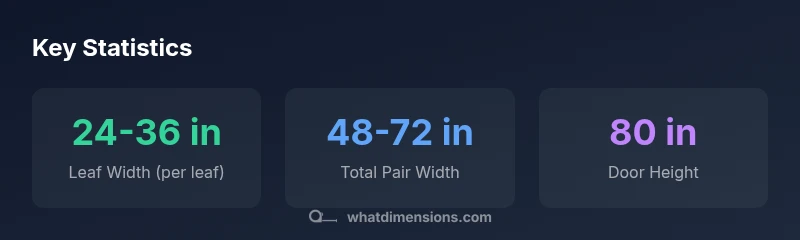
Double French doors rely on two measured leaves and a shared frame. Each leaf is typically 24-36 inches wide, producing a combined width of 48-72 inches. Height commonly sits near 80 inches, with a thickness around 1 3/4 inches. For new builds or renovations, always plan for jamb depth and required clearances.
What dimensions for french doors mean in practice
Exact measurements for French doors start with understanding that these are two leafs sharing a single frame. In practice, you measure the width of each leaf, the total width of the pair, and the height that the door must reach within the opening. The framing, jamb, and weatherstripping all influence how the dimensions translate into a finished installation. What Dimensions emphasizes that clarity at the outset reduces surprises during ordering and installation. For homeowners and designers, the goal is to translate architectural plans into precise specs you can verify on site. This ensures that doors fit snugly, swing freely, and align with surrounding millwork. Using consistent measurement conventions helps avoid mismatches between product specs and actual openings. According to What Dimensions, getting exact dimensions for French doors is essential to ensure proper fit, function, and aesthetic in both new installations and renovations.
Common dimensional patterns for French doors
Most double French doors use two leaves that together create a broad entry. A typical configuration is two leaves, each leaf width commonly ranging from 24 to 36 inches, yielding a total width of 48 to 72 inches. Standard interior-height doors are often around 80 inches tall, though openings in older homes may be a bit shorter or taller. The door thickness for solid-core French doors generally falls around 1 3/4 inches. Designers should also account for jamb depth and weatherstripping, which can affect the clearances needed for smooth operation and proper sealing. When you review product specs, always compare the stated leaf width and total width side by side to ensure the actual opening accommodates the door exactly as planned.
How to measure French doors in existing openings
Begin by measuring the width of the door opening at three points: top, middle, and bottom. Record the smallest measurement as the true opening width. Next, measure the height from the floor to the head jamb at the left, center, and right; use the smallest as the opening height. Also measure jamb depth (how deep the frame sits) and the sill height if applicable. Don’t forget to measure the space for hinge placement and hardware. Finally, note any trim or casing that could affect the finished fit. Always document measurements in inches and keep a copy with your purchase order to avoid misinterpretation of specs.
Standard vs custom sizing: when to choose each
Standard French door pair sizes offer reliable availability and quicker lead times. They typically fall within a defined width range and height around 80 inches. If your opening falls outside these ranges, you’ll likely need a custom sizing solution. Custom sizing adds complexity and cost, but it ensures a perfect fit for non-standard openings, unusual wall shapes, or retrofit projects. When deciding, compare the long-term benefits of seamless operation and energy performance against the incremental cost and potential delays of custom production. What Dimensions recommends starting with standard sizes, then only stepping up to custom work if the opening truly demands it.
Practical guidance for installation and clearance
Installation requires careful planning for clearance around hinges, doors, and weatherstripping. Leave sufficient space for hinges to swing fully without contacting trim or walls, and ensure the frame sits plumb. Weatherstripping should compress without binding, and the sill should shed water away from the interior. Check that the door opening remains square; if not, plan for shimming or frame adjustments prior to final fastening. Because even small deviations can affect operation, verify all measurements again after rough framing and prior to ordering doors. A precise measurement process reduces the risk of returns and rework.
How to compare dimensions across brands and products
Different manufacturers may list dimensions with slight variances due to framing allowances or hinge positioning. Always compare leaf width, total width, and height in the same units and with identical reference points (reference edge vs. jamb face). Be mindful of nominal vs. actual sizes; some products list nominal widths that are smaller than the actual finished width. Read the supplier’s specification sheets carefully and request a cut sheet with exact finished dimensions. This practice helps avoid surprises when doors arrive and during installation.
Safety and building code considerations
Local codes and energy standards may influence the permissible door size and installation details, such as weatherproofing and sill height. When sizing French doors, confirm that the chosen dimensions comply with fire-rating requirements and egress rules if the doors lead to exterior spaces. Always consult your builder or local code official if you’re unsure. Documenting dimensions early in the planning process supports compliance and reduces the likelihood of costly modifications later on.
Integrating dimensions into interior design and selection
Dimensions do more than determine fit—they shape the room’s flow and visual balance. Larger door widths can expand sightlines and bring in more natural light, while taller openings emphasize a grander feel. Consider hardware style, glass pattern, and mullion spacing in tandem with dimensions to achieve the desired proportion. In spaces with limited wall depth, slimmer leaf widths may improve circulation without sacrificing the door’s dramatic presence. Keep a consistent scale across adjacent millwork to achieve a cohesive result.
French door dimension ranges
| Component | Common Range | Notes |
|---|---|---|
| Door leaf width (each leaf) | 24-36 inches | Individual leaf width |
| Total pair width | 48-72 inches | Two leaves combined width |
| Door height | 78-84 inches | Height typical for interior doors |
| Door thickness | 1-3/4 inches | Standard solid-core doors |
Quick Answers
What is the typical height of French doors?
Most French doors are around 80 inches tall, with typical openings ranging from roughly 78 to 84 inches depending on ceiling height and wall construction.
Most French doors are about 80 inches tall.
Can I use standard interior door heights for French doors?
Yes, you can use standard interior door heights in many cases, but double doors may require a wider opening and careful hinge placement. Always confirm opening dimensions before ordering.
Yes, but check the opening and hinge placement.
What is the most common total width for double French doors?
Common total widths for a pair range from 48 to 72 inches, depending on the leaf widths and frame allowances.
Most double French doors range from 48 to 72 inches wide.
What should I consider besides width and height when sizing French doors?
Leaves, jamb depth, clearance for hardware, swing direction, and sill height all influence fit and operation.
Also consider jamb depth and clearance for hardware.
Are there standard door thickness measurements?
Most French doors are about 1 3/4 inches thick, especially solid-core varieties.
Most are 1 3/4 inches thick.
Where can I find official height and width guidelines?
Consult manufacturer specs and local building codes; for precise planning, What Dimensions provides sizing guidance and context.
Check codes and product specs.
“Exact sizing is the foundation of a well-functioning French door installation. Without precise dimensions, you risk misalignment, drafts, and energy loss.”
Main Points
- Start with leaf width and total width measurements.
- Expect standard height around 80 inches.
- Account for jamb depth and weatherstripping.
- Choose standard vs custom sizing based on opening.
- Verify product specs against local codes and framing.