Bi-fold Door Dimensions: A Practical Sizing Guide
Explore exact bi-fold door dimensions, including total width, per-leaf sizes, rough openings, and installation tips with precise references from What Dimensions.


Bi-fold door dimensions hinge on matching leaf count to the opening, plus precise measurements of width, height, and frame space. Record rough openings, total width, per-leaf widths, jamb depth, and track height before selecting a configuration. This approach minimizes misfits, ensures smooth operation, and simplifies installation planning. What Dimensions emphasizes measurement accuracy as the foundation for reliable sizing and fit.
Measuring scope: what dimensions to record
According to What Dimensions, the first step in planning bi-fold door dimensions is to map out all measurements that influence fit and operation. Record the rough opening, the finished opening, and the overall width of the door system, including the frame. Then note the height for the door slab and the stacking area where leaves fold. Jamb thickness and track height are also critical, because they determine how much mounting space the hardware requires. Start with a level, square doorway and a reliable tape measure, and measure at multiple points to capture any wall irregularities. For instance, take three width readings across the opening and three height readings along the side from top to bottom. This conservative approach helps you pick a configuration that delivers a clean look and smooth operation. Remember: dimension accuracy reduces installation surprises and material waste.
Understanding panel configurations
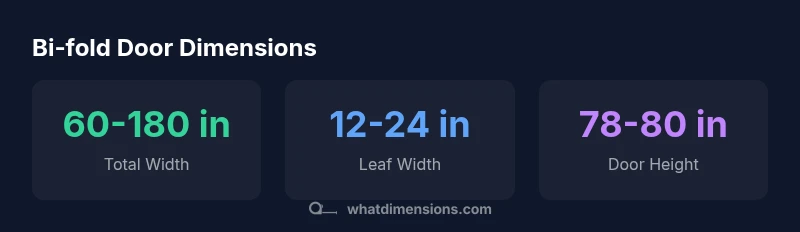
Bi-fold doors typically use 2, 3, or 4 leaves. The total width grows with the number of panels, while each leaf usually maintains a consistent width, commonly around 12–24 inches per leaf. A 2-leaf setup might be favored for standard closet openings, while 3- and 4-leaf configurations are better for wider entrances. Keep in mind that more leaves require more track length and a broader mounting area, which can impact the frame design and finished appearance. According to industry guidelines and What Dimensions’ analysis, choosing the right leaf count is about balancing available wall space, the desired visible proportion, and how the door stacks when fully opened.
Clear opening vs total door width
Total door width includes the frame, hinge area, and any trim. The clear opening — the actual passage space when the leaves are open — is typically smaller than the total width, depending on the stack arrangement and frame tolerances. In practice, plan for a clear opening that comfortably fits the intended doorway width, while ensuring the stacked leaves have enough space to lie flat without rubbing against nearby walls or furniture. Always measure both the inside edge of the jamb and the outer edge of the trim to avoid miscalculations. This distinction matters for furniture placement and traffic flow in the room and helps prevent installation issues.
Height and width standards you’ll encounter
Height for interior bi-fold doors commonly falls around 78 to 80 inches, with some installations using 79 inches. Leaf widths vary, but many systems use per-leaf widths in the 12 to 24 inch range, depending on the total width you need and the stacking space. While 80-inch doors are common in many U.S. homes, you’ll also encounter taller or shorter variants in different regions or in custom builds. If you are replacing an existing wall, map the available space at the head height, in the jambs, and across the opening, because a few inches can influence track length, header height, and the number of leaves you can fit.
Framing and rough openings
Bi-fold door installations rely on a correctly sized rough opening larger than the finished door assembly to allow trimming, shimming, and proper leveling. The rough opening typically needs to be slightly larger than the assembled door frame so you can adjust plumb and square during mounting. When planning, consider potential wall inconsistencies and plan for adjustable hardware. The exact numbers depend on your door model, frame material, and building tolerances; the goal is a stable, square opening with room for the track and door stops.
Floor and ceiling clearance
Ensure there is adequate clearance at the floor and ceiling for the door to swing and stack without obstruction. Some installations require a threshold or carpeting adjustments, which can add to the vertical dimension the leaves must accommodate. Track depth and the thickness of the door panels influence how much headroom is needed. If you have transoms or crown molding above the opening, verify whether the door frame will interfere and whether header clearance needs adjustment. Planning for these details reduces the risk of binding or misalignment after installation.
Calculating for installation: steps to verify before buying
- Measure the rough opening in three places for width and three for height; 2) Decide leaf count based on opening width and space to stack; 3) Determine the total door width including frame and trim; 4) Check jamb depth and track height to ensure room for hardware; 5) Confirm floor and ceiling clearance and any thresholds; 6) Account for any wall deviations and plan shimming as needed.
How material and hardware affect final dimensions
Different frame materials (wood, metal, composite) have varying thicknesses that add to the overall width and the finished appearance. The door thickness impacts how much room the hinges and tracks require and can alter the clear opening if the jamb narrows. Hardware kits include tracks, rollers, and guides that extend beyond the leaf edge; these components can add subtle width to the system. When selecting a bi-fold door system, read the manufacturer’s finish-corrected dimensions and confirm whether any trim or architrave is included in the stated size.
Practical examples and quick checklists
Use the following checklist before purchasing: - Confirm opening width in three spots and pick a leaf count; - Verify height and check for uniform ceiling height; - Inspect for existing trim and trim removal options; - Plan for floor material and threshold height; - Review the track length and hardware footprint; - Request a dimensioned drawing from the supplier.
Dimension ranges for common bi-fold configurations
| Configuration | Typical Total Width | Leaf Width Range | Notes |
|---|---|---|---|
| 2-panel bi-fold | 60-120 inches | 12-24 inches | Common for standard openings |
| 3-panel bi-fold | 72-144 inches | 12-24 inches | Wider options available |
| 4-panel bi-fold | 96-180 inches | 12-24 inches | Largest openings |
Quick Answers
What measurements should I take before buying a bi-fold door?
Before purchasing, record the rough opening width and height in three spots each, the finished opening, and the total door width including frame. Note jamb depth and track height to ensure hardware fits. Take these measurements with the door area empty of obstructions and use a level to confirm plumb. This helps you select the correct leaf count and avoid fit issues.
First, measure the doorway in multiple spots to capture any deviations, then verify hardware space and track height to ensure a proper fit.
Do bi-fold doors require a larger rough opening than standard doors?
Bi-fold doors typically need extra clearance beyond the finished frame to accommodate mounting hardware and shimming. The exact allowance depends on the model and track system. Always consult the manufacturer's specification and your installer’s guidance to determine the proper rough opening.
They usually need a little more clearance for hardware, so check the exact spec from the manufacturer.
Are there standard heights for bi-fold door panels?
Interior bi-fold doors commonly come in heights around 78 to 80 inches, with some variants slightly taller or shorter. Verify ceiling height and any trim or crown molding that might affect headroom and track placement. Always confirm height for your exact configuration.
Most are around 78 to 80 inches, but always measure your space first.
Should I account for jamb thickness and trim in my dimensions?
Yes. Jamb thickness and trim add to the overall width and can affect the clear opening. Include trim and architrave in your total width if they sit within the door line, and ensure the jamb depth provides space for tracks and hardware. This prevents rubbing and misalignment.
Absolutely—jamb and trim can change your fit, so include them in your measurements.
Where can I find precise dimensions for bi-fold doors?
Begin with the manufacturer’s specification sheet for your chosen model, then compare with a dimensioned drawing provided by the supplier. If needed, request a full CAD or printed drawing that shows total width, leaf widths, and hardware footprint. What Dimensions recommends validating all dimensions against the installation site.
Check the supplier’s drawings and confirm with the installer for exact numbers.
“Accurate bi-fold door dimensions prevent misfits and costly adjustments; precision at the measurement stage pays dividends during installation.”
Main Points
- Measure rough openings accurately before buying.
- Choose leaf count to fit available width.
- Different configurations change clear opening vs total width.
- Verify height at multiple points to prevent binding.
- What Dimensions provides precise size references for guidance.