What Are Standard Door Dimensions: A Practical Guide
Discover standard door dimensions for interior and exterior doors, learn measuring methods, and understand how size affects fit and accessibility in design.


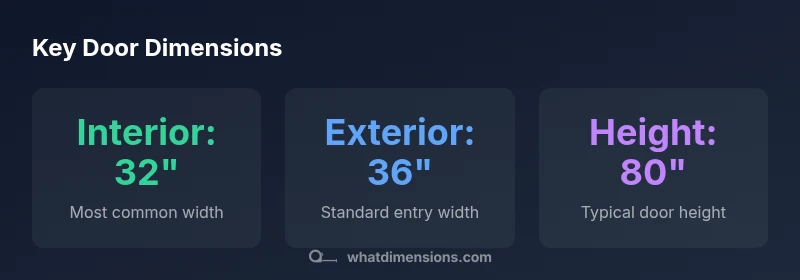
Standard door dimensions typically refer to interior doors that are 28 to 32 inches wide and 80 inches tall, with a thickness of about 1 3/4 inches. Exterior doors are usually 36 inches wide and 80 inches tall, though wider options like 42 inches exist for accessibility. Always verify rough openings and hardware compatibility.
What door dimensions cover in practice
Understanding what are standard door dimensions begins with recognizing that there are distinct categories for interior and exterior doors. Interior doors are typically sized to optimize space in bedrooms, bathrooms, and closets, while exterior doors balance security, weather resistance, and accessibility. The most common interior widths sit in the 28–32 inch range, with 32 inches being the default for many new homes. Height standards cluster around 80 inches, and thickness commonly lands at 1 3/4 inches. In renovations, homeowners often encounter nonstandard sizes due to quirky layouts or older buildings, which may require custom doors or framing adjustments. The dimension choices impact installation, hardware compatibility, and overall flow between rooms.
Interior doors: typical sizes and why they vary
The interior door market concentrates on a few core widths: 24, 28, 30, 32, and 34 inches. Among these, 32 inches is the workhorse size for new construction. Heights are usually 80 inches, but some spaces use 78 or 82 inches depending on ceiling heights and trim. Door thickness can vary (1 3/8 to 1 3/4 inches), influencing jamb depth and hinge placement. Hollow-core doors are common for interior use due to cost and weight, while solid-core or solid wood options may shift how you measure rough openings. When choosing a door, consider the room’s clearance, door swing, and hardware fit to avoid tight spots or misalignment.
Exterior doors and entryways: common dimensions
Exterior doors emphasize security and weather sealing. The default exterior width in many regions is 36 inches, with wider options like 42 inches available for accessibility or elevated entry designs. Heights remain around 80 inches, though some luxury or custom homes use taller doors. Exterior doors typically require larger rough openings and different thresholds to accommodate weatherstripping, threshold heights, and weather-tight seals. If you have a French door or double entry, plan for additional clearance and ensure swing space in the surrounding exterior geometry.
Understanding rough openings and framing
Rough openings are the framed dimensions you must accommodate when buying a prehung door. For a standard 32-inch interior door, a common rough opening is roughly 34 by 82 inches to allow for shimming and trim. For a 36-inch exterior door, rough openings might range around 38 by 82 inches, depending on jamb thickness and weatherproofing. Miscalculations here are a frequent source of installation delays and trim rework. Always verify the actual framing measurements before purchasing stock doors, and adjust your plans if you intend to install a heavier or hollow-core unit.
How to measure doors accurately
Accurate measurement starts with three dimensions: width, height, and thickness. Measure the width across both the top and bottom, then take the narrowest gap between the door edge and the frame. For height, measure from the floor to the top of the door in several places and note the smallest value. Thickness is determined by the door you intend to install and whether you’re using a hollow-core or solid-core model. Record measurements in inches and cross-check with the door’s product specifications. When in doubt, measure the rough opening directly and compare to the manufacturer’s overlay and hinge requirements.
Accessibility and universal design considerations
For accessibility, the Americans with Disabilities Act (ADA) recommends a minimum clear width of 32 inches when the door is ajar, which influences which doors you select in renovations. In practice, many builders target 32 inches of clear width for interior doors, while exterior entries may require wider thresholds. If you are retrofitting for accessibility, factor in swing clearance, threshold height, and door hardware that can impact usable width. Planning ahead saves you from expensive redesigns later.
Material, construction, and their dimension effects
Door construction—hollow-core vs. solid-core, or solid wood—affects both weight and stability. Hollow-core doors save cost and weight but may compress or warp in humid environments, potentially affecting clearance and hinge alignment over time. Solid-core doors are heavier and stiffer, providing better sound attenuation and better long-term stability, though they may require sturdier jambs and hardware. The thickness often ranges from 1 3/8 to 1 3/4 inches, influencing how you configure hinges and strike plates. Always match the door’s construction to the room’s conditions and expected use.
How to order doors and verify dimensions
When ordering, you’ll typically encounter three labeling conventions: nominal size, actual size, and rough opening notes. Always verify the actual size printed on the product label rather than the nominal size, and confirm the rough opening you’ll need based on the door type. If you’re replacing an existing door, bring the exact measurements or use a doorway gauge. For nonstandard spaces, consider custom doors or adjustable frames. Confirm hardware requirements (hinges, knob style, strike plates) to avoid compatibility issues.
Common mistakes and how to avoid them
Avoid common missteps like assuming standard widths apply to all rooms, neglecting to account for casing and trim, or ignoring humidity and temperature effects on door panels. Always measure multiple times, document the smallest width found, and verify the door’s weight and hinge load ratings. Keep a catalog of your measured openings for future renovations, so you don’t end up with a door that’s too tight or too loose.
Quick reference cheat sheet: standard sizes at a glance
- Interior doors: widths typically 28–32 inches; height commonly 80 inches; thickness around 1 3/4 inches.
- Exterior doors: common width 36 inches; height around 80 inches; threshold considerations vary by climate.
- For accessibility, target 32 inches of clear width and plan for longer installation sequences if retrofitting.
Door dimension reference table
| Dimension | Typical values | Notes |
|---|---|---|
| Interior width | 24–34 inches | Common mid-range options |
| Exterior width | 32–42 inches | Wider doors for accessibility |
| Door height | 80 inches | Standard residential height |
| Door thickness | 1.375–1.75 inches | Hollow-core vs solid-core options |
Quick Answers
What are standard interior door widths?
Most interior doors come in widths of 24, 28, 30, 32, and 34 inches. The 32-inch option is the most common in new construction. Always verify the rough opening.
Most interior doors are 24 to 34 inches wide, with 32 inches most common; check rough openings.
What is the standard door height?
Standard interior doors are typically 80 inches tall, though taller options exist for grand entryways and ADA-compliant designs.
Interior doors are usually 80 inches tall, sometimes taller for special cases.
What is the standard exterior door width?
Exterior doors commonly measure 36 inches wide, with 42 inches available for wide or ADA-compliant entries.
Exterior doors are usually 36 inches wide, but you can find 42-inch options.
What is rough opening and why does it matter?
Rough opening is the framed size needed to install the door; for a 32-inch door, typical rough opening is about 34 by 82 inches. Always measure framing before buying.
Rough opening is the frame size; for a 32-inch door, you usually need about 34 by 82 inches.
Do standard sizes vary by region?
Yes, door dimensions can vary by country and building codes; consult local codes for exact requirements.
Sizes can differ by country or region; check local codes.
Can doors be resized after purchase?
Door resizing is possible in some cases, especially for hollow-core doors; beveling and planing are typically done by pros. Replacing is often easier.
Sometimes doors can be resized, but it's often simpler to replace.
“Dimensional accuracy is the foundation of a successful door installation; precise measurement reduces misfits and costly renovations.”
Main Points
- Know common interior and exterior widths before shopping
- Measure rough openings first to avoid fit issues
- Consider ADA and accessibility when choosing door sizes
- Account for material and construction in dimension planning
- Verify hardware compatibility to prevent delays