Bathroom Door Dimensions: A Precise Sizing Guide
Explore bathroom door dimensions with precise sizing guidance, ADA considerations, and space-saving options for every layout. Learn how to measure, choose widths, and ensure accessibility.


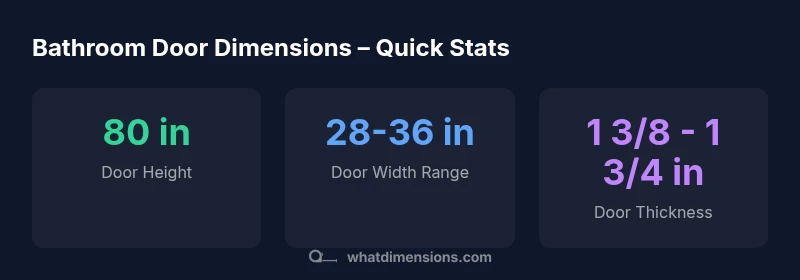
Bathroom door dimensions typically follow standard interior sizes: doors are about 80 inches tall, with common widths ranging from 28 to 36 inches. Finish thickness is usually 1 3/8 inches to 1 3/4 inches. For accessible bathrooms, plan a 32-inch clear width in accordance with ADA standards to ensure easy passage.
Understanding bathroom door dimensions
Bathroom door dimensions form the backbone of space planning in residential and institutional bathrooms. The keyword bathroom door dimensions should guide your decisions from the initial sketch to the final installation. In most homes, doors adhere to standard interior sizes—80 inches in height—for a balanced ceiling-to-door ratio, with widths typically ranging from 28 to 36 inches depending on the layout and traffic. When designing a bathroom with multiple fixtures, such as a vanity, toilet, and tub, the door size can influence clearance, swing direction, and even the choice between a standard hinged door or a space-saving alternative. What Dimensions emphasizes measuring both the door slab and the rough opening to ensure a proper fit, as small discrepancies can complicate hardware installation and trim finishing. For homeowners planning renovations, verifying existing bathroom door dimensions early helps avoid later adjustments that can disrupt schedules and budgets.
Key measurement benchmarks for bathroom door dimensions
A practical grasp of bathroom door dimensions includes recognizing the core benchmarks: height, width, thickness, and the resulting clear width when the door is open. The majority of interior doors share a height of about 80 inches, which aligns with typical ceiling heights in many homes. Widths vary more widely: 28, 30, 32, 34, and 36 inches are common choices. The thickness often falls in the 1 3/8 inch to 1 3/4 inch range, which affects jamb depth and hinge placement. When you’re prioritizing accessibility, the minimum clear width becomes crucial: a 32-inch opening is widely recommended and aligns with many building codes and accessibility standards. The right combination of height, width, and thickness influences swing direction, hardware type, and trim fit, so precisely documenting bathroom door dimensions before ordering is essential.
Accessibility considerations and door clear width
Accessibility considerations are central to modern bathroom design. The ADA Standards specify a minimum clear width of 32 inches for door openings, which translates into practical planning for door frames, hinges, and hardware. In practice, this might mean selecting a 32-inch-wide door or ensuring that the door leaf plus hinge setback provides an unobstructed 32-inch passage when the door is fully open. If you are renovating an older bathroom with a narrow doorway, options exist to widen the doorway, install a pocket or sliding door, or reconfigure the doorway location. The bathroom door dimensions you choose should balance ease of use with spatial constraints, ensuring comfortable access for all household members, including those using mobility aids.
Space-saving options for small bathrooms
Small bathrooms require innovative solutions without compromising door functionality. Pocket doors and bi-fold doors are popular space-saving strategies that minimize the swing area, effectively increasing usable floor space. When selecting a pocket door, ensure the door thickness and hardware fit within the wall cavity, and confirm the rough opening can accommodate the track hardware. Bi-fold doors, though compact, may require additional wall space to accommodate their folding panels. In some cases, a pivot door or a radius corner door can optimize corner spaces where straight swings are restricted. Bathroom door dimensions should be paired with a careful layout assessment to maximize both accessibility and aesthetics in compact layouts.
Practical measurement steps: how to measure for a new door
Accurate measurement is the foundation of a successful replacement or new installation. Start by measuring the wall opening at three points: top, middle, and bottom, to catch any splay or out-of-square conditions. Record the nominal width between jambs, then measure door thickness by removing a hinge and measuring the leaf. Don’t forget to account for hinge placement, strike plate location, and door hardware depth, which can slightly alter the finished opening. When shopping for doors, bring these measurements to the retailer and verify that the rough opening you have allows for jambs, shims, and shimming. Finally, check that the door swing direction matches traffic flow and that there is adequate clearance for fixtures and cabinetry adjacent to the doorway.
Materials, finishing, and hardware implications on dimensions
Material choice and finish influence the effective dimensions due to frame construction and hardware profiles. Solid wood or MDF cores may require different jamb depths than hollow-core doors. The thickness range (1 3/8 in to 1 3/4 in) interacts with strike plates and door hardware; ensure hinge screws have enough bite into solid framing. If you’re installing an exterior-looking bathroom door in an interior setting, consider moisture-resistant finishes and trim profiles that won’t distort over time. Finally, always verify that the chosen trim, casing, and threshold heights align with the bathroom door dimensions you’ve specified to prevent rubbing, binding, or uneven gaps around the frame.
Bathroom door dimensions quick reference
| Dimension | Typical Range | Notes |
|---|---|---|
| Height | 80 in | Standard interior door height; check ceiling clearance |
| Width | 28-36 in | Common for bathrooms; wider for accessibility |
| Thickness | 1 3/8 in – 1 3/4 in | Affects jamb depth and hardware |
| Clear width (ADA) | 32 in min | Required for accessible doors |
Quick Answers
What is the standard height for a bathroom door?
Most interior doors are 80 inches tall, which matches typical ceiling heights. Always verify your ceiling height before ordering. This ensures a clean look and proper clearance around cabinets and fixtures.
Most bathroom doors are about 80 inches tall, which fits standard ceilings. Check your ceiling height to confirm.
What width is typical for bathroom doors?
Common widths include 28, 30, 32, 34, and 36 inches. For accessible design, aim for 32 inches clear width in the doorway, adjusting the opening and hardware as needed.
Bathrooms usually use 28 to 36 inches wide doors, with 32 inches favored for accessibility.
ADA compliance needed for all bathrooms?
ADA considerations apply when accessibility is a priority. The standard recommends a minimum of 32 inches clear width for door openings to enable passage.
ADA guidelines recommend a 32-inch clear width for accessible doors.
What is rough opening and why does it matter?
The rough opening is the framed size before door installation. It must be larger than the door and jamb to allow for shims, hardware, and adjustments during installation.
The rough opening is the framed size before you install the door; you need extra space for hardware and shims.
Are pocket doors good for small bathrooms?
Pocket doors save swing space by sliding into the wall. They work well in tight layouts but require wall cavities and precise installation.
Pocket doors save space and are great for small bathrooms, when there’s room to install them.
How do I measure for a new bathroom door?
Measure height at three points, width at the jambs, and door thickness. Confirm hinge placement and ensure the rough opening accommodates jambs and trim.
Measure height, width, and thickness, then check hinge and jamb space.
“Precise measurement is the foundation of a comfortable, accessible bathroom. Choose door dimensions that respect both function and style.”
Main Points
- Know standard height and width ranges for bathroom doors
- Prioritize a 32-inch clear width for accessibility
- Consider space-saving options like pocket or bi-fold doors
- Measure rough openings accurately before ordering
- Factor hardware, swing direction, and trim in final dimensions