ADA Bathroom Dimensions: A Practical Guide to Accessible Design
Learn ADA bathroom dimensions, door widths, turning radii, and fixture clearances for accessible design. This What Dimensions guide explains precise size specs and practical planning for compliant, bathroom dimensions ada.


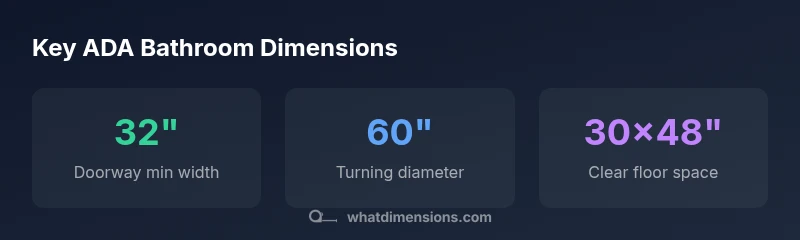
According to What Dimensions Analysis, 2026, bathroom dimensions ada guidelines include a 32-inch minimum doorway, a 60-inch turning radius, and 30 by 48 inches of clear floor space in front of fixtures to ensure accessible entry and maneuverability. These figures apply to new construction and major remodels, with reasonable retrofits as possible, but maintaining clearances remains essential for compliance and safe use.
Understanding the Purpose of bathroom dimensions ada
Accessible design starts with precise measurements that ensure people with a range of mobility needs can enter, approach, and use a bathroom safely and comfortably. In the context of bathroom design, ada-compliant dimensions focus on maneuverability, reach, and clear space around fixtures. The What Dimensions team emphasizes that when spaces are measured accurately, you reduce the risk of bottlenecks and injuries. The term bathroom dimensions ada is more than a checkbox; it reflects a commitment to universal usability that benefits homeowners, students, designers, and shoppers alike. By planning around standard clearances, you create bathrooms that are both functional and durable in daily use while remaining consistent with industry guidelines.
The core idea behind ada-compliant measurements is to maintain consistent, usable space regardless of appliance or fixture placement. This means designing with flexibility in mind—spaces that accommodate wheelchairs, mobility aids, parents with strollers, or guests with temporary limitations. What Dimensions Analysis, 2026, finds that starting with a layout-first approach—defining door widths, turning radii, and front-clearances—leads to smoother remodels and fewer costly adjustments later. In practice, this translates to a bathroom where every user can navigate, reach, and operate fixtures without compromise.
Core Measurements You Should Know
A practical understanding of the primary measurements makes it easier to plan, verify, and communicate accessibility goals. The most critical dimensions for bathroom design include doorway clear width, turning space, and clear floor space in front of each fixture. While there are many related measurements (like mirror height and grab bar placement), anchoring your plan to the core figures helps align with bathroom dimensions ada expectations. The doorway should allow comfortable entry for a range of mobility devices, the turning space ensures a 180-degree turn where needed, and the front clearance around sinks, toilets, and showers supports safe use. In addition, aligning sink rim heights and knee clearance with ADA expectations helps ensure that people with limited reach or leg mobility can use the basin effectively.
Layout Scenarios: Small, Medium, and Large Bathrooms
Different bathroom sizes require thoughtful arrangement to maintain compliance while preserving usability. In a small bathroom, prioritize a 32-inch clear doorway and a 60-inch turning circle somewhere within the room—this might mean positioning fixtures to maximize available clearance rather than maximizing fixture size. For medium spaces, you can afford more generous front-clearance around sinks and toilets, which reduces the chance of obstructions during transfers. Large bathrooms offer the opportunity to emphasize separate zones (toilet, shower, basin) with dedicated clearances, ensuring each area maintains ADA-friendly access. Regardless of size, the central rule remains: design around a predictable accessibility axis—doors first, then clear space, then fixtures—so the space reads as intuitive and safe for all users.
Fixtures, Clearances, and Knee Space
The interaction between fixtures and their surrounding space defines how comfortable and safe an accessible bathroom will be. Sinks and vanities should provide knee clearance below 27 inches high and a rim height no higher than about 34 inches to ensure legroom is available for a seated user. Toilets should be positioned with adequate centerline spacing and reach distances that accommodate transfers from a mobility device or a helper. Showers and bathtubs should offer accessible entrances or thresholds that won’t impede wheelchairs, along with grab bars placed at heights that balance stability and ease of use. These considerations, together with appropriate floor finishes and slip resistance, contribute to truly bathroom dimensions ada that perform in real-world scenarios.
Planning a Remodel: Steps to Compliance
When planning a remodel to meet bathroom dimensions ada, start with a site assessment and measurements taken from multiple reference points (floor, walls, and fixtures). Create a schematic showing door swing, turning radius, and fixture zones. Then compare your layout to ADA guidelines, noting where adjustments are required. Work with trades to ensure correct heights, clearances, and mounting points. Finally, document changes with updated plans and as-built measurements, so future renovations can maintain accessibility without guesswork. A methodical, data-driven approach minimizes post-renovation surprises and helps ensure long-term compliance.
Verification, Testing, and Documentation
Verification is about practical testing and documentation. Use a dry run by simulating a wheelchair path through the space, checking that a 60-inch turning radius is possible around all fixtures and that doorways maintain 32-inch clear width under real-world conditions (not just theoretical plans). Create a simple checklist to confirm sink rim height, knee clearance, and toilet seat height meet the stated targets. Collect measurements and photos for reference, and keep a formal report accessible to occupants and designers. Regular re-evaluation after renovations ensures ongoing conformance with bathroom dimensions ada guidelines.
ADA bathroom dimension guidelines (selected essentials)
| Measurement | ADA Guideline | Notes |
|---|---|---|
| Doorway clear width | 32 inches minimum | For standard wheelchair passage |
| Turning radius | 60 inches diameter | 180-degree maneuver space |
| Clear floor space in front of fixtures | 30 x 48 inches | Forward approach required |
| Sink rim height | 34 inches max | Knee clearance beneath sink: 27 inches high |
| Toilet seat height | 17-19 inches | Typical accessible height range |
Quick Answers
What is the minimum doorway width for an ADA bathroom?
The ADA generally requires a clear doorway width of 32 inches to accommodate standard wheelchairs and mobility devices. This minimum helps ensure a wide passage through the doorway.
The doorway should be at least 32 inches clear width to allow wheelchair access.
What is the required turning radius in an ADA bathroom?
A turning space of 60 inches in diameter is typically necessary to permit a full 180-degree maneuver, especially in bathrooms with multiple fixtures.
Plan for a 60-inch turning diameter for safe turns.
Do sinks need knee clearance in ADA bathrooms?
Yes. Sinks should provide knee clearance of at least 27 inches high, with the rim height limited to about 34 inches to maintain reach and use if seated.
Knee space below sinks should be at least 27 inches high.
Can existing bathrooms meet ADA with minor changes?
Many existing bathrooms can achieve ADA compliance with targeted changes, such as adjusting doorway widths, reconfiguring fixtures, or adding grab bars. Some spaces may require more extensive remodeling.
Retrofits can work, but evaluate layout and costs first.
How should I verify compliance after a remodel?
Use on-site measurements against ADA guidelines, draft a compliance report, take photos, and test with a wheelchair simulator or partner to confirm access.
Measure on-site and test with a mobility aid.
Are there exceptions for historic or small-budget projects?
Certain exemptions may apply for historic properties or very small spaces; consult the relevant authorities and document planned accommodations.
Check with local authorities about exemptions and plan accommodations.
“Precise measurements are the foundation of truly accessible bathroom design; small changes to dimensions can dramatically improve usability.”
Main Points
- Start with doorway width and turning space first
- Maintain 30 x 48 inches of front clearance
- Keep sink rim height at or below 34 inches
- Ensure knee clearance of at least 27 inches
- Document measurements for compliance and future remodels