Entry Door Dimensions Standard: A Practical Measurement Guide
Learn the standard entry door dimensions, including typical heights, widths, and how to measure for new installations. This guide from What Dimensions clarifies common sizes, regional variations, and accessibility considerations.


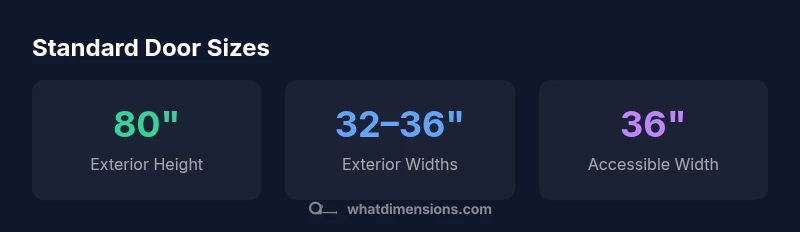
Standard exterior entry doors are typically 80 inches tall with common widths of 32 or 36 inches. Some older homes use 30-inch doors. For accessibility, 36 inches is preferred where codes allow. Exterior doors may vary by regional practice and frame builders. Always measure the rough opening and plans before purchasing to avoid ordering errors.
What the term 'entry door dimensions standard' means in practice
When designers, homeowners, and builders refer to entry door dimensions standard, they mean the typical height, width, and framing allowances used for exterior doors in residential construction. In many regions, the baseline is an 80-inch-tall door with doors commonly offered in 32-inch and 36-inch widths. Knowing these baselines helps you plan jambs, trim, and weathersealing before you shop. According to What Dimensions, starting from a standard baseline reduces ordering errors and ensures compatibility with common jambs.
Typical exterior door sizes by region
In the United States, the de facto standard exterior door height is 80 inches, and common widths are 32 inches or 36 inches. Some homes may have 30-inch doors, especially in older constructions or smaller entryways. Canada and parts of Europe may have similar baselines, but regional variations exist due to framing practices and building codes. When you visit showrooms, you’ll often see these sizes represented across many model lines, with 30–32 inch doors appearing in narrower entryways and 34–36 inch options for accessible designs.
How to measure existing doors accurately
To measure, start with the height from the floor to the top of the door frame (not the drywall). Then measure the width at three points: hinge side, middle, and doorknob side; note the smallest width. Record the jamb thickness and any present weatherstripping or trim. Finally, verify the rough opening height and width to ensure the new door will fit with shims and proper weather sealing. Always measure on the actual site rather than relying on existing hardware alone.
What to consider when selecting new doors
Key factors include rough opening, swing direction, and the intended use. A 36-inch wide door offers greater accessibility but may require a wider frame. Consider the door slab thickness, hinge placement, and whether you need extra insulation or security features. For energy efficiency, look for doors with a solid core and proper weatherstripping. If retrofitting, factor in existing jambs and trim so the new unit aligns with the wall plane.
Special cases: interior doors vs exterior doors
Interior doors typically share the same basic height as exterior doors (around 80 inches) but often come in a narrower set of widths, such as 28, 30, and 32 inches. Exterior doors require weatherstripping, deadbolts, and thicker frames. Always confirm the compatibility of the door with your current jamb depth and trim. For interior installations in tight spaces, consider pocket or French doors as alternatives when standard widths are impractical.
How standards impact installation, codes, and accessibility
Standards influence rough opening dimensions and code compliance. The ADA guidance and many building codes favor a minimum clear width of 36 inches for accessible entry, which affects door ordering and jamb sizing. When in doubt, confirm with local inspectors and choose doors that can be adjusted to match rough openings. Planning ahead for weathersealing, thresholds, and sill height will reduce post-install surprises and service calls.
Typical dimensions and rough opening ranges for standard entry doors
| Dimension | Typical Size | Notes |
|---|---|---|
| Exterior door height | 80 inches | Standard for most single-family homes |
| Exterior door width | 32–36 inches | Common options; 36 inches for accessibility |
| Rough opening height | 82–84 inches | Depends on frame and trim |
| Rough opening width | 34–38 inches | Depends on jamb and hinge placement |
Quick Answers
What is the standard exterior door height in most homes?
Most exterior doors are 80 inches tall. This height fits typical jambs and ceiling spans in residential construction, but always measure on site to confirm.
Most exterior doors are 80 inches tall; measure on site to confirm before ordering.
What widths are considered standard for exterior entry doors?
Common exterior door widths are 32 inches and 36 inches. Some doors also come in 30 inches, especially in older homes.
Common widths are 32 or 36 inches; older homes may have 30-inch doors.
Are interior doors measured the same way as exterior doors?
Yes, you measure height and width of the door slab and account for the door frame. Interior doors typically use 80 inches height with 28–32 inch widths.
They’re measured the same way; height and width matter for fit.
What is the minimum ADA width for a doorway?
The minimum clear doorway width for accessibility is commonly 36 inches in many codes, but verify local requirements.
ADA doors are usually at least 36 inches wide, but check your local codes.
How do I determine rough opening for a new door?
Take three measurements: height, width, and corner squareness of the opening, then choose a door size that fits with the jamb and shims.
Measure the rough opening in height and width, note squareness, then pick a door that fits.
Where can I find reliable dimensions references for doors?
Consult manufacturer catalogs and building codes; What Dimensions Analysis, 2026 provides general guidance on standard sizes.
Check manufacturer catalogs and standards; sources like What Dimensions Analysis can guide you.
“Accurate measurements reduce installation headaches and prevent costly returns; rely on standard baselines while adapting to on-site conditions.”
Main Points
- Measure the rough opening before purchasing.
- 80-inch height is the baseline.
- Choose 32–36 inch widths for most homes.
- Check local codes for accessibility requirements.