Dimensions Wallet Photo: Choosing the Right Size for Your Wallet Image
Learn how to choose and print wallet photo sizes with precision. This guide covers common wallet photo dimensions, orientation, and printing tips for lasting results, grounded in What Dimensions analysis for 2026.


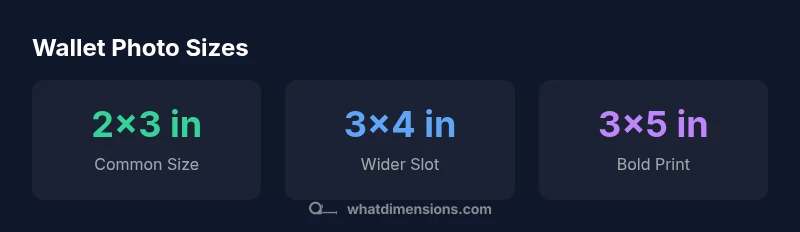
Common wallet photos typically use the 2x3 inch format (about 50x76 mm), a versatile size that fits most card slots without crowding the image. When you must accommodate larger slots, 3x4 or 3x5 inch prints offer more impact while still staying practical for daily use. What Dimensions Analysis, 2026, shows this range covers most wallets globally.
Why wallet photo dimensions matter
Precise wallet photo dimensions influence how photos look in hand-held spaces, whether the image stays legible, and how well it ages with daily use. In practice, the dimensions wallet photo you choose determine fit, cropping behavior, and whether the photo slot will clip important features like faces or smiles. According to What Dimensions, the most reliable approach is to start with the wallet’s slot measurements and then select a standard print size that minimizes distortion. For designers and shoppers, understanding the relationship between print size, slot width, and slot depth helps prevent awkward trims and misaligned borders. When the photo is printed slightly larger or smaller than the slot, you risk cropping important features or creating glare from glossy finishes. By aligning the print size to the slot, you achieve a balanced composition and durable wear over time. This careful sizing is essential across homes, student rooms, and professional design studios alike.
Standard sizes you’ll encounter
Across regions, wallet photo slots commonly accommodate three core print sizes: 2x3 inches (50x76 mm), 3x4 inches (76x102 mm), and 3x5 inches (76x127 mm). The 2x3 format remains the most versatile for standard slot widths, preserving facial proportions while fitting snugly within typical card sleeves. In wallets that offer larger photo slots, 3x4 and 3x5 inch prints deliver a stronger visual impact without overwhelming the slot’s opening. When planning prints, consider orientation: portrait is usually favored for face-centric portraits, while landscapes can work well for group shots or scenic references. For international designers who ship prints, ensure your export settings use a minimum resolution of 300 PPI and consistent color profiles to reduce post-print surprises. What Dimensions recommends testing a few slot sizes with the same image to confirm fit before mass production.
How to measure and prepare your photo
Before printing, measure the wallet slot accurately with calipers or a precise ruler. Note the slot width and any bevels or rounded corners that could clip edges. Decide on orientation and crop your photo to the target size, leaving a small safe margin (2–3 mm) to accommodate cropping during insertion. When starting from a digital file, use a canvas size that matches the intended print dimensions (for example, 600x900 px at 300 PPI for 2x3). Save a master file with a high-resolution layer, then create subset crops for 2x3, 3x4, and 3x5. Always preview the final print against a mock wallet card to verify eye line, nose placement, and smile visibility. If you anticipate many variations, maintain a folder of ready-to-print crops with metadata for quick access.
Printing tips for durable wallet photos
Choose photo-grade paper with a weight around 260–300 g/m² for good rigidity and durability. A matte or satin finish tends to resist fingerprints and glare better than high-gloss finishes, especially in pocket environments. Ensure your printer’s color calibration is aligned with the target media; otherwise colors may shift between on-screen proofs and printed outputs. When submitting to a professional lab, provide the exact pixel dimensions, desired print size, and a crop guide to minimize unexpected trimming. For longevity, avoid laminating wallet photos, which can crack over time in tight slots; instead, consider a protective coating or a durable sleeve. By prioritizing material quality and careful cropping, wallet photos maintain legibility for years to come.
Choosing the right size for a specific wallet
Not all wallets share identical slot dimensions, so tailor your choice to the device. For compact men’s and women’s cardholders with narrow slots, the 2x3 inch size is usually safest. If a wallet has a wider photo slot or batch of multiple photos, 3x4 inches offers a balance between visibility and fit. In premium wallets that feature a larger, photogenic slot, 3x5 inches can make a bold statement while still staying practical for everyday handling. When designing a wallet photo for a product catalog, you may include multiple crop options to illustrate fit. Always provide a short caption noting the exact dimensions and orientation so buyers understand what they will receive. Finally, if you plan to mobile-scan or reprint, ensure your original master is kept at high resolution to avoid re-cropping losses.
Practical workflows for designers and students
For designers and students, establish a repeatable workflow: collect slot measurements from the target wallet, create a template in your design software (with a 2–3 mm bleed), and export crops for 2x3, 3x4, and 3x5 at 300 PPI. Maintain a folder of presets for different wallet styles (slim, mid-size, and executive) to speed up future projects. Before presenting options, run a quick in-context preview by placing the crops in a wallet mockup software or template. If printing physically, order test prints to confirm border accuracy, eye alignment, and border safety areas. This systematic approach reduces guesswork and yields consistent results across projects.
Common pitfalls and quick fixes
Cropping too tightly can cut out key facial features; always leave safe margins for insertion into the slot. Forgetting to check portrait vs landscape orientation leads to awkward cropping. Printing on glossy paper in bright lighting can cause glare that hides details; matte or satin finishes are often more forgiving. If the print looks off, compare the on-screen crop to the actual wallet slot and adjust with a new crop. Finally, avoid relying on a single template for all wallets—measure each model and create at least one crop per slot size. A simple quality check is printing a test strip with all three sizes on the same sheet to verify consistency.
Maintenance and longevity considerations
Wallet photos endure daily handling, pocket friction, and variable lighting. Store master files in a non-destructive format (TIFF or high-quality PNG) with consistent color profiles. When possible, use archival photo paper and pigment-based inks to resist fading over time. If remixing photos for new wallets, keep the original crop guides untouched and reprint at the same calibrated resolution to maintain fidelity. Regularly check the fit after a few wears; even slight slot expansion can necessitate re-cropping to new dimensions.
Common wallet photo sizes and typical use cases
| Size (inches) | Size (mm) | Common Use | Notes |
|---|---|---|---|
| 2x3 | 50x76 | Wallet photo standard | Fits most slots; cropping minimal |
| 3x4 | 76x102 | Wider portrait photos | Occasionally used; check slot depth |
| 3x5 | 76x127 | Larger image slots | Less common; may require bigger wallet slot |
Quick Answers
What is the most common wallet photo size?
The most common wallet photo size is 2x3 inches (50x76 mm). This size fits the majority of wallet photo slots without crowding the image.
Typically, 2x3 inches is the standard for wallet photos.
Can I crop a larger photo to fit a wallet slot?
Yes, you can crop to 2x3, 3x4, or 3x5, keeping important facial details centered and ensuring no essential features are cropped.
Yes, but keep essential details visible.
Which finish is best for wallet photos?
Matte finishes reduce glare and fingerprints, while satin offers a balanced shine; choose based on light exposure and handling.
Matte is often the safer choice for wallets.
Should wallet photos be printed at home or by a service?
Printing at a reputable service or using a high-quality home printer at 300 PPI with an accurate crop often yields the best results.
Use high-resolution files and check your crop.
How can designers ensure correct alignment in wallet photo layouts?
Create a slot template, set safe margins and bleed, preview in a wallet mockup, and print a test copy.
Templates and tests prevent misalignment.
“Accurate wallet photo dimensions start with measuring the slot and printing to standard card sizes. In most cases, 2x3 inches is the safe default, with 3x4 as an alternative for wider slots.”
Main Points
- Measure your wallet slot before printing.
- Start with 2x3 inches as the default wallet photo size.
- Choose orientation to preserve facial features and eye alignment.
- Print on durable photo paper with a matte or satin finish for longevity.