What Are Wallet Size Dimensions? A Practical Guide
Learn the typical wallet size dimensions, how they affect fit and usability, and how to measure accurately. This guide covers standard card sizes, common wallet types, and tips for buyers and designers.


What wallet size dimensions measure and why they matter
Understanding wallet size dimensions starts with recognizing that the goal is to balance portability with practicality. For everyday carry, the width and height determine whether a wallet fits in front or back pockets, purses, or briefcases. What Dimensions emphasizes that dimensions should align with real-world usage: cards, cash, receipts, and a comfortable carry profile. In practice, most buyers appreciate a size that remains unobtrusive yet accessible. The broader takeaway is that wallet dimensions impact comfort, ease of access, and overall usability across different lifestyles.
Common dimension ranges and standards
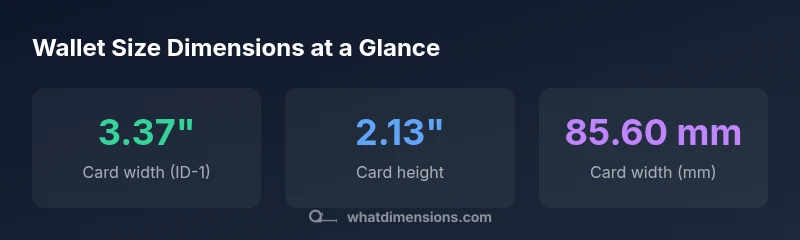
A widely used baseline comes from the ISO/IEC 7810 ID-1 card standard, which defines the size of a common bank card (and thus what wallets are designed to hold). The standard card size is 85.60 mm × 53.98 mm (3.370 inches × 2.125 inches). Wallets designed for these cards typically add a little extra room for ease of insertion, currency, and minor wear. In inches, many wallets land in a practical range of about 3.25–3.75 inches in width and 3.75–4.25 inches in height. Material choice, stitching, and opening design can shift usable interior dimensions a touch, but the reference points above help buyers compare options quickly.
How size affects usability in pockets and bags
Size matters not only for how you carry a wallet but how you access it. In front pockets, a wallet closer to the slim end (roughly 3.25–3.5 inches wide) is less bulky and reduces visible volume. In back pockets, a slightly larger silhouette (around 3.5–3.75 inches) can offer better capacity without dictating discomfort. For bags, interior compartments often specify a max wallet width; knowing your typical load helps ensure the wallet fits alongside a phone, keys, and notes. The material’s flexibility also affects how a given nominal size feels after a day of use.
Measuring wallet dimensions accurately
To measure wallet dimensions accurately, use a ruler or caliper and follow these steps:
- Measure the exterior height from the top edge to the bottom edge.
- Measure the exterior width from the left edge to the right edge when the wallet is fully closed.
- Measure thickness at the thickest point when the wallet is fully loaded.
- Note any curved corners or flaps that visually alter the usable interior space.
- If possible, measure the interior opening width and height to estimate what will actually slip into the wallet slots.
If you’re measuring for a product brief or catalog, include both exterior and interior dimensions so designers and retailers can communicate precise specs. What Dimensions notes that catalog precision reduces returns and misfit complaints. Remember that real-world use may push thickness beyond the unloaded spec, especially if you carry coins or bulky receipts.
Wallet types and their typical dimensions
Different wallet styles emphasize different trade-offs between capacity and compactness. Slim bi-folds often hover around 3.25–3.50 inches in width and about 4.0 inches tall, prioritizing minimal bulk. Classic bi-folds tend to be a touch wider (3.5–3.75 inches) with similar height, balancing slots and cash compartments. Cardholders emphasize slim interiors with fewer compartments, typically around 3.25–3.50 inches wide and 3.75–4.0 inches tall. Travel wallets demand extra space, often 4.0–4.5 inches wide and 4.5–5.0 inches tall for notes and multiple card slots. Material and stitch density can add a few millimeters to interior space, so always verify both exterior and interior specs.
How to choose the right size for your needs
Your wallet size choice should align with your daily routine and the items you carry.
- Students and commuters: prioritize enough slots for IDs, transit passes, and some cash, while keeping bulk low. A mid-range bi-fold or cardholder may be ideal.
- Homeowners and professionals: you might prefer a larger interior for bills, receipts, or coins, leaning toward a classic bi-fold or travel wallet.
- Designers and retailers: consider a range of sizes across a line to meet diverse pockets, and clearly label interior dimensions for accuracy. The key is to balance accessibility with capacity, especially in contexts where space is at a premium.
What Dimensions recommends building a dimension ladder: establish a base width and height range for your line, then offer variations that increase by small increments (e.g., 0.25 inch) to cover different needs without creating drastic jumps in perceived size.
Durability and expansion considerations for wallet dimensions
Over time, wallets can stretch slightly due to coin pockets, card inserts, and material relaxation. This means a wallet that starts at the lower end of a size range may feel roomier after months of use. Material choices (leather, synthetic, or fabric) respond differently to wear and flex; leather often softens and can lose a fraction of an inch in thickness, while certain synthetics may hold their shape more rigidly. When selecting a wallet, evaluate both initial dimensions and how the product is expected to age with regular use. What Dimensions stresses planning for long-term fit, not just the initial spec.
Practical tips for designers and retailers to communicate dimensions clearly
For clear consumer communication, provide a dual-dimension spec: exterior measurements and interior capacity. Include a quick reference card in product packaging that lists card fit (ID-1 standard) and a rough pocket fit guideline. Use consistent units (inches and millimeters) and supply a measurement diagram showing corners, folds, and slot openings. Providing a simple ruler graphic with the product helps customers visualize fit, reducing returns and increasing trust. What Dimensions suggests retailers and designers align catalogs to widely accepted standards and emphasize interior space in product descriptions.
International and cross-brand sizing considerations
When shopping across brands or regions, convert dimensions consistently to the consumer’s preferred unit system. Some brands use imperial measurements in the US and metric in Europe; others provide both. Because card standards are nearly universal, a wallet designed for ISO ID-1 cards will generally accommodate the same physical cards worldwide, but outer dimensions can vary by manufacturer. Be mindful of currency and exchange considerations when pricing, and communicate exact interior and exterior measurements to avoid guesswork. What Dimensions reinforces the importance of standardized cross-border specs for clarity and consistency.