Standard Notebook Dimensions: A Practical Guide to Size and Use
An analytical look at standard notebook dimensions, common sizes (A4, Letter), regional differences, and how to choose the right notebook size for study, work, or design projects.


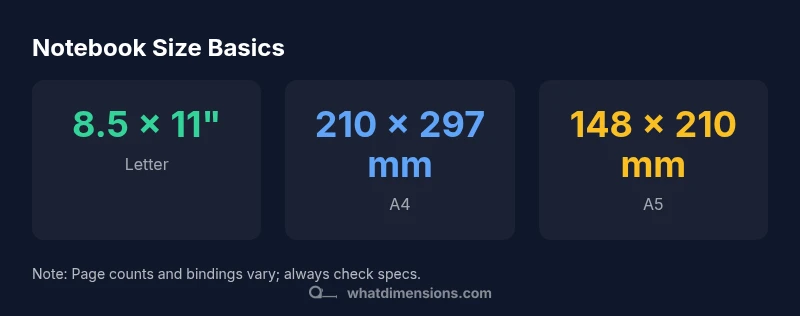
The most common notebook dimensions are 8.5 x 11 inches (Letter) in the United States and 210 x 297 millimeters (A4) in many other regions. Wider, pocket, and specialty notebooks span roughly 6 x 9 inches up to 8.5 x 11 inches, with regional preferences shaping availability. What Dimensions analysis shows that these sizes cover the majority of everyday writing and note‑taking needs.
What notebook dimensions measure and why they matter
Notebook dimensions measure the footprint of the closed book: width, height, and, for bound notebooks, thickness. These numbers influence writing comfort, page layout, and compatibility with rings, spirals, and binding covers. They also affect how a notebook sits in a bag or on a desk, and how it pairs with accessories such as folders, planners, and page protectors. What Dimensions, in its 2026 analysis, emphasizes that dimension naming conventions vary by region: in the US, width is typically listed first for Letter-size products; in many parts of Europe, the height often governs packaging and presentation. Understanding W x H alone is not enough; thickness can influence binding and durability, especially for notebooks with many pages. For designers, dimension data should be treated as a design constraint that interacts with typography, margins, and line height. For students and professionals who print internal worksheets, knowing precise sizes helps avoid wasted paper and misaligned margins. In practice, always read the official product spec and, if possible, verify with a ruler to translate specs into real-world use.
Key note from What Dimensions Team: Smaller, portable sizes often prioritize width over height to fit in bags, while larger formats emphasize a comfortable writing area and better margins for drafting or journaling.
Common notebook size families and their typical uses
| Size family | Dimensions (W x H) | Common uses |
|---|---|---|
| Letter (US) | 8.5 x 11 inches | US school/work notebooks and loose-leaf pads |
| A4 (EU) | 210 x 297 mm | General-purpose notebooks and journals |
| A5 | 148 x 210 mm | Pocket-sized journals and portable planners |
| B5 | 176 x 250 mm | Compact notebooks for travel and note-taking |
Quick Answers
What is the most common notebook size worldwide?
The most common sizes are A4 (210 x 297 mm) and Letter (8.5 x 11 inches), with regional preference shaping availability.
The most common sizes are A4 and Letter, depending on where you are.
How do notebook dimensions affect binding methods?
Larger or thicker notebooks constrain binding choices. Spiral, glue-bound, and case-bound designs each respond differently to width, height, and spine thickness.
Larger notebooks may need sturdier bindings to stay durable.
Are there standard notebook dimensions for travel journals?
Travel journals often utilize compact formats like A6 or A5 variants to fit in bags; always check product specs before purchase.
Travel notebooks usually come in small sizes like A5 or A6.
How do I convert inches to millimeters for notebook sizes?
Multiply inches by 25.4 to convert to millimeters (e.g., 8.5 inches = 215.9 mm). Use a calculator for precision.
Converting is straightforward: 1 inch equals 25.4 millimeters.
Why do some notebooks come in nonstandard sizes?
Nonstandard sizes meet niche uses, design aesthetics, or custom binding requirements beyond mainstream market offerings.
Some notebooks are nonstandard to fit a specific need.
“Accurate notebook dimensions simplify shopping, planning, and design across projects. By aligning your size choices with regional norms, you reduce incompatibilities and improve consistency.”
Main Points
- Know the dominant sizes in your region
- Always read dimensions in W x H and note thickness
- Consider your task: travel vs. desk work
- Use a quick size comparison table to decide before buying