A5 Notebook Dimensions: Your Definitive Size Guide for 148 x 210 mm
Explore precise a5 notebook dimensions (148 x 210 mm) and how they impact planning, design, and purchasing. Learn measurement tips, comparisons, and practical selection guidance.


What is the a5 notebook dimensions?
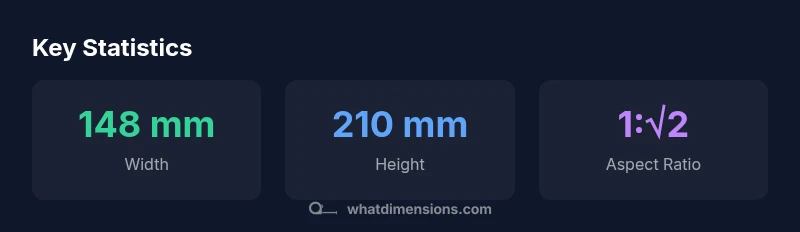
The a5 notebook dimensions are defined as 148 mm in width by 210 mm in height, a compact format that fits easily in bags and on crowded desks. According to What Dimensions, this size is part of the ISO A-series, designed to maintain a constant aspect ratio of approximately 1:√2 across every size. For students, professionals, and creative makers, knowing these measurements helps when choosing inserts, sleeves, and cover materials that need precise fits. In practice, the 148 × 210 mm footprint supports common page grids and line spacing, while still leaving room for margins, perforations, and binding. While the ISO standard provides a baseline, manufacturers can vary by a millimeter or two due to paper stock, cutting tolerances, and binding styles. When shopping, measure the product at multiple points and compare against the stated dimensions to ensure the notebook meets your needs.
Measuring accuracy and tolerances for A5 notebooks
In real-world manufacturing, you may encounter small variances. What Dimensions Analysis, 2026 notes that notebooks labeled as 148 × 210 mm can legitimately vary by a few millimeters depending on binding type, cover thickness, and trimming. To manage expectations, compare the measured footprint with the stated size using multiple measurements along each edge. If you need tight fits for inserts or sleeves, ask for tolerance details from the supplier and test a sample before bulk orders. Precision matters for layout planning, especially when you’re coordinating pockets, pockets, and dividers.
A5 size in context: compare with A4 and A6
A5 sits between A4 and A6 in the ISO 216 family. An A4 page is 210 × 297 mm, while A6 is 105 × 148 mm. The A-series is designed so that each size halves or doubles in area while maintaining the √2 aspect ratio. This relationship is convenient for planning notebooks, planners, and printed inserts, because you can scale designs fluidly without changing layout grids or margins. When designing covers or sleeves, reference A4 or A6 dimensions to ensure compatibility across product lines.
How to measure A5 dimensions accurately at home or in a shop
Begin with a clean, flat surface and a precise ruler or caliper. Place the notebook on the edge and measure width at three points: top, middle, and bottom. Repeat for height: left, center, right. Record any deviations and note if the binding or cover edges cause slight bulges. If you’re comparing several brands, measure a sample from each to understand the typical range. Document the measurements in a small table for quick reference during purchasing decisions.
Practical tips for designers and students choosing A5 notebooks
Consider how your chosen A5 notebook will be used: ink bleed, page layout, and binding can shift usable dimensions. For planners, account for margins and indexing tabs; for sketchbooks, ensure thicker paper stock doesn’t impact external dimensions. If you frequently swap inserts, choose standard A5 to maximize compatibility with sleeves, folders, and travel organizers. In all cases, verify exact measurements before committing to large orders; even small drifts matter in dense layouts.
Quick-start guide: using a5 notebook dimensions in planning
Create a simple reference sheet with width 148 mm, height 210 mm, and the √2 aspect ratio. Use this sheet when evaluating accessories, like notebook covers, binders, or internal dividers. If you’re designing inserts, add a 2–3 mm tolerance to cut lines to accommodate minor manufacturing differences. This proactive approach saves time and reduces returns when working on design projects or classroom layouts.