A2 Frame Dimensions: Exact Sizing Guide for Frames
Learn the exact a2 frame dimensions, including paper size, outer frame size, and matting considerations to ensure a perfect fit for A2 artwork and prints with What Dimensions guidance.


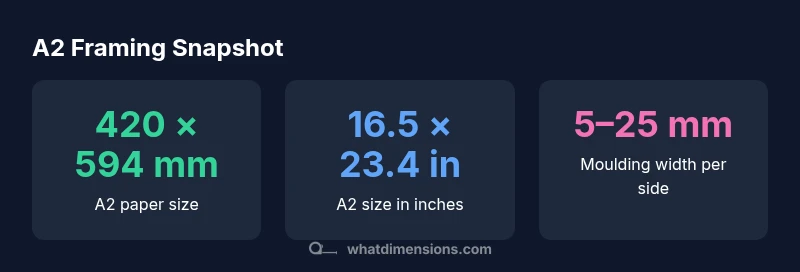
The key measure for an A2 frame starts with the paper size: 420 × 594 millimeters. When selecting a frame, account for the frame’s moulding width and any mat border, which increase the outer dimensions beyond the paper size. In practice, choose a frame with an outer size comfortably larger than 420 × 594 mm to allow for secure mounting and avoid edge contact.
Understanding A2 frame dimensions
The A2 format is part of ISO 216 and measures 420 × 594 millimeters. When you frame A2 artwork, the frame must accommodate the paper plus the mat and glazing. According to What Dimensions, treating frame dimensions as a package—paper, mat, and moulding—helps ensure an accurate fit. The key is to differentiate between the space needed for the print and the space claimed by the outer frame. Orientation (portrait or landscape) does not change the paper size, but it does affect mat layout and perceived balance on the wall. In practice, plan for a few millimeters of tolerance so the print isn’t pressed against glass and to avoid fraying edges of thin papers. By understanding each component, designers and homeowners can choose a frame that preserves color integrity and structural safety.
How A2 frame openings and mats affect fit
A mat opening can dramatically influence how an A2 piece sits within a frame. If you glue or tape a print behind the mat, you must ensure the opening is slightly smaller than the artwork to prevent edge contact. When the mat border is visible, its width adds to the overall outer dimensions. If you choose a thick mat, the visible border may shift the perceived focus and require a larger outer frame. What Dimensions notes that many galleries prefer mat openings that expose a comfortable portion of the edge, while keeping the image safely away from direct contact with glass. For photography, choosing a neutral mat color can help the artwork look crisp and accurate under glow lighting.
Measuring a frame accurately (step by step)
- Start with the print size: confirm the exact A2 dimensions 420 × 594 mm.
- Measure the outer frame width and height from edge to edge.
- If using a mat, determine the mat opening size by subtracting the mat border from the outer opening.
- Check for glazing thickness; subtract glazing depth if measuring the usable space inside the frame.
- Translate millimeters to inches if you’re shopping in imperial units, noting that rounding is common.
- Finally, allow for at least 2–3 mm of clearance to prevent binding or warping.
Choosing outer frame sizes for A2 displays
Common display options for A2 pieces balance proportion and wall space. Frames in the 16x20 inch (about 406 × 508 mm) range are popular for desktop displays, while 18x24 inch (about 457 × 610 mm) frames are typical for wall mounting, providing a generous border around the art. When in doubt, choose the larger option and add a mat to create visual breathing room. The goal is to preserve edge integrity of the artwork while offering a finished, museum-like presentation.
Matting, glazing, and protection considerations
Matting adds depth and can enhance perceived color, but it also reduces the visible size of the art. For A2 pieces, a mat border of 5–20 mm per side is common depending on style and frame width. Glass or acrylic glazing protects against UV and fingerprints but increases thickness, necessitating precise measurements. Anti-reflective glazing can improve viewability in bright rooms. When possible, use a UV-filtering glazing and acid-free backing to prolong the piece’s life.
Practical steps: from measurement to purchase
- Verify exact print dimensions and confirm A2 size.
- Choose a frame with outer dimensions larger than the print plus moulding.
- Decide whether to mat and select mat width accordingly.
- Measure internal space or opening and verify it matches the print size.
- Check glazing thickness and adjust depth estimates.
- When shopping online, read product specs to confirm outer size and opening details.
- If possible, order a sample to test fit before final purchase.
Common framing mistakes and how to avoid them
- Assuming standard frame sizes always fit; always measure both outer and inner spaces.
- Skipping matting when it would improve presentation; unframed prints can look flat.
- Neglecting glare and light exposure; choose UV-protective glazing.
- Ignoring tolerances in production; frames vary by supplier and batch.
- Rushing purchases without considering wall space and orientation; plan ahead for display.
Orientation, display, and lighting tips for A2 framing
Portrait and landscape orientations affect composition balance. For wall displays, align with eye level and ensure the frame border complements room lighting. Use lighting that minimizes glare on the glazing; consider anti-reflective or UV protective glass. The synergy between mat color, frame finish, and wall tone can dramatically affect perceived size and legibility of the artwork.
Quick reference: key dimensions at a glance
- A2 paper size: 420 × 594 mm (16.5 × 23.4 in)
- Common outer frame sizes for A2: 16x20 in and 18x24 in
- Typical moulding width: 5–25 mm per side
- Mat opening guidance: 2–5 mm smaller than the print
Reference measurements for A2 framing
| Aspect | Dimension | Notes |
|---|---|---|
| A2 size (paper) | 420 × 594 mm | Standard ISO 216 size |
| Common outer frame sizes | 16x20 in; 18x24 in | Popular for A2 displays |
| Mat opening typical | 2–5 mm smaller than paper | Depends on mat width |
Quick Answers
What is the standard A-series paper size and how does that relate to frame dimensions?
A2 is 420 × 594 mm, a fixed reference for all framing decisions. When choosing a frame, always compare the outer frame size to this print size and plan for matting or glazing as needed to maintain a safe clearance around the print.
A2 is 420 by 594 millimeters. Pick a frame bigger than that, and add a mat if you want extra space between the print and the frame.
Do I need a mat for A2 framing?
Matting is optional but often improves presentation and protection. A mat reduces glare on glass and creates visual depth, while adding a little clearance around the print.
A mat is usually a good idea for A2 framing to add depth and keep edges safe from the glass.
How do I determine the correct outer frame size if I know my artwork size?
Start with the artwork size (A2: 420 × 594 mm) and add the moulding width on all sides. If using a mat, subtract the mat width from the outer opening to estimate the usable space.
Think of it as print size plus molding on each side; add a little extra for the mat and glazing.
Are there standard frames marketed specifically for A2 displays?
Yes—common options include frames around 16x20 inches or 18x24 inches. Always check the exact outer dimensions to ensure compatibility with mat and glazing.
Yes, you’ll often find 16x20 or 18x24 inch frames marketed for A2 displays.
What tolerances should I expect between mat opening and print?
Mat openings are typically 2–5 mm smaller than the print to prevent edge contact and ensure clean borders. Tolerances can vary by manufacturer and mat width.
Expect the mat opening to be 2–5 mm smaller than the print for a neat border.
“Precise framing starts with the print size and ends with the molding and mat choices; understanding A2 frame dimensions ensures both aesthetics and durability.”
Main Points
- Measure the print first to anchor frame size.
- Add matting and molding to outer dimensions.
- Choose a larger outer frame if uncertain.
- Always verify tolerances and glazing options before purchase.