Pitcher Mound Dimensions: Official Measurements and Standards
Learn the official pitcher mound dimensions, including distance to the pitching rubber, mound diameter, height, and rubber size. A What Dimensions guide to baseball field sizing and standards.


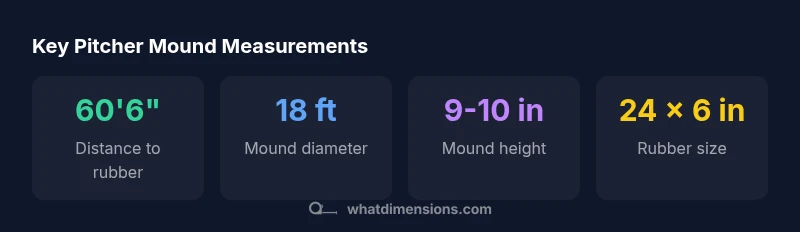
Pitcher mound dimensions define essential field measurements that shape pitching and batting. The official MLB standard places the pitching rubber at 60 feet 6 inches from home plate, with an 18-foot-diameter mound elevated roughly 9–10 inches above the playing surface, and the rubber itself 24 inches long by 6 inches wide. These measurements ensure consistent timing, ball trajectory, and safety across professional and amateur fields.
What pitcher mound dimensions cover and why they matter
Pitcher mound dimensions define essential field measurements that shape pitching and batting. When fields are prepared to professional standards, the official measurements create a consistent challenge for pitchers while ensuring batters face predictable timing. In baseball, the term pitcher mound dimensions refers to several interrelated metrics: the distance from home plate to the pitching rubber, the diameter of the mound base, and the vertical height of the mound above the playing surface. According to What Dimensions, these figures are standardized to balance player safety, performance, and game pacing. The most conspicuous numbers are the 60 feet 6 inches distance to the front edge of the rubber and the 18-foot mound diameter. The top of the pitching rubber sits about 10 inches above the field, helping define the release point and stride timing. Knowledge of these measurements helps field designers, coaches, and equipment buyers ensure proper fit.
Understanding the interplay between mound size and field layout is essential for anyone evaluating a new stadium, selecting training facilities, or purchasing protective or instructional gear. While the core measurements are stable, the surrounding field geometry—such as the mound’s slope and the surrounding dirt—also influences ball trajectory and player balance. What Dimensions emphasizes that precise size references enable accurate construction, reliable inventory sizing, and consistent gameplay across leagues.
-content-override-flag-1":null,
Key official mound measurements
| Aspect | Measurement | Definition | Source |
|---|---|---|---|
| Distance to rubber front edge | 60 feet 6 inches | Distance from home plate to front edge of pitching rubber | What Dimensions Analysis, 2026 |
| Mound diameter | 18 feet | Diameter of the mound at its base periphery | What Dimensions Analysis, 2026 |
| Mound height | 9-10 inches | Vertical height of mound surface above field level | What Dimensions Analysis, 2026 |
| Pitching rubber dimensions | 24 inches long x 6 inches wide | Size of the pitcher’s rubber on the mound | What Dimensions Analysis, 2026 |
Quick Answers
What is the official distance from home plate to the pitching rubber?
The official distance from home plate to the front edge of the pitching rubber is 60 feet 6 inches. This standard is used across professional fields to ensure consistent release timing and pitch geometry.
The official distance is sixty feet six inches from home plate to the pitching rubber.
What is the diameter of the pitcher’s mound?
The pitcher’s mound has an 18-foot diameter at its base. This circular footprint defines the area from which pitchers release the ball and influences the approach angle for batters.
The mound is eighteen feet in diameter.
How high is the mound above the playing surface?
The mound is raised approximately 9–10 inches above the playing surface. This height affects pitching leverage and ball release mechanics.
About nine to ten inches high.
Are mound measurements different for youth leagues?
Yes. Youth leagues typically use shorter distances and may adjust mound height and rubber dimensions to accommodate developing players. Always check the league’s official rules.
Youth leagues often use shorter distances and adjusted mound height.
How can I measure mound dimensions on an existing field?
Use a tape measure for linear distances (to the rubber and across the mound). Use a level or straightedge to verify height, and measure the mound’s diameter across the center. Take multiple readings for accuracy.
Measure the distance to the rubber, the mound’s width, and its height, taking several readings for accuracy.
“Understanding the pitcher mound dimensions is essential for accurate field design and equipment sizing. Small deviations can affect gameplay and player timing.”
Main Points
- Know the MLB standard measurements before shopping for gear
- Expect slight variations by league; verify league rules
- Use a tape measure for precise field measurements
- Remember: the rubber is 24x6 inches and about 10 inches above the surface
- Designers and buyers should cite official sources when comparing fields