Men's Pants Dimensions: A Practical Sizing Guide
Master men's pants dimensions—waist, inseam, rise, and leg opening. Learn to read charts, measure accurately, convert units, and tailor for a perfect fit with What Dimensions' expert guidance.


Men's pants dimensions define the measurements that determine fit and comfort, including waist, inseam, rise, and leg opening. According to What Dimensions, understanding these metrics helps shoppers compare brands, select correct inseam lengths, and avoid returns. This quick answer outlines the core sizing concepts and why precise dimensions matter when shopping, tailoring, or designing pants.
Why precise pants dimensions matter
In a world where clothing is increasingly sold by finite measurements, precise pants dimensions can dramatically improve fit, comfort, and satisfaction. According to What Dimensions, the most consequential metrics are waist, inseam, rise, and leg opening, but the context—fabric, cut, and intended use—also shapes how those numbers translate onto your body. A jeans style with the same waist label as dress pants may still feel different due to taper and weight. For designers and shoppers alike, aligning actual body measurements with labeled sizes reduces returns and creates consistently better outcomes across brands and seasons. This section explains why a few extra millimeters or inches in the right places matter, and how you can translate measurements into a reliable size decision rather than impulsive guessing.
Core dimensions you should know
The core dimensions fall into a handful of categories that you will see on virtually every sizing chart. Waist measures around your midsection and determines how the garment sits. Inseam is the length from the crotch seam to the bottom hem and governs how the pants reach the ankle. Rise describes how the waist sits relative to the crotch and affects comfort in sitting and bending. Leg opening, also called hem width, influences the silhouette around the ankle and shoe. Finally, hip and thigh measurements become relevant for fuller cuts. When you compare brands, look for how they label these dimensions and whether they provide both finished garment measurements and body measurements for reference.
How to measure your body and pants accurately
Begin with your natural waist measurement and a well-fitting pair of pants that match the style you want. Use a flexible tape measure and stand straight, not tense, when taking waist and hip measurements. For inseam, measure along the inner leg from the crotch seam to the bottom hem while wearing the shoes you plan to wear. If you cannot try on pants, check the garment’s finished measurements—taut, not stretched—to gauge fit. When in doubt, record multiple measurements (waist, hip, and inseam) and compare them to the brand’s size chart.
Reading sizing charts and what brands list
Sizing charts typically present waist and inseam first, with a rise label and an approximate leg opening or cuff width. Some brands also publish hip or thigh measurements for each size, particularly for slim or athletic cuts. Be mindful of units—some charts use inches, others centimeters. If a chart omits inseam, measure the garment’s inseam yourself or choose a style with adjustable hems. Finally, always verify the garment’s finish measurements rather than relying on the label alone.
International sizing and converting guides
Not all regions use the same sizing scales. In the United States, waist and inseam are commonly specified in inches; many European brands express sizes using numeric labels that map to a different waist range. To compare across regions, use a reliable conversion chart or measure your waist and inseam in centimeters and then translate to the corresponding size on the chart. What Dimensions’ guidance emphasizes consistent unit usage across catalogs and stores to avoid confusion.
Common fit issues and how dimensions solve them
A mismatch between waist and hip measurements can cause gapping in the back or tightness in the thigh. A too-short inseam results in awkward bunching at the ankle, while an overly long inseam drags and may cause stacking. A high rise can ride up in the seat, and a low rise may shift fabric at the waist. By focusing on core dimensions and chosen style, you can predict fit more reliably across brands.
How to tailor pants for a perfect fit
While many pants are sold off the rack, tailoring remains the surest route to comfort. A 1–2 inch hem adjustment is common for jeans and chinos, and waist tailoring can address waist-gap issues. Seat and thigh taper can refine a straight cut into a more flattering silhouette. When tailoring, bring the original garment along and mark the alteration points; always test the fit with movement and seating to ensure the changes work across postures.
Practical sizing checklist for shoppers
- Know your core measurements: waist, hip, and inseam.
- Compare finished garment measurements, not just labels.
- Check for stretch fabrics or elastics that affect fit.
- Note the rise type and leg opening that suit your preferred style.
- If between sizes, choose the larger size with the option to tailor the waist.
- Always test the fit while sitting, standing, and walking to confirm comfort.
Examples by pant types: jeans, chinos, dress pants
Jeans often feature a roomier thigh and a tapered leg with a mid-rise, whereas dress pants favor a flatter front and a higher rise with a narrow leg opening. Chinos sit between jeans and dress pants in terms of fit and fabric. For each type, start with your waist measurement on the label, then verify inseam and rise in the size chart. When possible, compare finished measurements from multiple brands to spot patterns and avoid misfits.
Comparison of key pant-dimension aspects
| Aspect | Common Range | Notes |
|---|---|---|
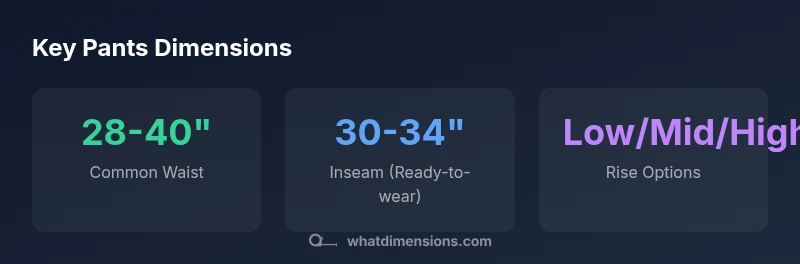
| Waist size | 28–40 inches | Ranges vary by brand and region |
| Inseam length | 30–34 inches | Measured from crotch to ankle; varies by height/shoes |
| Rise | Low–Mid–High | Affects torso length and fit in seats |
| Leg opening | 14–22 inches | Depends on cut (slim vs relaxed) |
Quick Answers
What is the difference between waist size and waist measurement?
Waist size is the label on the garment, while waist measurement is your actual waist circumference. To determine the correct waist size, measure around the narrowest part of your torso. Compare your measurement to the size chart; different brands may assign sizes differently.
Waist size is the label; waist measurement is your actual measurement. Check the chart to choose the best fit.
How do I convert inches to centimeters for pants dimensions?
Multiply inches by 2.54 to get centimeters. If you’re comparing inseam lengths, convert both numbers to the same unit before matching to a size chart.
Multiply by 2.54 to convert inches to centimeters.
Why do brands list inseam and leg opening instead of full measurements?
Inseam and leg opening are the most visible indicators of length and silhouette for pants. Full-body measurements are less practical for apparel because garments sit on the body differently across styles.
Inseam and leg opening show length and silhouette; full-body measurements are less practical for pants.
Should I size up for dress pants or tailored fits?
Dress pants and tailored fits can vary by brand. Start with your measured waist and inseam; if you’re between sizes, consider the larger size with potential waist tailoring for comfort.
If between sizes, pick the larger and tailor the waist as needed.
How should I measure my inseam at home?
Wear pants that fit well or stand straight while measuring. From the crotch seam to the bottom hem, use a flexible tape measure along the inside leg to determine inseam length.
Measure from the crotch seam to the ankle along the inside leg.
What should I do if I’m between sizes and fabric has stretch?
Choose the size that fits your waist and hip measurements. If the fabric has stretch, you may be able to wear the smaller size, but ensure the waist sits comfortably when seated.
Go with the waist/hip fit, allow for stretch if present.
“Dimensions are the bridge between a product page and a perfect fit; precise measurements reduce returns and boost shopper satisfaction.”
Main Points
- Measure waist and inseam before shopping
- Read finished measurements, not just label size
- Account for rise and leg opening to match style
- Consider tailoring for a perfect fit