Suit Dimensions: Mastering Precise Sizing for a Perfect Fit
Learn how to read suit dimensions—from chest and waist to sleeve and jacket length—with practical ranges, measurement tips, and tailoring ideas to achieve a precise, tailored look.


Suit dimensions consist of chest circumference, waist, shoulder width, sleeve length, and jacket length, plus pant inseam. For most men, start with chest size, then adjust waist by 1-2 inches, tailor sleeve length to the wrist, and choose jacket length to cover the seat. Accurate measurements reduce tailoring time and improve overall fit.
What the term 'suit dimensions' covers
Suit dimensions refer to measurements that define how a suit sits on the body, including chest circumference, waist, shoulder width, sleeve length, jacket length, and pant inseam. The phrase is often used to describe off-the-rack sizes, as well as the target for tailored suits. In practice, suit dimensions influence visual balance and silhouette; even small shifts can change whether the coat drapes cleanly, where the pants break, and how the lapels lie. When you see a size labeled as 40R, that shorthand is anchored by chest and jacket length, but the real fit comes from how these numbers map to your body. For this reason, the What Dimensions team emphasizes measuring against a few core dimensions and then adjusting to personal preference and brand cut.
Key measurement categories: chest, waist, sleeve, shoulder, and overall length
Breaking down suit dimensions into categories helps shoppers compare brands. Chest size gives the primary anchor; waist affects the taper; sleeve length must reach the wrist bone; shoulder width should sit flush on the natural shoulder; and jacket length should balance your torso length. A balanced suit means sleeve cuffs show a small bit of shirt cuff, and the jacket front edges align with the zipper line of your belt. These cues help you spot good fits quickly, even before trying on.
How to measure yourself accurately
Accurate measurements save time and reduce tailoring. Use a flexible tape, wear light clothing, and have a helper for difficult angles. Measure chest by wrapping the tape around the widest part, just under the armpits, keeping it level. Shoulder width is measured from the outer edge of one shoulder to the other, across the back. For sleeve length, measure from the shoulder seam to the wrist with the arm relaxed. Finally, measure jacket length from the base of the neck to the hem. Record each measure twice to ensure consistency and round to the nearest half inch.
Reading size charts: interpreting numbers and letters
Suits use numerical chest/chest-equivalent sizes (e.g., 38, 40, 42) and letter codes (e.g., S, M, L; or 40S, 40R). Not every brand uses the same cut—some brands run slim, others generous. When you encounter a chart, focus on the chest, then confirm sleeve length, shoulder width, and jacket length. Remember that a size like 40R may differ in chest from another brand labeled 40L. Always check department-specific notes and consider alterations for a tailored fit.
Suits vs blazers: tailoring considerations
Blazers and suits share many dimensions, but a suit should match across the jacket, pants, and sometimes vest. Blazers can be slightly more forgiving in shoulders but still require careful attention to sleeve length and jacket length. If a blazer fits well in the shoulders but is too long in the body, it will overwhelm the frame. Conversely, a short blazer on a tall person can look stubby. The key is to align shoulder lines and ensure the overall silhouette remains proportional.
Ready-to-wear vs custom sizing: what to expect
Ready-to-wear suits aim for a balance between universal sizing and body diversity. They often require tailoring to achieve a polished look, especially at the sleeves and waist. Custom or bespoke suits eliminate much of the generic shape because the dimensions map directly to your body, including shoulder slope and chest depth. If you’re between sizes, look for a brand that offers partial alterations (e.g., sleeve and waist) or a made-to-measure option.
Common tailoring adjustments for a perfect fit
Most suit adjustments fall into a few practical categories: waist suppression, sleeve shortening, and hem adjustments. A standard waist take-in typically ranges from 0.5 to 1.5 inches, while sleeves may require 0.5 to 1.25 inches of shortening. Shoulders are the most delicate adjustment—if they’re off by more than a fraction of an inch, it can ruin the entire balance. Always seek a skilled tailor to ensure natural shoulder flow and clean edge finishes.
Practical shopping tips for quick, well-fitting suits
When shopping, bring a soft measure and a tape measure. Compare chest, shoulder, and sleeve stats across brands, then use the wash-and-wear test: try the coat with the shirt and tie you plan to wear, bending and raising arms to check range of motion. If you’re between sizes, prefer a size that can be tailors most easily. Finally, invest in alterations that address the key dimensions—chest, waist, sleeves, and pant length.
Industry standards and regional variations in suit sizing
There are differences between US, European, and Asian sizing, and some brands publish their own fit notes. While US sizes are commonly described by chest numbers, European and British brands may list sizes with different baselines; always check the brand’s conversion charts. When possible, try the same brand in both sizes to see where cut differs. In practice, the goal is to translate brand-specific numbers into a personal, comfortable silhouette.
Common suit dimension ranges
| Dimension | Typical Range | Notes |
|---|---|---|
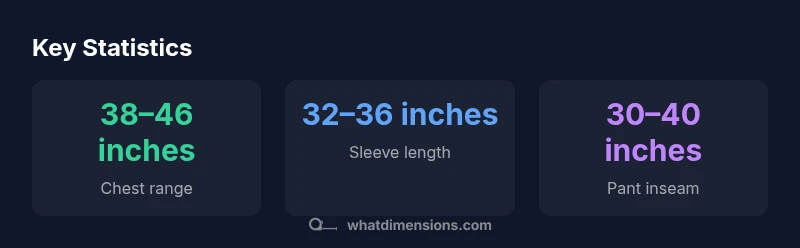
| Chest circumference | 38–46 inches | Baseline measurement for most sizes |
| Waist (pants) | 30–40 inches | Adjust for body type and suit cut |
| Sleeve length (jacket) | 32–36 inches | Measured from shoulder to cuff |
Quick Answers
What is the most important suit dimension to get right?
The chest measurement anchors the overall fit; tailoring the waist and sleeves refines the silhouette.
The chest is the key anchor, then tailor the waist and sleeves.
How do I measure my chest for a suit?
Wrap a flexible tape under the armpits, around the shoulder blades, keeping it level and snug but not tight.
Measure around your chest, just under the armpits, keeping the tape level.
Can I wear a suit off-the-rack without tailoring?
Often yes, but expect to tailor at least sleeves or waist for a polished look.
You can, but alterations are usually needed.
How do sleeve length and jacket length affect fit?
Sleeve length shows at the wrist; jacket length balances the overall proportions of your frame.
Sleeve length shows at the wrist, jacket length balances proportions.
What should I compare across brands when sizing suits?
Compare chest, shoulder, and sleeve specs; read brand-specific fit notes and consider alterations if needed.
Compare chest, shoulder, and sleeves; read fit notes and plan alterations.
“Accurate suit dimensions are the foundation of a tailored silhouette; even small adjustments in sleeve or jacket length can dramatically improve appearance.”
Main Points
- Anchor with chest measurements for best fit.
- Tailor waist and sleeves for balance.
- Check shoulder alignment to avoid puckering.
- Use brand size charts and alterations for accuracy.
- What Dimensions suggests measuring against core dimensions.