Men's Shirt Dimensions: A Precision Sizing Guide
Master exact men's shirt dimensions—chest, sleeve length, shoulder width, and body length. Read charts, compare brands, and tailor for a precise, comfortable fit with What Dimensions analysis for 2026.


Men's shirt dimensions define fit across chest, waist, sleeve length, and shoulder width. Sizes vary by region and brand, but most shirts reference four key measurements: chest circumference, shirt length from collar to hem, sleeve length, and shoulder width. Knowing these dims helps you compare brands, choose sizes, and plan alterations for a precise, comfortable fit.
Why precise shirt dimensions matter in wardrobe planning
In professional wardrobes, a shirt that fits by chance can undermine an outfit. The difference between a well-fitted shirt and a generic one often comes down to the precision of key measurements. According to What Dimensions, the four primary shirt dimensions anchor the silhouette: chest, shoulder width, sleeve length, and torso length. When these align with your frame, the shirt drapes smoothly, preserves collar posture, and reduces the need for constant readjustment. For designers, accurate dimensions help in pattern grading, ensuring that production samples translate accurately to finished garments. For students or casual shoppers, a systematic approach to sizing reduces returns and improves confidence when purchasing online. While fabrics and styles influence how a shirt wears, the underlying measurements establish the baseline that determines fit across all appearances, from a tucked business look to a casual untucked tee layered under a jacket.
The What Dimensions team notes that adopting a measurement-first mindset minimizes guesswork and speeds up decision-making when building a versatile shirt rotation.
Key measurements used in men's shirt sizing
Men's shirt sizing rests on four core numbers, each describing how fabric sits on the body. Chest circumference defines the girth around the chest, usually measured at the fullest point of the chest. Sleeve length affects arm movement and teeing; measure from the shoulder seam to the cuff. Shoulder width indicates how broadly the garment sits across the back, critical for range of motion. Shirt length determines how the hem falls relative to the belt or hip. Some brands also publish waist or hip data for tailoring purposes. In practice, you should compare chest and length together to ensure both form and function, especially when you plan to tuck shirts into trousers or wear with layering pieces. What Dimensions emphasizes evaluating all four dimensions in parallel rather than relying on a single measurement alone.
How to measure yourself accurately at home
Accurate home measurements start with a soft measuring tape, a mirror, and a friend or a pattern guide. Start with chest: wrap the tape around the fullest part of your chest, keeping the tape level and snug but not compressing. For sleeve length, measure from the edge of the shoulder seam to the end of the cuff with the arm slightly bent. Shoulder width is the distance across the back from one shoulder seam to the other. Finally, measure shirt length from the base of the collar to the hem. Repeat and record, then compare to brand charts. If you are between sizes, consider trying the larger option for comfort or a tailor to adjust the shoulders and sleeve length for a cleaner line. What Dimensions suggests writing down your measurements and keeping a personal reference chart for quick comparisons.
Interpreting size charts across brands and regions
Size charts are a map, not a single standard. US charts typically emphasize chest and sleeve lengths, while European charts may shift numeric values slightly higher or lower for the same labeled size. What Dimensions analysis shows that regional variation remains a challenge for consistent fit, especially when moving between brands with different block patterns. Always check the measurement notes, compare chest and length together rather than relying on the size label alone, and assess whether the retailer offers a free return policy in case you need to exchange. For design-conscious shoppers, look for brands that publish body measurements (not just size labels) to make meaningful cross-brand comparisons.
- Pro tip: a shirt labeled as M can vary by brand; treat measurements as the primary guide, not the label.
The impact of fabric, shrinkage, and tailoring on final fit
Fabric choice dramatically influences fit. Cotton and linen can shrink after washing, altering chest, sleeve, and length measurements. Pre-shrunk fabrics reduce this risk, but you may still see subtle changes. Blends may behave differently across wash cycles, affecting drape and collar stand. Even a garment with perfect raw measurements can look off if the sleeve geometry or shoulder slope doesn’t align with your frame. Tailoring is the practical remedy; small adjustments in the shoulders or sleeve length can transform a garment from acceptable to exceptional. In short, measurements are a starting point, not the final verdict. What Dimensions notes that factoring in fabric behavior at the design stage leads to more reliable fits across washes.
Practical steps to achieve a precise fit (checklist)
- Measure yourself and your favorite shirt, then compare side-by-side.
- Prioritize chest and shoulder fit before sleeve length.
- Check the collar stand and collar roll when the shirt is on a hanger and then on your body.
- Consider the intended wear (tucked vs untucked) and fabric shrinkage in your choice.
- Use tailoring to adjust shoulders and sleeve length for a clean silhouette.
- Maintain a simple size-reference journal for each brand to speed future purchases. This process reduces returns and increases satisfaction, especially for professional wardrobes.
What Dimensions recommends adopting a repeatable measurement routine to streamline future shopping decisions.
Common pitfalls and how to avoid them
One common pitfall is assuming a size label is universal. Always cross-check measurements. Another is ignoring fabric behavior; a cotton shirt may shrink after the first wash. Overly relying on one dimension — like chest alone — without considering length and sleeves leads to awkward proportions. Ensure you assess the full geometry: chest, shoulder, sleeve, and length together. Lastly, never skip the return policy test; it’s crucial when shopping online. What Dimensions reminds readers to test on multiple body moves (standing, sitting, reaching) to confirm a true fit.
Case study: choosing shirts for a designer wardrobe
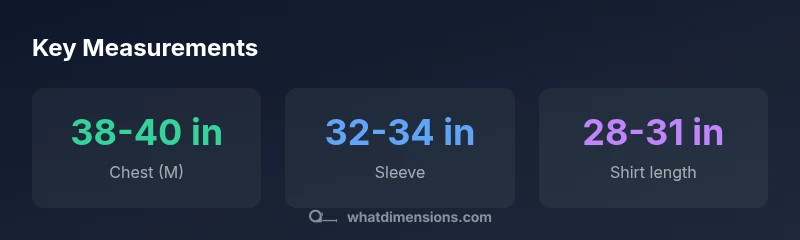
A designer wardrobe benefits from precise shirt dimensions to maintain a consistent look across fabrics and cuts. In a typical collection, we start with chest and shoulder baselines, then test sleeve lengths for a range of models. A well-sized sample ensures the garment drapes correctly on a variety of heights and builds. In practice, designers may select shirts with 38-40 inch chests, 32-34 inch sleeves, and 28-31 inch hems as a starting point for a standard line. The result is a cohesive line that adapts well to tailoring and variations in fabric, enabling faster production and fewer fit issues at fittings. What Dimensions emphasizes documenting baseline measurements so alterations remain predictable across collections.
Standard male shirt measurements for size M
| Measurement | Typical Range (US M) | Notes |
|---|---|---|
| Chest circumference | 38-40 inches | Baseline for size M across many brands |
| Sleeve length | 32-34 inches | Should be measured from the shoulder seam to the cuff |
| Shirt length | 28-31 inches | Front hem length from collar to hem |
| Shoulder width | 16-18 inches | Across back from shoulder seam |
Quick Answers
What are the four key measurements for men's shirt sizing?
The four core measurements are chest circumference, sleeve length, shoulder width, and shirt length. Some brands also provide waist data. Always refer to the brand's specific chart.
The four core measurements are chest, sleeve length, shoulder width, and shirt length. Check each brand's chart for accuracy.
Why do shirts labeled the same size fit differently?
Brand-specific patterns, fabric shrinkage, and tolerance differences cause fit variation. Look for body measurements rather than relying solely on the size label.
Different brands use different patterns and fabrics, so fit can vary even if labels match.
How should I measure my chest for a shirt?
Wrap a soft tape around the fullest part of your chest, keeping it level and snug but not tight. Record the measurement with arms relaxed.
Wrap the tape around your chest at the widest point, keep it level, and note the number.
Do shrinkage and fabric type affect final shirt size?
Yes. Cotton and linen can shrink after washing; pre-shrunk fabrics reduce this, but always plan for minor changes and consider tailoring if needed.
Yes. Some fabrics shrink; plan for small changes and tailor if needed.
Is there a standard international size chart?
There is no universal global standard. Size charts vary by country and brand, making cross-brand comparisons essential.
There isn't one global standard; charts differ by region and brand.
Can I rely on online size charts alone?
Online charts are helpful, but better results come from measuring a shirt you own and checking the retailer's return policy for exchanges.
Charts help, but measure a shirt you own and test returns before buying.
“Accurate shirt dimensions form the foundation of a comfortable, professional silhouette. Small measurement deviations can noticeably alter fit across the chest and shoulders.”
Main Points
- Measure chest with a flexible tape at nipple level
- Always compare sizing charts across brands
- Check sleeve length and overall shirt length for layer-ready fits
- Account for fabric shrinkage when choosing cotton shirts
- Consider tailoring for shoulder and sleeve precision