Dress Shirt Dimensions: A Precision Sizing Guide
Explore dress shirt dimensions and how neck, chest, waist, sleeve length, and torso length determine fit. What Dimensions analyzes sizing standards to help you choose shirts with flawless proportions.


Dress shirt dimensions are the measurements used to size and fit a shirt, including neck, chest, waist, sleeve length, shoulder width, and torso length. These metrics form size charts and determine how a shirt sits on your frame, with variations by style, brand, and region.
What dress shirt dimensions cover
Dress shirt dimensions encompass the key measurements that define fit and silhouette. The most talked-about metrics include neck circumference, chest width, waist tolerance, sleeve length, shoulder breadth, and torso length. Collectively, these numbers translate into size charts that guide purchasing decisions. While the core measurements remain consistent, the exact values can shift by brand, cut, and regional sizing culture. According to What Dimensions, the core idea is to map your body geometry to a shirt’s geometry so fabric drape and movement feel natural rather than restrictive. When you understand which measurements matter most for your preferred look—slim, classic, or relaxed—you can compare charts more effectively and avoid the common pitfall of assuming that a single size fits all.
Neck measurements and collar sizing
Neck measurements underpin collar fit and comfort. The neck circumference is typically measured around the base of the neck with a soft measuring tape, keeping the tape snug but not tight and allowing a finger’s worth of ease. Collar sizing is usually listed in inches or centimeters, and many brands provide multiple collar options for each neck size. The goal is to strike a balance between a collar that sits neatly without pinching and a neckline that doesn’t gape when you move. For specific shirts, check whether the brand notes the collar style (classic, semi-spread, or button-down) since that can affect the actual fit around the neck. What Dimensions’ analysis shows that collar design often interacts with neck size to influence overall comfort.
Chest and waist: defining width
Chest and waist measurements establish the shirt’s width across the torso. A proper chest measurement should account for comfortable breathing room without excess fabric pulling at the buttons. Waist treatment mirrors the chest but may vary with the cut: slim fits tighten at the waist, regular fits maintain proportion, and classic fits offer more ease. In practice, you should measure around the fullest part of the chest and then compare to the label’s corresponding chest range. Waist measurements help predict how the shirt drapes at midsection and can affect how the shirt tucks into trousers. What Dimensions notes that chest-to-waist balance is crucial for a visually balanced silhouette, particularly in formal or semi-formal looks.
Sleeve length and cuff fit
Sleeve length is measured from the shoulder seam to the end of the sleeve, with the arm relaxed at the side. Cuff fit depends on the wearer’s wrist circumference and desired look—functional cuffs allow a bit of movement without riding up, while tailored cuffs sit closer to the wrist. If you wear a watch, factor it into your sleeve-length measurement to avoid oversized cuffs. Some brands offer different sleeve lengths for the same neck size, so verify the sleeve option when shopping. What Dimensions’ reviewers emphasize: accurate sleeve measurements prevent fabric bunching and ensure proper cuff placement for a tidy, professional appearance.
Shirt length and torso balance
Shirt length determines how well a shirt stays tucked and how it sits at the hip. Torso length, together with the front and back hemline, affects how the garment sits when you bend or reach. A longer torso provides coverage, but excessive length can create bulk when seated. Shorter torsos might ride up if the wearer is tall or particularly tall in the torso. The goal is to select a length that keeps your shirt neatly tucked while maintaining a clean line from shoulder through hip. This balance is especially important for dressier outfits where a smooth silhouette matters. What Dimensions researchers highlight: the ideal balance depends on your height, torso proportion, and the intended wear (dress pants vs. casual jeans).
Fit styles and their dimension implications
Fit styles translate measurements into a visual outcome. Slim or tailored fits emphasize chest and waist restraint, producing a closer silhouette. Regular fits offer standard roominess, while classic fits maximize ease through the torso and hips. The dimension differences across these cuts usually involve chest width, waist taper, and sleeve room. When choosing, consider how you move, how you tuck, and whether the shirt will be worn under jackets. What Dimensions’ analysis indicates that choosing a cut that aligns with your activity level and wardrobe goals leads to fewer alterations and better overall proportion across outfits.
Variations across brands and regional sizing
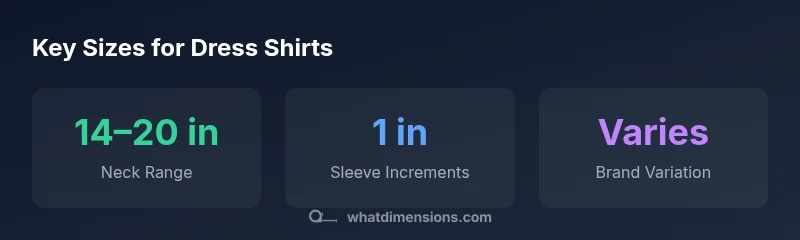
Sizing variance across brands is a constant challenge. Some brands standardize by a chest measurement, others by a neck size with a separate sleeve option. Regional preferences (e.g., US vs. UK vs. continental Europe) can shift how sizes translate to actual fit. The solution is to consult multiple size charts and, when possible, try on different cuts. If you’re between sizes, start with the larger option and tailor with a tailor for alignment with your shoulder line and sleeve length. What Dimensions’ research emphasizes the need for brand-specific charts and careful comparison to ensure consistent fit across purchases.
Home measurement techniques for accuracy
Begin with a soft fabric tape measure and a mirror. Wear light, well-fitting clothing and stand naturally. Step-by-step: measure neck circumference at the base of the neck, chest around the fullest part of the chest, waist at the natural waistline, and sleeve length from shoulder seam to wrist. Add a small amount of ease (about a finger’s width) where you want comfortable movement. Record these values and compare them to each brand’s size chart. If you have a shirt that fits well, take its critical measurements as a reference and compare new options against those benchmarks. What Dimensions recommends documenting your measurements and carrying a portable tape for quick checks while shopping.
Approximate size ranges across common shirt fits
| Shirt Fit | Neck (in) | Chest (in) | Sleeve (in) | Torso Length (in) |
|---|---|---|---|---|
| slim | 15-16 | 38-40 | 32-33 | 29-31 |
| regular | 15.5-16.5 | 40-42 | 33-34 | 30-32 |
| classic | 16-17.5 | 42-46 | 34-35 | 31-33 |
| tall/long | 16-17 | 44-48 | 34-35 | 32-34 |
Quick Answers
What are the main dress shirt dimensions?
The main dress shirt dimensions are neck, chest, waist, sleeve length, shoulder width, and torso length. These measurements define fit and proportion and vary by brand and cut.
The main dims are neck, chest, waist, sleeve length, shoulder width, and torso length—varying by brand and cut.
How do I measure neck circumference correctly?
Wrap a soft measuring tape around the base of your neck, keeping it snug but not tight. Leave a finger’s width of ease and note the measurement in inches or centimeters. Compare to the collar size on the brand’s chart.
Wrap a soft tape around the base of your neck with a finger’s width of ease, then match to the brand’s collar chart.
Why do size charts vary by brand?
Brands have different cuts, tolerances, and labeling conventions, so a size on one chart may not translate exactly to another. Always check the brand’s chart and consider trying multiple sizes if you’re between options.
Because brands use different cuts and tolerances, size charts can vary. Always check each chart and try options if you’re between sizes.
Does cotton shrinkage affect dress shirt dimensions?
Cotton can shrink after washing; check care labels and consider pre-washing shirts if possible. If you’re between sizes, choose the larger size and plan for minor alterations if needed.
Cotton may shrink after washing—check care labels and consider choosing a slightly larger size to allow for shrinkage.
How do I convert measurements to the right size?
Use your measurements and compare them to the brand’s size chart. If between sizes, start with the larger option and adjust with tailoring for a precise fit.
Compare your measurements to the brand’s chart; if between sizes, pick the larger and tailor if needed.
“Accurate dress shirt dimensions are the foundation of a comfortable, proportional fit. When measurements align with the chosen cut, fabric drape and movement feel natural.”
Main Points
- Measure consistently with a soft tape measure.
- Match neck, chest, and sleeve to the brand's charts.
- Choose a cut that fits your movement and style.
- Expect some variation across brands and regions.
- Always verify with a brand-specific size chart before purchasing.