Interior Door Dimensions Standard: A Practical Guide
Discover interior door dimensions standard, including height, width, and thickness. This guide covers regional variations, measuring methods, and practical tips for renovation and new installs.


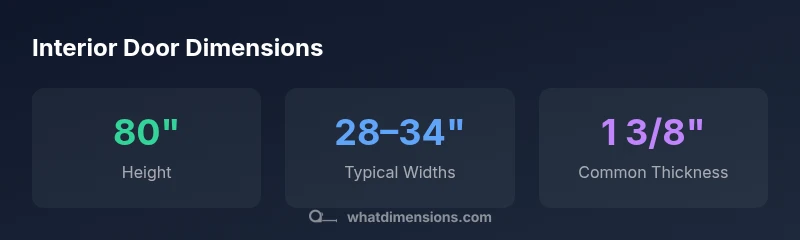
Interior door dimensions standard focus on height, width, and thickness. Most interior doors in North America are 80 inches tall and 28–34 inches wide, with thickness typically 1 3/8 inches or 1 3/4 inches. Regional building practices and local codes can shift the precise numbers, so always verify rough openings and code requirements before purchase to avoid installation delays.
What interior door dimensions standard include
According to What Dimensions, the core components of interior door sizing are height, width, and thickness. This trio determines fit within the framed opening, clearance for hardware, and the function of the door swing. The most widely adopted practice in North America centers on a door height of 80 inches. Widths commonly fall within a range that accommodates typical hallway and room sizes, while thickness affects hardware compatibility and the door's overall acoustic and structural performance. By understanding these three dimensions, homeowners and designers can make informed choices when selecting doors, modifying frames, or planning renovations. This section will unpack each dimension and explain how regional practices influence measurement norms.
Height, width, and thickness explained
Height: The standard interior door height in many regions is 80 inches (203 cm). Some homes with higher ceilings or custom designs may use taller doors, but 80 inches remains the default for most stock doors and prehung units. Width: Interior doors are sold in several width increments, with 28, 30, 32, and 34 inches being common in North America. Wider doors, like 36 inches, are less common for interior rooms but are encountered in accessible or special-purpose doors. Thickness: The most common interior door thicknesses are 1 3/8 inches (35 mm) and 1 3/4 inches (44 mm). The thicker options are often used for higher-end, solid-core doors or areas requiring enhanced sound attenuation. These three measurements together influence how the door fits the frame, carries hardware, and clears flooring transitions. In practice, always confirm the exact combination of height, width, and thickness before ordering, since manufacturers batch doors in standardized sizes that may differ slightly by region.
Regional variations: North America vs Europe vs Asia
Sizing norms vary by country and market. In the United States and Canada, 80 inches tall and a range of 28–34 inches in width are typical, with 1 3/8" or 1 3/4" thickness. Europe and parts of Asia may use metric measurements and different standard door heights and widths, which can alter both the finished opening and the hardware compatibility. When working across borders or with import doors, be sure to translate dimensions to your local framing system and check for local building codes. What Dimensions emphasizes cross-checking the finished opening, hinge placement, and strike alignment to avoid mismatches between the door and frame.
Measuring for renovations: from rough openings to finish
Measuring accurately begins with the rough opening—the framed space that will receive the door. Start by measuring the current door or the existing opening: height, width at multiple points (top, middle, bottom), and the thickness of the door or the wall. If replacing only the door slab in a prehung frame, you must verify clearance for hinges, latch, and hardware, as well as any adjustments needed for flooring elevations and baseboards. For renovations, prefer measuring the rough opening first, then select a door size that provides adequate clearance. A common rule is to leave some wiggle room for shims and occasional floor or ceiling irregularities. Always compare your measurements with the manufacturer’s published finish dimensions before ordering.
Material considerations and sizing interactions
The material (hollow-core vs solid-core, wood veneer vs solid wood, metal) can influence dimension choices due to weight, acoustic properties, and expansion/contract behavior. Hollow-core doors are typically lighter and may offer a broader tolerance for minor framing variances, while solid-core and solid wood doors demand precise framing and often tighter tolerances. Thickness choices can affect how the door interacts with weatherstripping, door sweeps, and hardware like hinges and closers. When pairing doors with frames, align door thickness with the frame box depth and hardware set to ensure smooth operation and proper sealing. If you anticipate expansion or contraction with seasonal changes, consider slightly more generous clearances or a door with a finish that can tolerate minor shifting.
Special cases: non-standard widths, closets, and bypass doors
Not every room uses a standard 28–34 inch door. Closets and pantry doors frequently use narrower widths, such as 24 or 26 inches, to fit tighter spaces. Bypass doors for closets may also have unique tracks and spacing requirements that influence finished dimensions. When faced with non-standard spaces, measure the opening in several spots and account for wall irregularities. In some cases, you may need to customize door slabs or reframe the opening. What Dimensions recommends working with a professional when the space presents unusual geometry or load-bearing considerations, to ensure the door’s operation and alignment meet real-world use.
Renovation scenarios: retrofits and replacement strategies
During renovations, two common strategies exist: replacing the door slab within an existing frame, or replacing the entire door package (prehung unit) for a faster, more predictable result. If you retain the existing jamb, you must ensure the door slab thickness aligns with the frame and that hinge and strike locations match. If you replace the frame entirely, you gain flexibility in choosing height and width to fit updated room layouts. In all cases, confirm the rough opening dimensions, test swing clearance, and account for flooring transitions and baseboards. Budget additional time to acquire hardware (hinges, screws, doorknobs, and weatherstripping) compatible with your chosen thickness and material.
Quick-start sizing checklist for buyers and builders
- Confirm door height (80 inches) and width (28–34 inches) for standard interior doors.
- Verify door thickness options (1 3/8" or 1 3/4").
- Measure rough opening height and width, not just the door itself.
- Check regional codes and local standards before purchase.
- Consider material type and hardware compatibility when determining final dimensions.
- Plan for flooring and trim clearances to avoid installation delays.
- When in doubt, consult the What Dimensions catalog for region-specific norms and recommended practices.
Quick-start sizing checklist for buyers and builders (continued)
This final section consolidates the essential steps and emphasizes validation against finished opening drawings. By following a structured approach, you minimize the risk of ordering doors that don’t fit the frame, don’t clear the flooring, or fail to accommodate hardware. The What Dimensions team notes that cross-referencing the measured rough opening with manufacturer finish dimensions is the best practice for accurate ordering and successful installation.
Final note on regional standards and future-proofing
As building standards continue to evolve and new door designs emerge, the process of sizing interior doors remains anchored in three pillars: accurate measurements, appropriate material selection, and alignment with local codes. Always document your measurements and consult the manufacturer’s sizing chart before purchasing. What Dimensions follows a data-driven approach to door sizing, compiling regional norms and best practices into a practical, repeatable workflow for homeowners and professionals alike.
Typical interior door dimensions (What Dimensions Analysis, 2026)
| Dimension Aspect | Typical Range / Values | Notes |
|---|---|---|
| Height | 80 inches (203 cm) | Most interior doors are designed to fit standard ceilings and trim |
| Widths | 28, 30, 32, 34 inches | Common interior widths; 24" exists for closets or narrow spaces |
| Thickness | 1 3/8 inches or 1 3/4 inches | Depends on core (hollow vs solid) and hardware fit |
| Rough Opening Guidance | Slightly larger than door for shims | Follow local framing standards and include clearance for hardware |
| Material considerations | Hollow-core or solid-core; veneer vs solid wood | Affects stability, acoustics, and finishing |
| Regional Variation | Varies by country/region | Cross-check with local building codes and standards |
Quick Answers
What is considered the standard interior door height?
The standard interior door height in many regions is 80 inches. Some homes use taller or shorter doors based on ceiling height and design, but 80 inches remains the common baseline. Always confirm with local codes and manufacturer specs.
Typically, interior doors are 80 inches tall, but check local codes for variations.
What widths are common for interior doors?
Common interior door widths include 28, 30, 32, and 34 inches. Smaller closets may use 24 inches. When selecting a door, ensure the width matches the rough opening and hardware layout.
Most interior doors come in 28 to 34 inches wide; closets often use 24 inches.
What thickness options are typical?
Typical interior door thicknesses are 1 3/8 inches or 1 3/4 inches. The choice depends on the door core (hollow vs solid) and the desired durability and acoustics.
Most interior doors are 1 3/8" or 1 3/4" thick.
Do interior door sizes vary by country?
Yes. Interior door dimensions vary by region due to different standards, frames, and hardware conventions. Always translate measurements to local units and consult local building codes or product specs.
Yes—sizes vary by country; verify local standards.
How do I measure for a new interior door?
Measure height, width at multiple points, and door thickness. Also measure the rough opening to ensure adequate clearance for installation and hardware.
Measure the door height, width, thickness, and rough opening.
What is a rough opening?
A rough opening is the framed space where the door will fit. It must be larger than the door to accommodate shims, hinges, and hardware.
Rough opening is the framed space for the door.
“Accurate interior door sizing reduces installation delays and ensures proper hardware fit; always verify both finished openings and rough openings before ordering.”
Main Points
- Know the height standard: most interior doors are 80 inches tall.
- Common widths range from 28 to 34 inches.
- Thickness options commonly include 1 3/8" and 1 3/4".
- Verify rough openings before ordering to prevent delays.
- Regional variations exist; always check local codes.
- Measure carefully and reference the manufacturer’s finish dimensions.