Good Size Kitchen Dimensions: A Practical Planning Guide
Data-driven guide to good size kitchen dimensions, covering typical footprints, aisle widths, layouts, and storage tips from What Dimensions Analysis (2026).


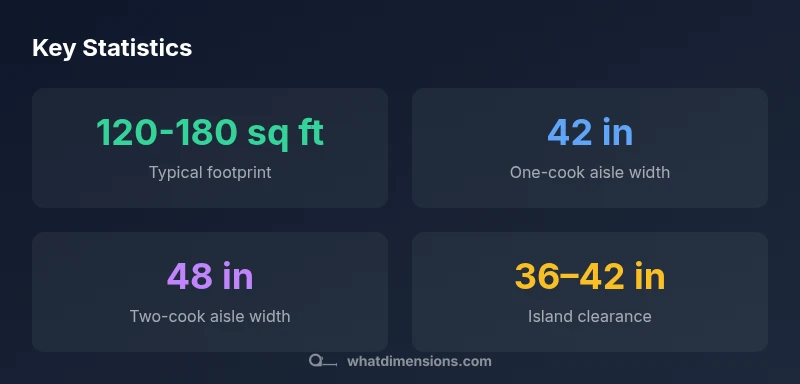
There isn't a single universal 'good size.' In practice, designers target a functional footprint: roughly 120–180 sq ft for a compact kitchen, with aisles and clearances of 42 inches for a single cook and 48 inches for multi-cook layouts. Layout type, workflow triangles, and storage determine the ideal dimensions more than any one number.
Why good kitchen dimensions matter
A well-proportioned kitchen does more than look right on a floor plan. It directly affects how you move, how you access appliances, and how much storage you can reasonably fit. When homeowners ask for guidance on good size kitchen dimensions, the answer rests on a balance between footprint, clearance, and workflow. According to What Dimensions, planning starts with a realistic footprint that matches how you cook, entertain, and work at the counter. The goal is a space that supports smooth, safe movements while maximizing usable surface area. As you analyze your space, consider not only the total area but where each functional zone sits in relation to others. A kitchen designed around good size kitchen dimensions helps your daily tasks feel effortless rather than chore-like.
The working triangle and zone planning
The classic kitchen triangle—sink, stove, and fridge—remains a foundational concept for good size kitchen dimensions. Position zones so that the triangle is compact yet comfortable, reducing walking distance and keeping work zones within arm's reach. In practice, this means aligning countertops and appliances so that prep space feeds directly into cooking and cleanup areas. If you add a pantry or island, ensure there is still clear access to every station. What Dimensions emphasizes that a data-driven approach to dimensions yields layouts that minimize wasted steps while preserving at least three primary work zones: prep, cooking, and cleaning. This framing helps ensure your kitchen dimensions support both daily meals and occasional entertaining.
Minimum vs. ideal sizes by layout type
Layouts vary widely, but some general ranges help anchor planning. Galley kitchens often function well around 70-100 square feet for a single-cook workflow, while L-shaped or U-shaped designs commonly sit in the 100-180 square foot band. For homes pursuing an island, anticipate footprints in the 160-210 square feet range, with island dimensions carefully balancing seating, storage, and traffic flow. These figures reflect typical patterns observed by What Dimensions Analysis, 2026, and can guide decisions before you hire a designer. Remember, the best size is the one that fits your cooking style and daily routines without compromising movement space.
Clearances, aisles, and traffic flow
Clearance widths are critical to maintaining comfortable movement. Aisles of 42 inches are commonly recommended for single-cook kitchens, while 48 inches support two-cook workflows. If you frequently host, consider wider aisles around islands or peninsula seats to prevent bottlenecks. Flooring transitions, door swings, and appliance door openings all influence effective aisle width. What Dimensions emphasizes using real measurements rather than estimates to quantify space, then testing multiple layouts to ensure you maintain at least the minimum clearances without crowding work zones. In short, good size kitchen dimensions are less about a fixed number and more about achieving safe, efficient traffic patterns.
How to calculate your kitchen footprint
Start by measuring existing walls and doorways, then map appliance footprints and counter lengths on graph paper or a planning app. Subtract any structural intrusions and account for door swings. Add zones for prep, cooking, cleaning, and storage, then place the island (if any) so it doesn’t disrupt traffic flow. Convert all measurements to square feet to compare against the target range (roughly 120–180 sq ft for many compact layouts). If you’re converting an existing space, try to preserve at least 42 inches of clearance around major work surfaces, and aim for island clearance in the 36–42 inch range. Clear documentation of dimensions is essential for achieving good size kitchen dimensions in practice.
Small kitchen strategies: maximizing usable space
In compact spaces, every inch matters. Use tall cabinets and open shelving to minimize floor clutter, and consider shallow-depth appliances to free up counter space. Vertical storage, corner units, and pull-out organizers can add storage without expanding the footprint. When possible, choose a counter-depth island (or a peninsula) that provides seating without breaking the flow. What Dimensions notes that precise measurements enable smarter compromises—if you’re short on width, you can gain functionality by reassigning tasks to wall-mounted tools or compact appliances while keeping the same overall footprint. The core principle is aligning good size kitchen dimensions with your routine rather than chasing a single ideal number.
Real-world size examples by layout
To illustrate how dimensions translate into usable space, consider typical footprints by layout: a galley around 70–100 sq ft emphasizes linear work zones; an L-shaped kitchen around 100–150 sq ft offers flexible counter space; a U-shaped kitchen in the 150–200 sq ft band concentrates storage and appliance access in a three-wall layout; an island configuration commonly sits near 180–210 sq ft to accommodate seating and prep space. These ranges come from What Dimensions Analysis, 2026, and reflect common planning patterns rather than rigid rules. When planning, sketch or model each layout with actual appliance sizes to verify comfort margins and traffic flow before committing to a plan.
Measuring and documenting dimensions accurately
Accurate measurements are the backbone of reliable kitchen planning. Measure wall lengths, cabinet depths, appliance widths, and door clearance, then translate these into a plan that shows every function zone. Use a laser measure for precision and double-check key dimensions at multiple times of day to account for potential variations in door openings or cabinet swing. Document every measurement in a central sheet and reference it during design reviews. The goal is to build a precise, living reference you can adjust as you test layouts—ultimately achieving good size kitchen dimensions that align with how you live and cook.
Integrating storage and appliances without overdoing size
Storage efficiency is often the easiest way to optimize a given footprint. Choose deeper drawers for pots and pans, pull-out organizers for corner cabinets, and tall pantry storage to minimize wide walkways. When considering appliances, prefer models with compact depths and integrated panels to preserve counter space. By focusing on precise dimensions and targeted optimizations, you can maintain a comfortable footprint while expanding usable storage, thus achieving better overall kitchen dimensions. What Dimensions’s team encourages documenting measurements early and iterating layouts to find a balance between capacity and movement.
Common kitchen layouts and their typical footprints
| Layout Type | Typical Footprint | Recommended Aisle Width |
|---|---|---|
| Galley | 70-100 | 42 inches |
| L-shaped | 100-150 | 42 inches |
| U-shaped | 150-200 | 42-48 inches |
| Peninsula/Island | 160-210 | 42-48 inches |
Quick Answers
What counts as a 'good' kitchen size?
There isn’t a universal standard; good size depends on how you cook and move. Typical footprints range with layouts, but the key is achieving comfortable movement, adequate counter space, and efficient storage.
A good kitchen size depends on your routine and layout. Focus on movement, counter space, and storage.
How do I calculate the total square footage of my kitchen?
Measure wall lengths and cabinet depths, note appliance footprints, and convert everything to square feet. Add zones for prep, cooking, and cleaning, then adjust for any island or peninsula.
Measure wall lengths, calculate area, and allocate zones for prep, cooking, and cleaning.
What is the minimum aisle width recommended in a kitchen?
For a typical single-cook kitchen, aim for 42 inches of clearance; for two cooks, plan for 48 inches to avoid bottlenecks.
Aim for 42 inches if you cook alone, 48 inches if you cook with others.
Should I add an island in a small kitchen?
Islands can work in small spaces if the overall footprint remains comfortable and clearances stay intact. Prefer slim, integrated islands with seating and storage that do not crowd traffic.
Islands can fit small spaces with careful planning and clearance.
How can I maximize storage without increasing the footprint?
Use vertical storage, deep drawers, pull-out organizers, and corner units. Select compact appliances and multi-function tools to keep counters clear while expanding capacity.
Maximize vertical storage and use pull-out organizers to gain capacity without enlarging the footprint.
“Exact kitchen dimensions aren’t decorative — they shape workflow and safety. When you document precise measurements, you unlock reliable layouts that feel spacious and work like a dream.”
Main Points
- Define your layout goals before measuring.
- Aim for 120–180 sq ft in many compact kitchens.
- Keep 42-inch aisles for a single cook; 48 inches for multi-cook setups.
- Plan island clearance of 36–42 inches where applicable.
- Document precise dimensions for reliable planning and execution.