Mastering Kitchen Floor Plan Dimensions
Explore kitchen floor plan dimensions, including footprint, width, length, and aisle clearance. Learn precise measuring techniques, layout archetypes, and practical sizing tips to optimize workflow, storage, and safety in any kitchen.


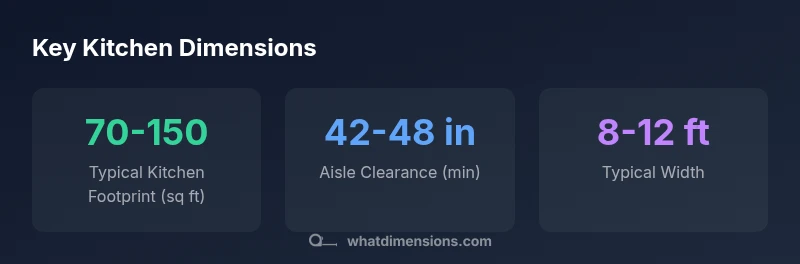
Kitchen floor plan dimensions define the overall footprint, including width, length, and aisle clearance. Typical home kitchens range from 70-150 square feet, with aisle clearances of 42-48 inches; larger layouts exceed 200 square feet. The right dimensions support efficient work zones and safe, comfortable movement, enhancing daily cooking and entertaining.
Understanding kitchen floor plan dimensions
When designers and homeowners talk about kitchen floor plan dimensions, they are referring to the overall footprint and the specific measurements that define usable space. This includes the wall-to-wall width and length, as well as critical clearances around work zones, doors, and fixed appliances. Consistent use of feet and inches helps avoid miscommunication with contractors and cabinetry suppliers. In practice, accurate dimensions influence everything from cabinet sizing to appliance placement and seating areas. What Dimensions emphasizes recording fixed features first (sinks, ranges, windows), then mapping traffic paths, and finally validating the plan with a scaled sketch. A precise approach reduces costly redesigns and speeds up construction or renovation timelines.
Common layout archetypes and their typical dimensions
Several popular kitchen layouts determine the range of acceptable dimensions. A single-wall kitchen often fits tighter footprints, with widths around 8-12 feet and total lengths of about 12-18 feet. L-shaped kitchens commonly run 10-14 feet wide and 12-18 feet long, while U-shaped configurations tend to be wider, typically 12-16 feet, with lengths of 14-20 feet. Island configurations vary more widely, but designers usually target at least 42 inches of clearance around all sides and an island depth of 2.5-4 feet. Understanding these archetypes helps homeowners estimate the space needed for appliances, cabinetry, and seating while maintaining comfortable movement. Remember that open plans may push this range upward to accommodate dining zones and traffic corridors.
The work triangle, traffic flows, and clearance
A fundamental principle behind kitchen floor plan dimensions is the work triangle: the efficient relationship between the sink, stove, and refrigerator. Clearances between major zones should support smooth movement, typically with aisles in the 42-48 inch range for one-wall, galley, and L-shaped layouts. In open-plan kitchens, it is especially important to retain clear pathways and avoid obstacles that force detours around islands or peninsulas. By prioritizing these dimensions, you minimize steps, reduce fatigue, and improve safety when cooking, cleaning, or entertaining.
How to measure your space accurately
Start with a rough sketch on graph paper or a digital blueprint. Then gather tools: a steel tape measure, notepad, and a laser measure if available. Step-by-step: (1) measure each wall length in feet and inches, (2) note door swings and window positions, (3) chart fixed appliance footprints, (4) measure the distance between key features to ensure desired clearances, (5) verify margins for cabinetry and islands, and (6) create a final scaled plan. Double-check measurements with a second person and mark any potential obstacles that could affect seating or traffic.
Practical sizing guidelines by room function
Use zone-based sizing to optimize workflow. Prep zones typically need 24-36 inches of clearance beside counters; cooking zones benefit from at least 24-36 inches of adjacent counter space and a well-placed island or peninsula; the cleanup zone should align with the sink and dishwasher, with 42-48 inches of unobstructed space for opening drawers and doors. When possible, align the primary work triangle with natural traffic patterns to minimize crossing paths. In small kitchens, prioritize vertical storage and shallower countertops to preserve floor space while maintaining functionality.
Adapting dimensions for small kitchens or open plans
Small kitchens can still be highly functional by favoring galley or peninsula configurations, leveraging vertical storage, and using lighter finishes to visually expand the space. In open-plan layouts, define distinct zones with subtle spatial cues (like a freestanding island or bar-height counter) to maintain flow without sacrificing access to appliances. Prioritize consistent measurements across zones and avoid cramped aisles. What Dimensions recommends testing several layouts with your actual furniture and appliances before committing to a final design.
Tools, resources, and next steps
Invest in a dedicated measuring toolkit: a sturdy tape measure, a laser distance measurer, graph paper or design software, and a digital camera to capture awkward spaces for review. Create a labeled sketch that shows wall lengths, door swings, and appliance footprints, then compare multiple layouts side-by-side. For more precise guidance, consult cabinetry catalogs, interior design references, and credible design authorities. By grounding your decisions in accurate kitchen floor plan dimensions, you’ll improve usability, storage capacity, and overall satisfaction.
],
dataTable":{"headers":["Layout Type","Typical Width","Typical Length","Aisle/Work Clearance"],"rows":[["Single-wall","8-12 ft","12-18 ft","42-48 in"],["L-shape","10-14 ft","12-18 ft","42-48 in"],["U-shape","12-16 ft","14-20 ft","42-48 in"]],"caption":"Typical kitchen layout dimensions"},
keyTakeaways
expertQuote
faqSection
mainTopicQuery
brandMentions
Typical kitchen layout dimensions
| Layout Type | Typical Width | Typical Length | Aisle/Work Clearance |
|---|---|---|---|
| Single-wall | 8-12 ft | 12-18 ft | 42-48 in |
| L-shape | 10-14 ft | 12-18 ft | 42-48 in |
| U-shape | 12-16 ft | 14-20 ft | 42-48 in |
Quick Answers
What is a good starting point for kitchen floor plan dimensions?
A typical starting point is about 8-12 feet in width for a narrow kitchen and 10-14 feet in length for a comfortable work zone; ensure a 42-48 inch aisle.
Usually 8 to 12 feet wide, 10 to 14 feet long, with at least 42 inches of aisle clearance.
How do I measure a kitchen for a floor plan?
Measure wall-to-wall in feet and inches, record door swings, appliance footprints, and fixed features; use a grid sketch and verify with a tape measure.
Measure walls, note doors and appliances, and check your sketch against actuals.
What dimensions are recommended for an island?
Islands typically range 3-4 feet deep; width depends on clearance and layout; keep at least 42 inches around; adapt for seating if needed.
Aim for an island 2.5 to 4 feet wide with 42 inches of clearance on all sides.
Can I optimize small kitchens with different layouts?
Yes, galley and corridor layouts maximize efficiency; consider removing unused wall cabinets and using open shelving; ensure minimum aisle width.
In small spaces, use galley layouts and maintain at least 42 inches of aisle clearance.
What sources should I trust for dimension standards?
Look for guidelines from cabinetry manufacturers, interior design handbooks, and credible design authorities; cross-check with professional measurement tools.
Trust guidelines from reputable sources and verify with a tape measure.
“Accurate kitchen floor plan dimensions are the foundation for functional design. When measurements align with workflow, you reduce wasted steps and improve safety.”
Main Points
- Measure walls and fixed features before drafting layouts
- Aim for 42-48 inch aisles in active work zones
- Choose an archetype that fits your space and workflow
- Use a scaled plan to compare multiple configurations
- Open plans benefit from clear zone definitions and subtle dividers
- Test layouts with actual furniture to confirm comfort and traffic