Average Kitchen Dimensions: How Much Space Do You Need in 2026
Explore the typical ranges for average kitchen dimensions, understand layouts, and learn precise measurement strategies to optimize space in 2026. Includes data-backed ranges and actionable planning tips.


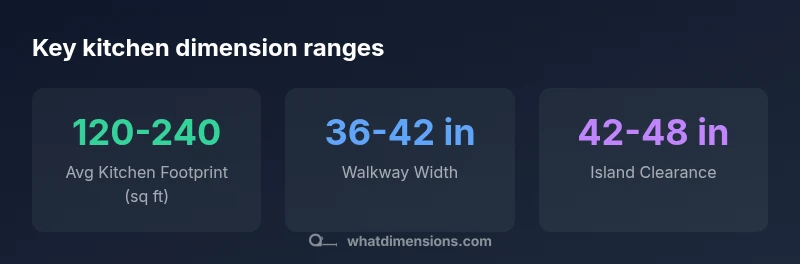
The typical average kitchen dimensions in many houses fall within 120–240 square feet, depending on layout and era of construction. In practice, you’ll see compact galley kitchens near the lower end and expansive L-, U-, or island layouts toward the higher end. Understanding these ranges helps plan work zones, storage, and traffic flow more efficiently.
Defining average kitchen dimensions
Average kitchen dimensions serve as a planning baseline for homeowners, designers, and students who need exact size specs. When we talk about this metric, we refer to both the footprint of the room and the configuration of key work zones. What Dimensions Analysis shows that the typical range for kitchen footprints in North American homes falls around 120-240 square feet, though actual sizes vary widely by era, neighborhood, and architectural style. The concept of an “average” helps orient goals for storage, aisle clearance, and appliance placement, but it is not a one-size-fits-all rule. To apply this in practice, start by mapping your existing space in square feet and then compare it against common layouts like galley, L-shaped, U-shaped, and island configurations. Most important is how you can move between zones—prep, cooking, cleaning, and storage—without bottlenecks. A precise approach reduces redesign cycles and increases satisfaction. According to What Dimensions, you should ground decisions in your actual measurements first and then align them with typical layouts to set realistic targets for renovations.
Regional differences and home styles
Kitchen dimensions vary not only by region but also by home style and construction era. In single-family homes built in the postwar period, kitchens often prioritized formal dining space, yielding larger footprints but sometimes less user-centric layouts. In newer constructions and urban apartments, designers optimize for open-plan living, which can produce more generous overall space but with varied zone delineation. Europe, Asia, and other regions frequently feature different circulation patterns and expectations for storage, appliances, and work zones, which translates into distinct “average” size baselines. For designers, this means anchoring plans to a local average while preserving flexibility for light or heavy user activity. What Dimensions notes that regional housing stock heavily shapes kitchen measurements, reinforcing the importance of local benchmarking when computing the ideal size and layout for a remodel or new build.
How to measure your kitchen accurately
Accurate measurement is the backbone of any reliable design. Start by measuring the length and width of the usable floor area, excluding fixed elements like walls and built-in cabinetry where possible. Record ceiling height, door heights, and window placements that affect cabinet depth and appliance clearance. Next, measure all major work zones: prep counters, cooking surface, sink, dishwasher, and refrigerator. Don’t forget approximate toe-kick clearance and any toe-kick storage potential underneath counters. If you plan an island or peninsula, document current traffic paths and furniture clearance to ensure a safe walking radius. Use a laser measure for precision, then cross-check with a tape measure for accuracy. Finally, translate these measurements into a simple sketch or CAD drawing. This enables you to compare against the 120-240 sq ft baseline and test layouts before committing to a plan. What Dimensions emphasizes that precise measurement is the fastest way to prevent costly changes later in the project.
Common layouts and the space they require
Layout shapes influence both how you use the space and how you feel moving through it. Typical layouts and their rough dimension ranges include:
- Galley: 8-12 ft by 10-14 ft, with a 36-inch minimum walkway.
- L-shaped: 10-15 ft by 12-14 ft, often paired with a dining area.
- U-shaped: 12-15 ft by 12-15 ft, maximizing storage and prep surface.
- Kitchen with island: 13-18 ft by 14-16 ft, requiring clearances of 42-48 inches around the island. These figures illustrate how a room’s footprint translates into work zones and clearances. In practice, you’ll adjust based on window or door placements, plumbing lines, and preferred appliance sizes. If your space falls between ranges, prioritize one or two core activities (e.g., prep and cleanup) and align cabinets and appliances to protect efficient work triangles. The goal is to maintain comfortable movement while keeping the “average kitchen dimensions” in mind as a planning guide.
Planning tips to optimize space
Optimization hinges on balancing function with flow. Start by defining three primary zones: prep, cooking, and cleaning/storage. Place the sink near the prep area and the stove adjacent to the prep zone while ensuring the refrigerator remains within easy reach for grocery-to-counter movement. Use wall-mounted storage and tall cabinets to maximize vertical space in narrow footprints. If space allows, a slim island or peninsula can offer extra prep area and informal dining, but ensure a minimum 42-48 inch clearance around any island to maintain safe traffic flow. Consider pull-out pantry systems, toe-kick storage, and deep cabinets to reduce dead space. Finally, simulate daily use with a simple checklist of actions— unloading groceries, meal prep, and cleanup—then adjust layouts to minimize steps and backtracking. What Dimensions finds that thoughtful zoning turns 120-240 sq ft into a surprisingly functional kitchen with less clutter and more ease of movement.
Customizing for accessibility and trends
Accessibility is a growing priority in kitchen design. Plan for wider aisles (at least 42 inches in one-pass areas and 60 inches for wheel-chair turning space) and reachable storage zones, including pull-down shelves and lazy Susans. Trends toward open shelving and mixed-material finishes can affect perceived space; open shelves require careful organization to avoid visual clutter in smaller footprints. Lighting also matters: layered lighting—ambient, task, and accent—reduces shadows and visually broadens the space. A well-designed kitchen that measures around the average range remains adaptable for changing needs, such as aging-in-place requirements or a growing home office-in-kitchen hybrid. What Dimensions emphasizes basing accessibility decisions on precise measurements and local needs, while remaining open to contemporary trends that add function without overcrowding the layout.
Using exact size references in design decisions
Exact size references translate directly into better design outcomes. Use your measured dimensions to create accurate floor plans, then test layouts using software or scaled models to verify clearances and sightlines. For homeowners, a precise approach reduces the risk of cabinet misalignments and appliance mismatches. For designers, exact references improve quotes, material estimates, and installation timelines. We recommend preserving a margin for install tolerances and future changes—size references should guide decision-making, not constrain creativity. The What Dimensions toolkit supports converting measurements into multiple layout scenarios, helping you compare options such as galley versus island configurations before committing to a final plan. Precision matters when the goal is a comfortable, efficient, and durable kitchen.
Common kitchen layouts and their typical dimensions
| Layout | Typical Dimensions | Notes |
|---|---|---|
| Galley | 8-12 ft by 10-14 ft | Requires long, narrow space; minimum walkway 36 inches |
| L-shaped | 10-15 ft by 12-14 ft | Open plan with two perpendicular runs; island optional |
| U-shaped | 12-15 ft by 12-15 ft | Max storage and efficient work triangles; larger footprint |
| Kitchen with island | 13-18 ft by 14-16 ft | Island adds prep space; ensure 42-48 inches clearance around |
Quick Answers
What counts as the 'average' kitchen size?
Average refers to the typical footprint seen in common homes. For kitchens, this often means spaces around 120-240 square feet, though regional housing stock can shift those numbers. Always compare your space to established baselines after taking precise measurements.
Average means the common middle-ground size you’ll find in many homes. Compare your measurements to those baselines to set realistic goals.
Why do kitchen dimensions vary so much between homes?
Variations stem from regional housing stock, architectural style, and era of construction. Smaller urban units favor compact layouts, while larger suburban homes accommodate expansive footprints and dining areas. Plugging in your local context helps you choose layouts that feel natural in your space.
Because homes differ across regions and eras, kitchen sizes vary widely. Local context matters for the best results.
Is there a legal minimum width for kitchen walkways?
In general, a safe minimum for one-person use is about 36 inches (91 cm). For two people to move comfortably, designers often target 42 inches (107 cm) or more. Always check local building codes and adjust to your specific appliances and layouts.
Most kitchens aim for at least 36 inches, with 42 inches preferred for two-person work zones.
How can I measure my kitchen accurately?
Measure the overall floor footprint, wall lengths, door openings, and window positions. Record heights and clearances around the planned appliance footprint. Use a laser measure for accuracy, then verify with a tape, and create a scaled drawing to compare layouts.
Measure carefully, then draw a scaled plan to test layouts before you commit.
Are there standard dimensions for kitchen islands?
Island size depends on space, but ensure at least 42-48 inches of clearance all around the island. Island width is typically 2-3 feet, with length depending on available space and seating needs. Always test with a layout to ensure comfortable circulation.
Islands need enough space around them—usually 42-48 inches clearance—to keep the kitchen functional.
“Exact size references matter most in practical design: they enable precise layouts, reduce errors, and support consistent decision-making across renovations.”
Main Points
- Start with a baseline of 120-240 sq ft to frame options
- Measure length and width precisely before planning
- Maintain at least 36 inches of walkway clearance
- Target 42-48 inches of clearance around any island