Dimensions of a Kitchen Counter: A Practical Sizing Guide
Explore standard kitchen counter dimensions, including depth, height, and length, with practical guidance for ergonomic design, storage, and appliance placement. Learn how to optimize counter sizing for comfort and efficient workflow.


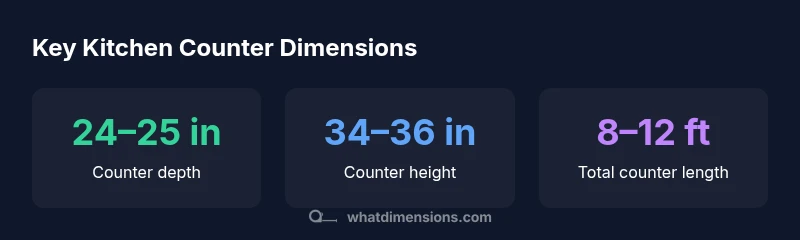
The dimensions of a kitchen counter typically center on depth, height, and length. Most counters are 24–25 inches deep, with a standard counter height of 34–36 inches to match ergonomic prep work and seating. Counter lengths vary by kitchen size, but 8–12 feet is common for full-wall layouts. What Dimensions analyzes these common dimensions and how they affect usability, storage, and appliance placement.
Understanding the core measurements
When planning any kitchen, the foundational numbers are depth, height, and length. These dimensions determine not only how much space you have to work with, but also how comfortably you can move between stations, reach for utensils, and operate appliances. In practical terms, the most common depth is 24–25 inches, which provides enough workspace while allowing for under-counter storage options. Counter height of 34–36 inches is widely favored for balanced ergonomics, enabling you to chop, mix, and slide items without wrist strain. Length varies with room size, but many layouts settle in the 8–12 foot range for full-wall configurations. The What Dimensions team emphasizes sizing that aligns with user tasks and the available floor footprint.
Ergonomics and workflow
Ergonomics play a central role in counter dimensions. A counter height of 34–36 inches suits most adults, reducing the need to bend or lift awkwardly while preparing meals or cleaning. Depth affects reach: a deeper counter (closer to 25 inches) provides more prep space but can encroach on walkway space in tight kitchens. If you regularly perform countertop work while seated, consider slightly adjusting height for seating compatibility and using a bar-height stool arrangement. For island work zones, ensure you maintain at least 42 inches of clearance for movement and appliance access. The balance between depth, height, and length ultimately influences posture, reach, and efficiency.
Layout scenarios and how dimensions inform design
The layout of a kitchen—single-wall, galley, L-shaped, or island-centered—dictates how counter dimensions interact with other elements. In a single-wall kitchen, 8–12 feet of counter length can support prep, cooking, and serving without crowding. In a galley, maximizing counter depth within the corridor width requires careful cooperation with appliance placement and wall storage. L-shaped kitchens benefit from a primary work triangle, where counter height and depth support safe movement between sink, range, and fridge. Islands demand not only depth and height alignment but also generous clearance around the perimeter to avoid bottlenecks when multiple people work at once.
Overhangs, edges, and materials
Overhangs extend usable surface but must be supported by cabinetry or structural elements. A standard 1½-inch to 2-inch overhang works well for most seating areas, while thicker stone or quartz countertops may require corbels or hidden supports for stability. Edge profiles affect both aesthetics and ergonomics; a rounded edge can reduce impact injuries in busy kitchens, whereas a sharp edge emphasizes a modern look but may require more attention to safety. Material choice influences maintenance and performance as well—granite, quartz, and solid surface each pair differently with depth and height constraints.
Plumbing, electrical, and appliance considerations
Counter dimensions must accommodate under-counter plumbing for sinks and dishwashers as well as electrical outlets for small appliances. Plan pipe runs and outlets so that wall cabinets do not obstruct a practical counter edge. When integrating appliances like under-counter microwaves or beverage centers, measure for clearances including ventilation requirements. If you’re adding an island, include space for electrical outlets or a pop-up power strip to keep the main counter areas free from cords. The end result should be a cohesive, safe workspace with sufficient surface area for all tasks.
Common mistakes and how to avoid them
Rushing counter sizing without measuring your space is a frequent error. Common missteps include choosing a standard depth without considering cabinet layouts, selecting a height that feels awkward for long prep sessions, and underestimating aisle clearance around islands. Avoid over-squeezing by using a floor plan with scaled measurements and short, frequent checks during remodels. Always test your workflow: simulate prep, wash, and plating in your space to confirm that you can move fluidly between zones without obstruction.
Common kitchen counter dimensions and practical notes
| Aspect | Typical range | Notes |
|---|---|---|
| Depth | 24–25 inches | Balanced workspace and storage |
| Height | 34–36 inches | Ergonomic for most users |
| Island clearance | 42 inches | Essential for safe movement |
| Total length (full-wall) | 8–12 feet | Depends on room size and layout |
Quick Answers
What is the standard depth of a kitchen counter?
The standard depth is typically 24–25 inches. This balances workspace with storage and allows room for under-counter cabinetry. If space is tight, a shallower depth may be used, but it reduces prep area.
Typically, 24 to 25 inches deep is standard. It gives you enough prep space without crowding the room.
What is the typical counter height for ergonomic seating?
Most counters are 34–36 inches tall to support comfortable chopping and plating while standing. For bar-height seating, you may adjust to around 40–42 inches and pair with appropriately sized stools.
Most counters sit at about 34 to 36 inches high to keep your posture comfortable while you work.
How long should kitchen counters be in a small kitchen?
In compact spaces, prioritize efficient work zones over total length. Aim for 8–12 feet of counter across key walls or an L-shape, plus a compact island if space allows.
For small kitchens, eight to twelve feet of counter across the main work zones is a good target.
Do I need deeper counters if I install an island?
Islands typically follow the same depth as main counters (24–25 inches), but you may extend the overhang for seating. Ensure there is enough clearance around the island for movement.
Islands usually use the same depth, with a seating overhang if you want a breakfast bar.
How do I account for appliances under the counter?
Plan plumbing and outlets in advance, ensuring there’s space for sinks, dishwashers, or beverage centers without impeding counter clearance. Check ventilation needs for any enclosed appliances.
Make sure you’ve planned plumbing and outlets before finalizing dimensions to avoid clashes.
“Counter dimensions should be tailored to how you cook and move through the space; standard ranges work, but customization yields real comfort and efficiency.”
Main Points
- Align counter depth with storage goals and flow
- Choose height in the 34–36 inch range for comfort
- Target 42-inch clearance around islands for safety
- Plan lengths based on room shape and work zones
- Factor overhangs and edge profiles into usability