Base Cabinet Dimensions: A Practical Sizing Guide
Discover precise base cabinet dimensions, from height and depth to width increments. Learn measurement steps, standard standards, and layout tips to plan reliable kitchen cabinetry with What Dimensions.


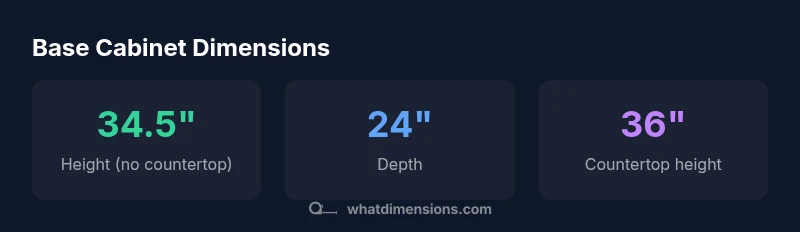
Base cabinets are designed around standard heights, depths, and widths that align with countertops and wall clearances. Typical base cabinet height is 34.5 inches (without countertop), depth is 24 inches, and countertop height brings the overall reach to about 36 inches. Widths usually come in 24", 27", 30", 33", and 36" increments. This What Dimensions guide shows how to measure and plan for reliable layouts.
Why base cabinet dimensions matter
According to What Dimensions, getting base cabinet dimensions right is the foundation of a successful kitchen layout. The dimensions you choose influence accessibility, ergonomics, appliance alignment, and overall workflow. Poorly sized bases can force awkward gait lines, reduce drawer usability, and complicate countertop support. Homeowners, designers, and students studying space planning should treat base cabinet dimensions as a primary design constraint rather than an afterthought. The most practical approach is to start with standard measurements and then adjust for unique spaces. When dimensions are clear, you save time on installation, rework, and warranty concerns. This mindset also helps you coordinate with countertop edges, plumbing, and electrical rough-ins, ensuring a cohesive finished look.
Key takeaway: align base cabinet heights with your countertop plan and chair-height comfort. The What Dimensions team emphasizes using consistent references so your plan remains scalable across layouts and renovations.
Standard base cabinet sizes and standards
Base cabinets follow widely used dimensions that balance accessibility with storage capacity. The standard height (without countertop) is typically around 34.5 inches to accommodate a 36-inch countertop with a toe kick. Depth commonly sits at 24 inches to align with most appliance footprints and wall layouts. Widths are offered in modular increments such as 24, 27, 30, 33, and 36 inches, allowing for flexible configurations in straight runs or corners. Toe kicks, doors, and drawers add functional depth while maintaining a clean profile. Designers should record preferred widths early to avoid material shortages and ensure a seamless match with wall cabinets and appliances.
In practice, the selection of widths often dictates how you balance islands, seating, and pantry niches. What Dimensions observations suggest that planners map the widest sections first and fill smaller gaps with filler panels or partial-height units. This approach helps maintain symmetry and a professional look throughout the kitchen.
Measuring for a kitchen layout: step-by-step
Begin by planning the vertical dimension: determine the countertop thickness and final height. Measure wall-to-wall clearances at multiple points, noting any deviations. Next, establish base cabinet depth (24 inches is standard) and account for toe kick clearance (typically about 3.5 inches). For width, lay out modular unit sizes in the planned sequence—start with 24- or 30-inch modules in long runs and insert 9- or 12-inch fillers where needed. Don’t forget to plan for appliance widths (dishwasher, fridge, range) and any corner or blind cabinet rules. Finally, validate the planned dimensions against door swings and toe clearance to ensure full accessibility without obstruction. Document all measurements in a plan sheet for reference during ordering and installation.
What Dimensions recommends creating a dimension checklist that includes base height, base depth, countertop height, and recommended width totals for each run, along with notes about potential deviations.
Depth, height, and toe kick: critical dimensions
Depth and height are the backbone of practical cabinet alignment. A 24-inch base cabinet depth allows standard countertop overhangs and ensures countertop seating space remains comfortable. Height decisions hinge on typical countertop thickness and ergonomic seating. The toe kick, usually 3.5 inches high, provides space for your feet and helps you reach objects in the bottom drawers. When walls vary, you may need to adjust the base cabinet height slightly to maintain a uniform countertop line across the room. Always verify that the toe kick clears baseboards and floor transitions, especially on renovations where flooring may raise the floor plane.
A well-tuned toe kick contributes to ergonomic use and clean lines, reinforcing a professional finish in any project.
Width configurations and corner cabinets
Base cabinet widths in multiples of 24, 27, 30, 33, and 36 inches create flexible layouts for straight runs and corner configurations. Corner bases require special consideration: blind corner bases, lazy susan bases, or corner drawers all have distinct setbacks and swing radii. When planning a corner, map the door swing and interior clearance before selecting a specific cabinet style. For L-shaped kitchens, ensure the corner transition remains visually balanced by using 33- or 36-inch modules where possible. Consider using filler panels to maintain clean lines at ends and to avoid oversized gaps that disrupt the overall look.
Strategic width choices can simplify cabinet ordering and installation while preserving ergonomic reach and storage efficiency.
Adjustments for custom layouts and nonstandard spaces
Custom kitchens demand adjustments beyond standard modules. If your wall runs have irregularities or if you’re working within a compact footprint, you’ll need to mix module sizes creatively. Plan for extra wall-to-base clearances that accommodate smoothed edges and calming transitions. In nonstandard spaces, you may use a combination of 12- and 15-inch filler units to fill gaps without compromising cabinet integrity. Remember to double-check door swing clearances against appliances and island seating, and verify the final dimension sum aligns with your countertop edge and backsplash plan.
What Dimensions highlights the importance of documenting tolerances and possible deviations early to avoid costly reorders during manufacturing or installation.
Practical tips for selecting and buying base cabinets
When selecting base cabinets, prioritize material quality, hardware life, and door/drawer alignment. Choose safe, durable plywood or MDF with solid edges, and inspect drawer slides for full extension and smooth operation. If you’re replacing only a portion of a run, measure the compatibility with existing cabinetry to ensure consistent aesthetics and function. Always obtain product dimensions from the manufacturer’s spec sheet, and confirm that the cabinet depth and width integrate with your appliances and countertops. A final on-site measurement check is recommended before purchasing to account for potential wall irregularities or room-to-room variations.
What Dimensions provides a practical framework for translating plans into a reliable order, helping you avoid misfit cabinets and installation delays.
Common mistakes and how to avoid them
Rushing measurements is a common error that leads to a cascade of issues. Always recheck wall lengths, confirm countertop thickness, and account for toe kick height when calculating final cabinet height. Overlooking door swing radii and drawer clearance can result in cramped spaces or doors that won’t open fully. Avoid mixing unit types without verifying sum totals for each run, as mismatched widths create odd gaps and visual inconsistency. Finally, neglecting to cross-check with plumbing and electrical rough-ins often results in costly modifications after delivery. A methodical measurement routine, aligned with standard cabinet dimensions, minimizes risk and speeds up installation.
Typical base cabinet dimensions overview
| Dimension | Typical Value | Notes |
|---|---|---|
| Height (base cabinet, without countertop) | 34.5 | inches |
| Depth | 24 | inches |
| Countertop height (with countertop) | 36 | inches |
| Standard widths | 24, 27, 30, 33, 36 | inches |
| Toe kick height | 3.5 | inches |
Quick Answers
What is the standard height of a base cabinet without a countertop?
The standard base cabinet height without a countertop is typically 34.5 inches. When you add a countertop, the overall height commonly matches a 36-inch countertop. Always verify with your specific cabinet line, as some manufacturers offer slight variations.
Base cabinets are usually 34.5 inches tall, and with a countertop, you’ll see about 36 inches total.
What is the standard depth for base cabinets?
Base cabinets are typically 24 inches deep to align with standard countertops and appliance footprints. This depth helps ensure clean lines and easy reach to contents, while leaving space for toe kicks and plumbing."
Most base cabinets are 24 inches deep, designed to fit standard countertops and appliances.
How wide do base cabinets commonly come in?
Base cabinets commonly come in widths of 24, 27, 30, 33, and 36 inches. These modules allow flexible layouts and easier matching with wall cabinets and appliances.
Widths usually come in 24 to 36 inches in 3-inch increments.
Do I need to consider countertop overhang when planning base cabinets?
Yes. Countertop overhang typically projects beyond the cabinet face, commonly 1/2 inch to 1 inch, depending on edge profile and cabinet depth. Plan accordingly to ensure proper seating and visual balance.
Yes—count for countertop overhang so seating and edges look correct.
Are there nonstandard base cabinets for odd spaces?
Yes. In nonstandard spaces, designers mix module sizes and use fillers to fill gaps while maintaining a cohesive look. Always verify that combined widths add up to plan dimensions and that door swings remain unobstructed.
Nonstandard spaces can be handled by mixing sizes and adding fillers.
What should I check on cabinet spec sheets before ordering?
Always check depth, width, height, drawer hardware, hinge location, and door swing. Compare the spec sheet against your on-site measurements and the countertop plan to avoid misfits.
Check all measurements and hardware specs before ordering to prevent mismatches.
“Accurate base cabinet dimensions are the foundation of a reliable kitchen layout; even small errors compound.”
Main Points
- What Dimensions recommends starting with standard base dimensions to ensure compatibility with countertops and appliances
- Plan widths in modular increments (24-36 inches) to enable flexible layouts
- Account for toe kicks and door swing to preserve ergonomic movement
- Document tolerances and deviations early to avoid costly changes
- Verify all measurements against countertop plans and plumbing/electrical rough-ins
- Use fillers strategically to maintain clean lines and symmetry
- Nonstandard spaces require careful mixing of module sizes to avoid gaps
- Always confirm product spec sheets before ordering cabinets