Front Load Washing Machine Dimensions: A Practical Guide
Discover precise front-load washing machine dimensions, including width, depth, and height ranges, plus planning tips to ensure a perfect fit in any space.


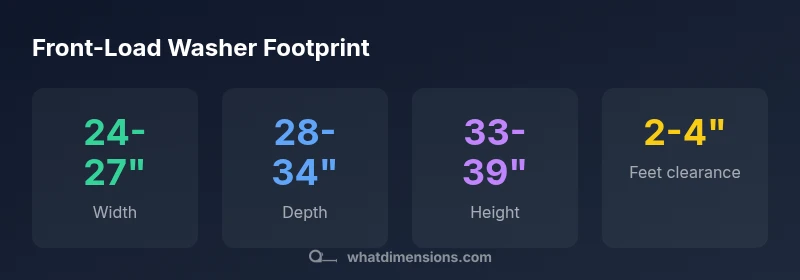
Most front load washing machines fit within roughly 24-27 inches in width, 28-34 inches in depth, and 33-39 inches in height. When planning space, measure the available alcove or closet, account for ventilation, hose clearance, and door swing, and compare exact specs on the model you choose. According to What Dimensions, matching precise size specs to your space reduces installation headaches and returns.
Why dimensions matter for front-load washers
Dimensions are more than numbers on a spec sheet; they are the foundation of a successful installation. For homeowners, students, designers, and shoppers, getting the footprint right means fewer surprises during delivery and fewer duct-taped repairs later. According to What Dimensions, the most common headaches come from overestimating the space or ignoring clearances required for ventilation, hoses, and door swing. A precise footprint helps you plan alcove width, door access, and even adjacent cabinetry without sacrificing usability. When you cross-check the product’s official dimensions with your site measurements, you gain a reliable baseline for selecting a model that fits seamlessly into your floor plan and budget.
In practice, dimensions influence everything from where you place the washer in a utility closet to whether you can comfortably reach controls. The What Dimensions Team emphasizes that measurement discipline—taking multiple measurements from different angles and verifying them against the manufacturer sheet—reduces the risk of returns. This approach is especially important in compact spaces, where a half-inch difference can block access or require costly redesigns.
Standard dimension ranges for front-load washers
Typical widths cluster around 24-27 inches, while depths commonly fall between 28-34 inches, and heights span roughly 33-39 inches. These ranges reflect a wide spectrum of consumer models, pedestal options, and configurations (freestanding vs. built-in). Remember that actual dimensions vary by brand and model; always confirm the exact numbers on the official spec sheet. The ranges above provide a practical starting point for space planning and layout sketches, helping you visualize how a given unit will sit beside cabinets or under overhead shelves.
When you see a spec like 27 inches wide, interpret it as the chassis plus any standard feet; some manufacturers list width excluding or including feet, so be sure to read the fine print. If your space is near the edge of a range, look for alternative models with slightly smaller footprints or consider a base pedestal that raises the unit without increasing its footprint."
How to measure your space accurately
Start by measuring the width: note the widest unobstructed point, including any handles, doors, or adjacent cabinetry that could intrude. For depth, measure from the wall to the furthest protrusion (including hoses, rear clearance, and any base or feet). Height requires measuring from floor to the ceiling or any overhead cabinet. Always document measurements in multiple places and verify them against the model’s official width, depth, and height. If possible, measure with the door swung open to ensure clearance for loading and unloading. Finally, check for irregularities like sloped floors or baseboard obstacles that could affect the unit’s level position, as these can alter both fit and performance.
Ventilation, clearance, and service access
Ventilation and service access are essential for long-term reliability. Most manufacturers recommend leaving space behind the machine for hoses and a little room above for air circulation. Clearances also aid maintenance and venting, reducing heat buildup and moisture. In tight spaces, consider models with front ventilation or access panels that allow easier servicing. If you’re connecting a dryer in a stacked configuration, confirm the combined height and ensure the dryer’s exhaust and venting paths won’t conflict with the washer’s clearance. These considerations help avoid heat buildup, condensation, and service calls down the line.
Stacking and adjacent cabinetry considerations
Stacking washers and dryers saves floor space, but it imposes additional dimensional constraints. Check that both units share a compatible footprint and that the combined height fits under overhead cabinets without obstructing access. Pedestals are common upgrades that can affect overall height and loading height; if you use them, recalculate the total height and ensure stairs or doors won’t block access. Adjacent cabinetry should align with the washer’s width for a clean, integrated look, and you should leave enough space for doors to fully swing open without hitting nearby drawers or walls.
Choosing a model for apartments and small spaces
In apartments or compact laundry rooms, narrow-depth or compact-width front-load washers can be a lifesaver. Look for models marketed as “slim” or “compact” that still offer essential features like high spin speeds, multiple wash cycles, and reliable reliability. When possible, reference the official spec sheet to ensure the width stays within your alcove and that the depth won’t collide with plumbing or cabinetry behind the unit. If stacking with a dryer, confirm that both units’ combined footprint remains within your available footprint and that any pedestal aligns with ceiling clearance.
Floor plans and practical layouts for laundry rooms
A well-planned layout considers not only the washer but also the surrounding workflow—sorting, loading, and folding. Create a simple floor plan showing the washer’s footprint, the dryer, cabinetry, and a folding surface. Use the typical footprint ranges as a guide to ensure enough clearance for doors and drawers to open without obstruction. In small spaces, consider L-shaped or corner configurations to maximize accessibility and airflow. This proactive planning helps prevent last-minute space reconfigurations and ensures a smooth installation process.
Validation checklist before you buy
Before purchasing, verify dimensions against the official product sheet and your space measurements. Create a quick side-by-side comparison: model width, depth, and height vs. your available width, depth, and height; check door swing in both directions if your space requires flexibility; confirm the rear clearance for hoses and exhaust; ensure ventilation space above the unit and near any cabinetry. Finally, request a diagram or measurement photo from the retailer if anything seems unclear. This validation reduces post-purchase surprises and returns.
Footprint ranges for common front-load washers
| Measurement | Typical Range | Notes |
|---|---|---|
| Width | 24-27 inches | Standard footprint for most front-load washers |
| Depth | 28-34 inches | Includes door swing and hoses |
| Height | 33-39 inches | Varies by model and pedestal use |
| Ventilation clearance | Several inches behind/top | Allow space for airflow and maintenance access |
Quick Answers
What is the typical width of a front-load washing machine?
Most front-load washers are 24-27 inches wide; exact specifications vary by model, so always check the product sheet.
Most front-load washers are about 24 to 27 inches wide; check the product sheet for the exact measurement.
Can I stack a front-load washer with a dryer, and how does that affect dimensions?
Yes, stacking is common; combined height will equal the sum of the two units plus any pedestal; verify with manufacturer guidelines.
Yes, you can stack them, but confirm the total height and clearances with the model's specs.
Do external dimensions include feet and knobs?
Most specs list the footprint with feet; some measurements exclude feet; read the spec sheet carefully.
Dimensions usually include feet; always check the spec sheet.
What space do I need behind and above the washer for hoses and ventilation?
Allow space for hoses and airflow; manufacturer recommendations vary—look for space around back and top.
Leave room behind and above the washer for hoses and airflow; follow the manufacturer's guidance.
How can I verify dimensions before ordering online?
Compare the retailer's spec sheet to the manufacturer's official sheet; ask for a measurement diagram if uncertain.
Always compare the retailer's specs with the official sheet and ask for diagrams if unsure.
“Dimensions matter more than appearance when fitting a front-load washer into any room; precise measurements prevent costly returns.”
Main Points
- Measure the space before choosing a washer
- Expect footprint ranges: width 24-27 in, depth 28-34 in, height 33-39 in
- Check clearance for ventilation, hoses, and door swing
- Verify exact specs on manufacturer sheets before purchase