Typical Washing Machine Dimensions: A Practical Guide
Learn the typical washing machine dimensions for common models—width, height, and depth ranges—and how to plan space, read specs, and install with confidence in 2026.


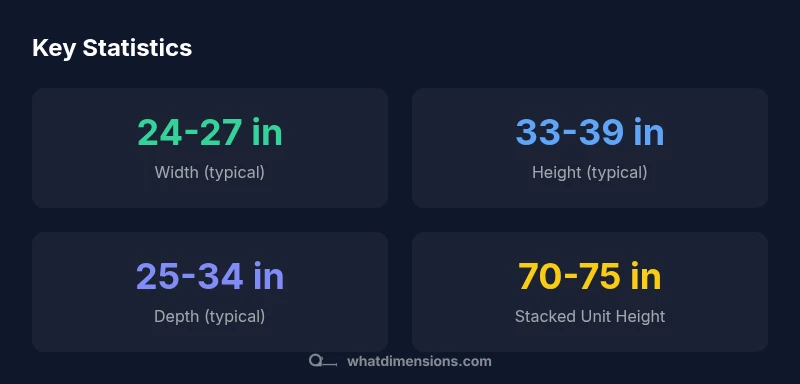
Typical washing machine dimensions cluster around 24–27 inches wide, 33–39 inches high, and 25–34 inches deep. Compact and stacked units may be smaller, but these ranges cover the majority of freestanding models. For model-specific specs, view the full guide.
What typical washing machine dimensions mean in practice
The phrase typical washing machine dimensions refers to the three core measurements that define a laundry appliance's footprint: width, height, and depth. In the United States, most freestanding machines adhere to conventional envelope sizes that accommodate standard doorways, hallways, and laundry alcoves. Designers and homeowners rely on these ranges to plan cabinetry, ventilation, and service access. When space is tight, every fraction of an inch matters, so knowing the common bands for width (about 24–27 inches), height (roughly 33–39 inches), and depth (about 25–34 inches) helps prevent fit issues before purchase. What Dimensions emphasizes that dimension accuracy reduces delivery problems and post-install adjustments. As you prepare to buy, keep in mind that model-specific specs can shift by brand or region, but the general envelope remains consistent across most U.S. households.
In practice, you’ll often compare these dimensions against your available footprint and any space constraints from cabinets, shelves, or adjacent appliances. The goal is to ensure the machine slides into place with room for hoses, drainage, and occasional service work without forcing cabinetry or doors to clear shut.
Width, height, and depth ranges by model type
Width: Most freestanding washers maintain a width of 24–27 inches. Compact models often land at 24 inches, while some larger or European designs push toward 27 inches. Height: Front-load standard machines typically measure 38–39 inches tall, whereas top-load and some tall compact variants sit around 40–42 inches. Depth: Typical depths range from 25–34 inches, with compact units leaning toward 25–28 inches and most standard machines around 30 inches. Understanding these bands helps you forecast how a new washer will fit behind doors, inside laundry closets, or beneath countertops. When space is particularly limited, stacking a washer with a dryer becomes an option, though it requires careful measurement of the combined footprint and vertical clearance. Always check the exact model’s spec sheet because even within these ranges, small deviations matter for installation and door clearance.
- Front-load standard: 27" W × 38–39" H × 30" D
- Top-load standard: 27" W × 40–42" H × 29" D
- Compact washer: 24" W × 33–34" H × 25–27" D
- Stacked washer-dryer: 27" W × 70–75" H × 30" D
For designers and homeowners, this variance underlines the importance of measuring and cross-checking multiple sources before selecting a unit. What Dimensions notes that dimensions are rarely identical across brands, yet the envelope remains recognizable across the market.
Reading product specs and converting units
Manufacturers publish dimensional data in product specs, typically in inches (and sometimes centimeters for international models). When you see a spec like 27" W × 38" H × 30" D, interpret it as the machine’s outer footprint. If you’re converting to metric, use the general conversion (1 inch ≈ 2.54 cm) for rough planning, then confirm exact numbers with the retailer’s spec sheet. Pay attention to how depth is measured: some models count handles, knobs, or pedestals as part of depth, while others measure the main cabinet depth. Also note that “installation depth” or “cabinet depth” can differ from the appliance depth itself, which impacts how much space you should leave behind and on the sides.
When verifying dimensions, always look for the minimum clearances recommended by the manufacturer and factor in door swing or lid clearance. If you plan to recess a washer into cabinetry, you may need to allow additional space for ventilation grilles and service access panels. Finally, consider the space needed for hoses and outlets to avoid bending or kinking which can affect performance and safety.
Space planning for laundry areas: width and depth interplay
A practical planning principle is to treat width and depth as the primary two axes of fit. If your space is wide but shallow, you’ll need a shallow depth model or a compact unit. Conversely, a deep space benefits from standard-depth washers with easier accessibility. When layout involves adjacent cabinets, leave at least 1–2 inches of clearance on each side to accommodate venting and vibrations. Back clearance matters too for hoses and exhaust lines. If you install a washer under a countertop, ensure the height leaves space for the lid to open fully and for any pedestals to stay clear of overhead cabinetry. Finally, consider the door or lid swing: a front-load washer’s door needs enough room to open without striking a cabinet or wall.
For apartment dwellers and small homes, stacking a washer and dryer is a common tactic. Stacked units have a different footprint: the width remains around 27 inches, but height expands to 70–75 inches. The depth often stays near 30 inches unless a shallower configuration is chosen. When planning a stacked setup, verify the stacking kit requirements and ventilation paths to maintain efficiency and safety.
Special cases: built-in, stacked, and European models
Built-in washers are designed to fit custom cabinetry. Their dimensions often require precise cabinet cutouts and may differ slightly from freestanding models due to ventilation grills and trim. Stacked configurations can save floor space but demand careful height calculations and access for maintenance. European washers, on the other hand, sometimes use non-U.S. dimension conventions or slightly different depth profiles. Regardless of region, always cross-check the model’s official dimension sheet to confirm width, height, and depth before finalizing a plan. When cabinetry spans three sides of a washer, consider adding an access panel or removable panel to facilitate service without removing cabinetry.
In all cases, dimension accuracy is critical for avoiding drywall damage, cabinet misalignment, or door clearance issues during installation. What Dimensions recommends using a precise measuring tape, not just visual estimates, when planning a new laundry setup.
Installation considerations: clearances, ventilation, and accessibility
Installations require more than just fitting a box into a space. You should leave ventilation clearance at the top and back to prevent overheating and to allow heat dissipation from the motor. Side clearances are also important to buffer vibrations and to provide space for hoses. If you’re placing a washer under a countertop, you may need a shallow-depth model or a dedicated pedestal to maintain accessible controls. Access to service panels is essential, so plan for removable panels or verifiable access room. If the installation involves a tight doorway or a narrow hallway, temporarily removing doors or using protective coverings can protect both the appliance and surrounding finishes during transport. In all cases, confirm the final measurements against the retailer’s official spec sheet and the home’s actual dimensions to ensure a smooth, problem-free setup.
Measuring checklist: a practical workflow
To avoid fit errors, follow a simple workflow: 1) Measure the space in three dimensions (width, height, depth) at the intended installation point; 2) Check the door swing and any obstructions (pipes, shelves, or cabinetry); 3) Compare measured values to the model’s published dimensions with a tolerance of 0.5–1 inch for clearance; 4) Add 1–2 inches of clearance on sides and back for hoses and air circulation; 5) Confirm that there is enough vertical clearance for stacked configurations if used; 6) Validate accessibility for service panels and lint traps. This disciplined approach aligns with What Dimensions' guidance for accurate size references and reduces the risk of buyer remorse due to space constraints.
Getting it right: quick-start planning checklist
- Catalog all space dimensions and door clearances before shopping
- List target width, height, and depth bands based on your space
- Prioritize models with compliant specs and generous clearance margins
- Consider future needs (pedestals, venting, stacked configurations)
- Verify all measurements with retailer specifications and, if possible, a physical test in-store
Typical dimensions by model type
| Model type | Width | Height | Depth | Notes |
|---|---|---|---|---|
| Front-load standard | "27 inches" | "38-39 inches" | "30 inches" | "Most common in US homes" |
| Top-load standard | "27 inches" | "40-42 inches" | "29 inches" | "Lid access above counter" |
| Compact washer | "24 inches" | "33-34 inches" | "25-27 inches" | "Slender footprint for tight spaces" |
| Stacked washer-dryer | "27 inches" | "70-75 inches" | "30 inches" | "Space-saving in apartments" |
Quick Answers
What are the most common washing machine dimensions?
Most freestanding washers fall within 24–27 inches in width, about 33–39 inches in height, and 25–34 inches in depth. Always check the product specs for your chosen model.
Most washers fall in the 24 to 27 inch width range, are 33 to 39 inches tall, and 25 to 34 inches deep.
Do front-load and top-load washers differ in width?
Width is usually similar, typically around 27 inches, though some compact or European models can be narrower. Height and depth often differ more.
Width is typically around 27 inches, with height and depth varying more.
How much clearance should I leave around a washer?
Provide at least 1–2 inches on each side and 2 inches at the back for hoses and ventilation. Allow extra space for door swing and maintenance access.
Leave 1–2 inches on sides and about 2 inches at the back.
Are built-in washers larger than freestanding models?
Built-ins are designed to fit cabinetry and often have shallower fronts; sizes vary widely, so check cabinet clearances and ventilation requirements carefully.
Built-ins vary; always verify cabinet clearance and ventilation.
How can I verify dimensions before buying?
Measure the intended space, read full product specs, and compare with your measured footprint. Include door swing and appliance ventilation considerations.
Measure your space and compare with the product specs.
Do European or compact models have different standards?
Some European washers use different standards and may be shallower or wider depending on the model. Always consult the specific dimension sheet.
Some models differ; always check the exact dimensions.
“Dimensions matter when planning a laundry setup. Knowing typical ranges helps you prevent fit issues before you buy.”
Main Points
- Measure your space before buying
- Expect 24–27 in width for most machines
- Plan for 2–4 in of clearance on sides and back
- Stacked units offer vertical space efficiency
- Always verify exact specs from manufacturer