Stackable Washer Dryer Dimensions: A Practical Guide
Learn precise dimensions for stackable washer-dryer units, including width, height, depth, and clearance. Get space-planning tips and exact specs from What Dimensions for reliable installs in 2026.


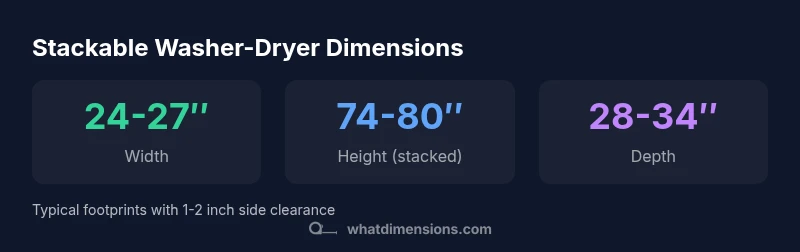
Stackable washer-dryer units typically measure about 24-27 inches wide, 74-80 inches tall when stacked, and 28-34 inches deep, with 1-2 inches of clearance on each side. Exact dimensions vary by model, so always verify the unit’s official spec sheet and installation clearances before purchase. Additionally, check for ventilation space and hoses access in the top and rear panels.
Understanding the footprint: width, height, and depth
In the world of laundry room planning, the term dimensions stackable washer dryer refers to three primary measurements you must fit into your space: width, height, and depth. From a design and space-planning perspective, getting these values right is essential to a smooth installation and long-term usability. According to What Dimensions team, most full-size stackable units measure roughly 24-27 inches wide. If you’re installing in a narrow alcove, you’ll want to verify the exact width of your chosen model, because some compact designs approach the lower end of that range while others push toward 27 inches. The stacked height typically falls in the 74-80 inch range; this accounts for the height of both the washer and the dryer and any control panel clearance at the top. Depths commonly run 28-34 inches, which matters for depth of the laundry space, door swing, and any recessed cabinetry. Beyond the numbers, you should consider service clearance and ventilation. Even a small miscalculation can create cramped access to water hookups or hamper lint disposal. Reading the manufacturer’s spec sheet is essential to confirm the exact footprint and any required gaps for maintenance.
Choosing between compact and standard widths
When space is at a premium, compact or 24-inch-wide stackable units can be a game-changer, allowing installation under low-hanging cabinets or in tight laundry closets. Standard-width models, typically around 27 inches, often provide higher drum capacities and better resale value. The choice depends on your space and your laundry needs. If you’re renovating a kitchen or integrating a washer-dryer into a closet, you must consider cabinet openings, door swing clearance, and the ability to pull the unit out for service. Always cross-check the exact width from the model’s spec sheet and compare it to your space measurements. If you have dual-use spaces or irregular alcoves, look for models that explicitly list a compact footprint without sacrificing capacity. The What Dimensions team emphasizes validating manufacturer specs rather than relying solely on generic guidance.
Stacking considerations: height, access, and clearance
Stacked configurations raise the overall height, so ceiling clearance becomes a practical constraint. Control panels and door openings must remain accessible for daily use and maintenance. Many installers recommend leaving a small top clearance to accommodate lint buildup, lint vent maintenance, and top panel access. In practice, plan for at least a few inches of headroom above the top unit when possible, and verify whether the top unit’s venting or exhaust routing requires extra space. If the laundry area has shelving or cabinetry directly above the unit, ensure the stack’s height does not impede access to electrical outlets or water connections. The dimensioning discipline here helps prevent rushed alterations after delivery.
Depth matters: fit in tight spaces
Depth affects how the stack will sit against the back wall and how door clearances interact with nearby cabinetry. Deeper units may require more room behind the washer-dryer for hoses and vent piping, which can influence wall framing and recessed niches. If your space features a recessed cabinet or a tight laundry alcove, opt for models with shallower depths and confirm that the venting path remains unobstructed. Remember that even modest depth differences can impact door swing and nearby plumbing access. Always compare the model’s depth to your space’s available footprint and plan for any hose routing that could add depth.
Measuring your space: a step-by-step checklist
A precise space measurement reduces the risk of a mismatched purchase. Follow this practical checklist:
- Measure the width of the intended space, from wall to wall, accounting for baseboards and trim.
- Measure the height from floor to ceiling, noting any lighting fixtures or shelving that might limit clearance.
- Measure the depth from the back wall to any adjacent surface or cabinet edge.
- Check door and drawer clearances for any obstructions that could interfere with installation or operation.
- Add 1-2 inches of ventilation/airflow clearance on each side and the back, as recommended by most manufacturers.
- Confirm the space allows for hose connections and service access behind the unit. This measured approach aligns with What Dimensions’ emphasis on precise sizing to prevent remodeling surprises later on.
Verifying specs: reading the spec sheet and install guide
Begin with the official spec sheet for your chosen model. Extract the exact width, height, and depth values, and note any required side clearance and top clearance. The install guide often lists electrical and venting requirements, which are as critical as the footprint itself. Create a simple checklist comparing your space measurements to the listed footprint, including door swing radius and service clearances. If the unit’s depth is at the upper end of the range, consider whether you have adequate space for hoses and gas or electric connections. When in doubt, contact the manufacturer or retailer for the model’s exact clearance recommendations.
Common setup scenarios and tips
- In a tight laundry closet, consider a 24-inch-wide stackable unit with a shallower depth if possible. This can help you maintain a clean doorway and easier access to the utility connections.
- For alcoves with limited top clearance, verify the top panel and venting requirements to ensure there’s no interference with overhead shelving.
- In a shared laundry area, plan for additional space to move shelves or washers for maintenance without having to dismantle anything.
- Always test-run a dry fit: place the unit in the space without securing it to ensure alignment with doors, pipes, and electrical outlets.
- Keep a simple measurement log; it saves time during installation and future remodeling projects.
Maintenance and safety: access and service clearances
Routine service visits require easy access to hoses, valves, and the back panel. Maintain sufficient clearance behind the unit for hose replacement and vent cleaning. Check that cords and hoses have slack and are not taut when the machine is in place. If you install in a closet, ensure there is at least some airflow behind the unit to prevent overheating or moisture buildup. Finally, document the model’s exact dimensions in your home inventory so future renovations or an upgrade can reuse the same footprint without surprise.
What to expect when shopping: model variety and future-proofing
The market offers a range of dimensions for stackable washer-dryer pairs, including compact 24-inch widths and standard 27-inch widths with varying depths. When evaluating options, compare the spec sheets, installation clearances, and available space in your home. If you’re planning for future upgrades, consider a slightly larger footprint that still fits your space or a model with adjustable feet to help with leveling on uneven floors. What Dimensions notes that prioritizing precise dimensions now reduces risk and increases satisfaction with the long-term use of your laundry area.
Dimensions snapshot for stackable units
| Dimension | Typical Range | Notes |
|---|---|---|
| Width | 24-27 inches | Typical stackable footprint width |
| Height (stacked) | 74-80 inches | Overall height when units are stacked |
| Depth | 28-34 inches | Includes space for hoses and clearance |
| Side clearance | 1-2 inches | Required for service and airflow |
Quick Answers
What is the typical width of a stackable washer-dryer?
Most stackable units are about 24-27 inches wide. Always confirm the exact width on the model’s spec sheet to ensure a proper fit.
Most stackables are 24 to 27 inches wide, but check the model sheet to be sure.
How much height does a stacked unit require?
Stacked configurations generally measure around 74-80 inches in height. Verify the exact figure from the manufacturer for ceiling clearance.
Most stackables are about 74 to 80 inches tall; confirm the exact height on the spec sheet.
Do I need side clearance for stackable units?
Yes. Plan for about 1-2 inches of clearance on each side to allow for installation, ventilation, and service access.
Yes—leave about one to two inches on each side for clearance.
Can you install a stackable unit in a closet?
Closet installations are possible but require careful attention to ventilation, exhaust routing, and space for service access. Always follow the model's installation guide.
Yes, in a closet with proper ventilation and clearances; follow the install guide.
What are common mistakes when measuring for a stackable unit?
Common mistakes include omitting door swing, ignoring vent/hose routing, and underestimating top clearance. Double-check all dimensions and compare to the spec sheet.
Don’t skip door swing checks or vent routing; verify every dimension against the spec.
Are there compact stackable units with smaller footprints?
Yes, there are compact models around 24 inches wide, suitable for tight spaces. Always verify depth and height for your layout.
Yes, there are compact options; check depth and height for your space.
“Accurate sizing is the foundation of a successful laundry install; start with the unit's footprint and required clearances to avoid fit issues.”
Main Points
- Measure your space before choosing dimensions.
- Always verify exact specs on the model sheet.
- Plan 1-2 inches of side clearance for service access.
- Aim for 74-80 inches in stacked height when possible.
- Consider depth (28-34 inches) and space for hoses.