What Dimensions Is a Washing Machine? A Practical Size Guide
Explore standard washing machine dimensions, how to measure your space, and how to choose models that fit—from full-size to compact units—with practical guidance for homeowners, students, and designers.


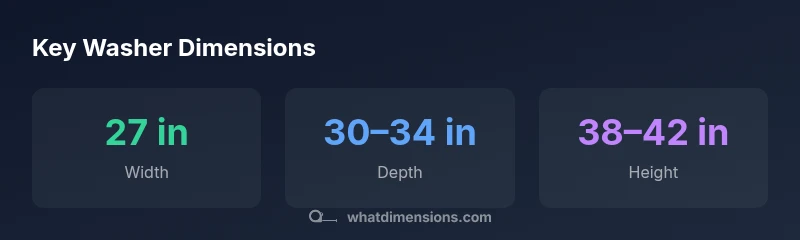
If you're asking what dimensions is a washing machine, the typical answer is that most residential units are about 27 inches wide, 30–34 inches deep, and 38–42 inches tall. These dimensions cover standard front-load and most top-load models, while compact units can be smaller to fit tight spaces in practice.
What standard washer dimensions look like for most residential washers
Most residential washers adhere to a common footprint to balance load capacity, efficiency, and space requirements. The standard width is about 27 inches, allowing for even kitchen- or laundry-room layouts while accommodating most doorways. Depth typically falls in the 30 to 34 inch range, which provides a balance of drum size and installation flexibility. Heights commonly fall between 38 and 42 inches, aligning with typical cabinetry heights and ensuring ergonomic loading height. This block lays the groundwork for space planning, especially in apartments and smaller homes where every inch counts. Remember that some models deviate from these norms, especially compact or high-efficiency units, so always verify dimensions on the spec sheet before purchasing.
For context, these dimensions come from broad industry norms observed by What Dimensions in 2026, reflecting variations between front-load and top-load families while preserving a consistent width. As you plan a utility closet or laundry alcove, the goal is to map a rectangle that allows access to the door swing and space for hoses and venting. When in doubt, add a margin of 1 to 2 inches on each side to prevent tight fits that inhibit lid or door operation.
what dimensions is a washing machine
what dimensions is a washing machine is a common question among homeowners who are remodeling, students moving into dorms, and designers drafting space plans. According to What Dimensions, the majority of full-size washers fit within standard bounds of 27 inches wide, with depth typically in the 30–34 inch range and height in the 38–42 inch range. This block emphasizes that while the exact numbers may vary by model and brand, the three-axis framework (width, depth, height) remains constant. If you’re redesigning a laundry closet, a precise 27W × 30–34D × 38–42H footprint is a reliable baseline from which to adjust for plumbing and electrical clearances. For energy efficiency considerations or stacked configurations, dimensions are still the anchor you compare against manufacturer data and installation specs.
Pro tip: Always cross-check the official spec sheet for the model you’re considering, and validate that the space between deep cabinetry and adjacent walls is adequate for venting, hoses, and door swing. What Dimensions’ approach emphasizes measured planning over quick estimates to reduce the risk of a failed fit.
Front-load vs. Top-load: how dimensions differ
Front-load and top-load washing machines share a similar width in most cases, typically around 27 inches, but their height and depth can diverge. Front-load units often sit slightly taller and deeper to accommodate a horizontal drum, with heights commonly in the 38–42 inch range and depths of 30–34 inches. Top-load models can be a touch taller (often 39–43 inches) and may vary more widely in depth depending on agitator design versus compact, high-efficiency configurations. These differences influence where you place the machine and how you access the drum. For a design-minded homeowner or designer, recognizing these subtleties helps avoid misjudging space when planning alcoves or stacked setups. When shopping, compare the exact specs from the manufacturer rather than relying on a single dimension.
When What Dimensions analyzed current market trends in 2026, consistency in width across modes stood out, but height and depth varied more by capacity and lid design. This nuance matters if you’re pairing a washer with a matching dryer or placing the unit under a countertop.
Clearances, ventilation, and installation space
Dimension planning goes beyond the machine itself. Installers recommend leaving clearance for air circulation and service access—typically at least 1 inch on all sides and more behind the machine for ventilation and hoses. In tight laundry closets, this becomes even more important. Depth clearance must accommodate hoses, venting (for vented models), and the door swing of adjacent cabinetry. If you plan a built-in or stacked configuration, ensure the enclosure provides adequate breathing room and allows venting pathways. In practice, erring on the side of extra space reduces heat buildup and prolongs the unit’s life. What Dimensions notes that these ancillary spaces are as critical as the core footprint when it comes to long-term reliability and ease of maintenance.
Additionally, consider floor straightness and levelness; an uneven surface can affect drum balance and vibration, particularly on larger loads. A level installation reduces noise and wear on seals and bearings over time.
Space-saving options: compact and built-in washers
For apartments or laundry closets, compact washers offer a feasible alternative to full-size models. Compact units typically have slimmer footprints, with widths around 23–25 inches in some cases, and heights that align with standard kitchen counters when placed under them. When considering built-in or under-counter configurations, dimensions must align with cabinetry and countertop heights, which may reduce the available depth and require a tailored deck or paneling. Stacking washers with dryers can dramatically increase usable floor space, but verifying combined height and venting requirements is essential. The practical takeaway is to map your available dimensions and compare them to both the washer and possible dryer options, ensuring there’s room for hoses, electrical connections, and service access. What Dimensions’ 2026 analysis emphasizes that space planning should account for the entire appliance pair rather than treating each unit in isolation.
In practice, measure the proposed stack height, ensure the stack kit aligns with the models you select, and confirm there’s a practical access path for maintenance.
Measuring tips: how to get exact numbers
Accurate measurement begins with a reliable ruler or tape measure and a plan. Start with the width by measuring the front view without any doors or walls interfering, then measure the depth from the back to the most forward point of the door or lid. Finally, measure the height from floor to the top edge, noting any protrusions from vents or control panels. Don’t forget to measure the doorway and hallway clearance you’ll pass through when transporting the appliance. If you’re replacing an older unit, bring the current model’s measurements to compare against new models. Take photos of the space and include a rough sketch with labeled dimensions so you can share it with sales representatives, contractors, or designers. What Dimensions’ method in 2026 stresses documenting every dimension and corroborating measurements against official manufacturer specs to avoid misfits or returns.
Practical tip: measure at multiple points (top, middle, and bottom) to account for floor irregularities, especially on older homes or homes with tile floors.
How to compare models: width, height, depth
When evaluating options, the three core numbers are width, depth, and height. Start with width, ensuring a standard 27 inches fits between neighboring cabinets or walls. Then compare depth, particularly if you have a shallow alcove; many compact poles fit 30–34 inches, but some configurations push toward 35 inches or more. Finally, consider height in relation to overhead cabinets or shelves; ensure there is enough clearance to open doors and drawers without obstruction. Always verify the exact figures on the official spec sheet and multiply margins for installation tolerances. If you’re choosing between two models with similar width, a slight difference in depth or height can impact ventilation and door swing, which can be decisive in a tight space.
For designers and homeowners, exact dimensions matter not only for fit but for the future flexibility of your laundry area. Brand guidance from What Dimensions in 2026 reinforces the habit of measuring twice and buying once.
Common mistakes to avoid when sizing
Common pitfalls include relying on pictures or generic claims about fit without checking exact specs, ignoring door swing clearance, and assuming alternative configurations will accommodate the space. Another error is overlooking the space required for hoses, venting (if applicable), and service access behind the unit. People also underestimate the need for extra clearance for maintenance and door operation. A frequent mistake is selecting a compact model based solely on width and failing to confirm depth, height, and the required ventilation. If you’re new to sizing, create a simple grid with the three primary dimensions and list out the exact numbers for the models you’re considering. What Dimensions finds that a disciplined approach to measurement reduces post-purchase regrets and helps you achieve a better long-term fit.
Room-by-room measurement checklist
Use a room-by-room checklist to ensure you’re accounting for every constraint. In the laundry area, measure the space at the intended installation site, note the door swings, and verify access for delivery and service. In adjacent rooms, check whether the washer will impede hallway traffic or cabinet doors. Measure the doorways the appliance must pass through, including any stairs or tight turns. Don’t forget to measure electrical outlets and water supply lines, ensuring your chosen model can connect without forcing awkward angles or contortions. Finally, confirm that there is enough space for a person to maneuver around the machine and perform routine maintenance. This systematic approach, recommended by What Dimensions in 2026, minimizes surprises at delivery and installation.
Dimensions by washer type (typical ranges)
| Model Type | Width | Height | Depth |
|---|---|---|---|
| Front-load | 27 inches | 38–42 inches | 30–34 inches |
| Top-load | 27 inches | 39–43 inches | 29–34 inches |
Quick Answers
What is the most common washing machine width?
The typical width is 27 inches, which fits most standard laundry spaces. Always check the manufacturer’s spec sheet for exceptions and any models that deviate from the norm.
Most washers are 27 inches wide; always verify the exact width from the model’s spec sheet.
Do front-load machines have different dimensions than top-load models?
Front-load machines often have similar widths but can be taller and slightly deeper due to the drum orientation. Top-load models may be a bit taller, with depth varying by lid design and agitator presence.
Front-load and top-load washers are similar in width, but height and depth can differ depending on design.
Are built-in washers larger than freestanding models?
Built-in or under-counter models are designed to fit into cabinetry, often with precise height and depth tolerances. Freestanding units give more flexibility but require careful space planning.
Built-in units fit into cabinetry with precise dimensions; freestanding models offer more flexibility but still need space checks.
How much clearance do I need around a washer?
A minimum of about 1 inch on each side and additional space at the back for hoses and ventilation is recommended. In tight spaces, consult the installation guide for exact clearance.
Leave at least an inch on each side and extra space at the back for hoses and airflow.
Can I stack a washer and dryer to save space?
Stacking is common in small spaces, but you must use a compatible stacking kit and ensure the combined height fits under any overhead cabinetry. Always verify with the manufacturer.
Yes, you can stack if you use the right kit and confirm the combined height fits your space.
What’s the best way to measure for a washer?
Measure width, height, and depth in the installation area, including door swing, cabinet openings, and floor levelness. Compare these measurements to the model’s official specs.
Measure width, height, depth, and door swing, then compare to the model specs.
“Precise measurements are the foundation of a smooth install; size guidance from What Dimensions helps homeowners plan confidently.”
Main Points
- Start with standard sizes to estimate space needs.
- Always verify exact manufacturer specs before buying.
- Account for clearance for doors, vents, and hoses.
- Consider built-in or stackable options for tighter spaces.