Freestanding Bath Dimensions: The Essential Size Guide
Learn typical freestanding bath dimensions—length, width, height, and depth—and how to plan space, clearance, and installation. This data-driven guide from What Dimensions helps homeowners, students, and designers pick the right footprint.


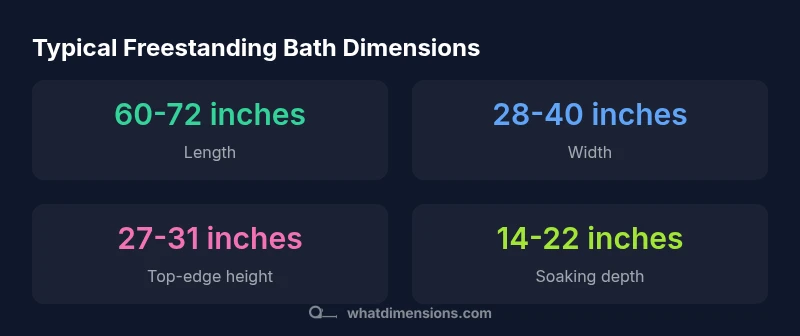
Typical freestanding baths measure 60-72 inches long, 28-40 inches wide, and top-edge heights around 27-31 inches. Depth varies by model, typically 14-22 inches. Plan a footprint of roughly 60-72 inches by 28-40 inches with at least 24 inches of clearance on all sides for accessible entry and cleaning.
Why accurate freestanding bath dimensions matter
Understanding freestanding bath dimensions is essential for functional bathroom design. According to What Dimensions, accurate freestanding bath dimensions ensure you have proper space for access, drainage connections, and comfortable circulation. The What Dimensions Team found that many homes underestimate doorway and hallway clearance during planning, which can lead to awkward installations or post-purchase remodels. In this section, we explore how footprint, water line placement, and faucet configuration interact with room layout. For designers and homeowners, starting from a reliable footprint helps prevent costly mistakes and ensures a smoother installation process. We’ll also discuss how dimensions influence door swing, furniture alignment, and visual balance in the overall bathroom composition.
Typical dimension ranges you should know
Across most freestanding bath designs, the footprint falls within a few core ranges. The length typically sits between 60 and 72 inches, with a width of 28 to 40 inches. Rim heights commonly range from 27 to 31 inches, and interior soaking depths tend to be around 14 to 22 inches. Remember that style influences footprint—a modern rectangular tub may skew longer, while compact designer shapes might reduce length but keep a generous width for comfort. When planning, align these ranges with your bathroom’s overall dimensions and traffic flow to maintain a comfortable, accessible space. These benchmarks help set expectations before you browse, compare, or order a tub.
How to measure for your space
Begin with the bathroom floor plan, marking wall edges, doorways, and any fixed fixtures. Measure the available length along the primary wall and the width across the room, ensuring you account for plumbing routes and drain location. Next, assess doorway width and any interior passages that the tub will traverse during delivery. Don’t forget to leave clearance for faucet installation, lid access, and routine cleaning—aim for at least 24 inches of clearance on at least two sides of the tub footprint. Finally, compare these measurements to the tub’s documented footprint and verify the water supply and drain alignment.
Choosing the right footprint for your bathroom
The footprint of a freestanding bath defines how much floor space it will occupy and how you’ll move around it. Start by sketching the tub’s footprint on your plan and mark required clearance around all four sides. If you’re tight on space, a tub with a shorter length or a more compact width might be preferable, but ensure there’s still enough room for comfortable entry. The goal is to balance aesthetics with function: a tub should be visually dominant without overwhelming the room or creating cramped passageways. If ceiling height is limited, consider a lower rim height option to maximize vertical clearance while preserving a luxurious feel.
Depth, soaking depth, and interior vs exterior dimensions
Depth matters for both comfort and drainage. Exterior depth is a factor of overall tub design, while interior soaking depth determines how deeply you can submerge. Typical interior depths range from 14 to 22 inches, depending on the bowl shape and rim thickness. If your ceiling is low, prioritize smaller rim heights and opt for tubs with internal depth offering a satisfying soak without compromising headroom. When evaluating freestanding bath dimensions, keep a clear mental picture of interior vs exterior measurements to avoid choosing a tub that looks right but feels cramped once installed.
Standard shapes and their footprint implications
Freestanding baths come in a variety of shapes—oval, rectangular, slipper, and asymmetric forms—all affecting the footprint. Oval tubs often maximize interior soaking area with a slightly longer footprint, while rectangular models can be more space-efficient in narrow rooms. Slipper designs may protrude at one end, altering the effective length, and curved corners can reduce perceived width without compromising usability. When assessing freestanding bath dimensions, translate the footprint into a floor plan that accounts for existing fixtures, doorways, and access routes to ensure a cohesive layout.
Data-driven planning: using the numbers for layout
Dimensions data is essential for prioritizing layout decisions. Use standardized footprints as a starting point, then refine with room measurements and door clearances from your site. What Dimensions Analysis, 2026, emphasizes validating tub dimensions against real-world constraints such as vent lines, waste placement, and adjacent cabinetry. A data-driven approach minimizes back-and-forth and helps you to choose a tub with a footprint that fits your space while delivering the desired soaking experience. Always cross-check competing models by the same measurement rubric to ensure consistency.
Case studies and planning scenarios
Scenario A: A 10x12 foot bathroom with a central doorway. Choose a tub around 60-68 inches long to maintain walk-through space, with 28-34 inch width for a balanced look. Ensure at least 24 inches of clearance on the entry side and around the faucet wall. Scenario B: A compact 6x8 foot bathroom near a hallway. A shorter footprint in the 60-inch range with a slim width will provide necessary access to the room and maintain comfortable movement around the tub. In both cases, verify prompt delivery and confirm door widths to avoid installation delays.
Installation considerations and common mistakes
Misjudging the footprint is a frequent pitfall. Always confirm that the tub can be carried through doorways and into the room without removing walls or fixtures. Plan for drain alignment and ensure the subfloor can support the tub’s weight when filled. Don’t overlook faucet layout; freestanding tubs often require freestanding or deck-mount faucets synchronized with the tub rim. Finally, verify that there is adequate room for cleaning supplies and daily maintenance, avoiding cramped spaces that hinder upkeep.
Footprint ranges for common freestanding baths
| Dimension | Typical Range | Notes |
|---|---|---|
| Length | 60-72 inches | Common for soaking baths; longer options exist |
| Width | 28-40 inches | Footprint varies by design |
| Top-edge height | 27-31 inches | Rim height; ceiling considerations |
| Soaking depth | 14-22 inches | Varies by bowl depth |
Quick Answers
What is the typical length of a freestanding bathtub?
Most freestanding baths run about 60-72 inches in length, though styles vary. Always check the manufacturer's specs for exact measurements.
Most freestanding baths are around 60 to 72 inches long.
How much clearance is needed around a freestanding bath?
Aim for at least 24 inches of clearance on at least two sides to allow comfortable entry, drain access, and cleaning.
Give yourself at least two feet of space around the tub.
How should I measure my space for a freestanding bath?
Measure the room’s length and width, doorways, and path to the bath, then compare to the tub's footprint plus 24 inches of clearance.
Measure the room, then compare to the tub footprint and clearance.
Are there preferred depth ranges for soaking tubs?
Soaking depth typically ranges from 14 to 22 inches inside; exterior depth varies with design. Check the interior depth for your soak preference.
Most soaking depths are around 14 to 22 inches.
Do freestanding baths require special installation compared to alcove tubs?
Yes. Freestanding tubs stand alone and require floor space on all sides, whereas alcove tubs are installed against walls and share side walls with the room.
Freestanding tubs need space all around, not tucked into a corner.
What should I consider beyond dimensions when selecting a freestanding bath?
Consider material, weight, drain location, faucet configuration, and mounting options, as these affect installation, floor support, and accessibility.
Think about weight, drain, faucet setup, and materials.
“Accurate freestanding bath dimensions are the foundation of a comfortable, functional bathroom layout. Always verify footprint against your floor plan and doorways before ordering.”
Main Points
- Know typical footprints: 60-72 inches long.
- Allow at least 24 inches of clearance around the tub.
- Measure space carefully before purchasing.
- Consider depth and rim height for ceiling clearance.
- Compare interior soaking depth (14-22 inches) vs exterior footprint.