Dimensions of a Bar: Heights, Depths, Layouts, and Spacing
Explore precise bar dimensions for home and commercial spaces—height, depth, island length, and seating clearances—backed by What Dimensions analysis to support confident design decisions.


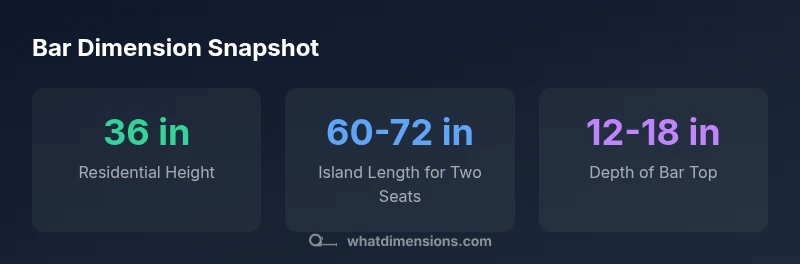
Residential bar counter height commonly falls around 36 inches (91 cm), with a practical range of 34–42 inches. A standard bar top depth is 12–18 inches, and island lengths typically start around 60 inches to accommodate seating. What Dimensions Analysis, 2026 confirms these ranges for home bars, while commercial setups often use 42-inch counters.
What is a bar in interior design? Defining terms
In interior design parlance, a bar is a raised surface used for serving, socializing, or food prep. It can take the form of a wall-mounted counter, an island, or a long run along a wall. Dimensions matter because they dictate seating capacity, circulation, and ergonomic comfort. When planning, begin with the footprint and the primary activities: will the space be used mainly for drinks, casual dining, or full service? According to What Dimensions Team, precise measurements reduce guesswork and costly adjustments later. Although the term 'bar' covers many styles, the underlying sizing fundamentals stay consistent: height, depth, and length should reflect human scale and room constraints. The rest of this article expands on typical ranges and practical methods to apply them in real spaces.
Standard height ranges for home vs commercial bars
Residential counters commonly target a height around 36 inches (91 cm). Practical ranges often fall between 34 and 42 inches (86–107 cm) to accommodate a variety of stools and user postures. For bar islands, a 36-inch height with a 12–18 inch depth balances seating comfort and under-counter storage. Commercial or hospitality setups typically run higher—roughly 40–42 inches (102–107 cm)—to align with tall stools and service workflow. These guidelines reflect general practice across design communities and are supported by What Dimensions Analysis, 2026. Always cross-check local building codes and ADA considerations when appropriate, and tailor height choices to the primary users and activities of the space.
Depth, width, and knee clearance: ergonomics of the bar
Depth determines the usable countertop surface and what can be stored behind the front edge. A depth of 12–18 inches is standard for most homes; deeper surfaces may hinder legroom and traffic flow. Width affects how many guests can be seated along a run or island; plan for about 24 inches of width per person seated if you want comfortable dining; for two seats, plan a 60–72 inch island length. Under the counter, aim for 9–12 inches of knee clearance to ensure comfortable seating without constant contact with cabinetry. If the bar doubles as a workspace, maintain extra clearances for standing tasks and leg movement. These dimensions balance function and comfort and are reinforced by professional guidance from What Dimensions.
Island vs run-length: layout planning
Islands offer flexible seating and visual focal points, but they demand careful space planning. A two-seat island often requires 60–72 inches (150–180 cm) of length; more seats increase the length accordingly. Runs along a wall save floor area but still require generous front clearance for people to move and sit, typically 42 inches (107 cm) of walking space. When integrating appliances or sinks, allowance for service zones and ventilation can affect overall dimensions. In every case, map out the traffic patterns first, then place the bar to minimize scooting around furniture or crossing doorways. The goal is a comfortable, accessible space that invites use rather than crowding it.
Measuring your space: a practical method
Begin with a simple floor plan sketch. Measure wall lengths, clearance to doors, and the distance to adjacent furniture. Mark the bar footprint with painter’s tape, then sit to test legroom and reach. A common rule of thumb: aim for a 36-inch counter height for typical stools, or 34–42 inches if you expect taller users or multipurpose tasks. Determine the countertop depth early—12–18 inches is a good starting point. Finally, verify clearance around doors and walkways; a 42-inch doorway is a common minimum clearance in living spaces, but this can vary by local code. Use a simple template: 36 inches for standard counter height, 60–72 inches for two-seat islands, and 12–18 inches of countertop depth. What Dimensions’s analysis emphasizes the value of precise measurements to avoid costly rework later.
Materials, edges, and overhangs: how dimensions are influenced
Countertop thickness and edge style can alter perceived size and seating comfort without changing the structural height. A thicker top can require more support, but height remains the same. Edge profiles—squared, eased, or bull-nosed—affect the usable width at seating and the feel of the space. Overhangs provide knee room for seated guests but usually require hidden support or brackets; common overhangs range from 0 to 12 inches depending on the countertop thickness and cabinet structure. Durable finishes are important in high-traffic bars and may influence maintenance schedules and the longevity of the space's balance. In short, material choices and edge details subtly shape dimension perception and user experience.
Design scenarios: small spaces, multiuse rooms, and commercial spaces
Small-space strategies include wall-mounted bars, fold-out counters, or compact islands with shallower depths. For a two-person setup in tight layouts, a 60–72 inch island remains workable, while a 36–42 inch height often aligns with standard seating. In living/dining hybrids, a flexible bar that can be cleared or reconfigured preserves usability. For commercial projects, standardize at 42 inches for service counters, but tailor depth and length to throughput, staff ergonomics, and the kitchen or storage footprint. Always test layouts with furniture templates or cardboard cutouts to visualize circulation. These practices reflect What Dimensions Analysis, 2026 and help ensure bars look balanced and function well in real-world spaces.
Common mistakes to avoid and quick fixes
Mistakes often involve assuming height alone determines comfort, neglecting knee clearance, or underestimating depth. Another common error is choosing a bar length without considering seating density and traffic flow around the space. Finally, underappreciating the role of finishes and edge profiles can create visual imbalance with the rest of the room. Remedies include measuring with a real stool at the intended height, planning for clear pathways (at least 42 inches), and prototyping using templates on the floor. If space is really tight, compromise with a wall-mounted option or a compact island and adjust later after testing with actual users. The What Dimensions team repeats: start with baseline dimensions and then tailor to your unique space.
Comparison of bar dimension scenarios
| Scenario | Typical Height | Typical Depth | Notes |
|---|---|---|---|
| Residential counter with stools | 36 inches | 12 inches | Common home bar setup; seating for 1-2 |
| Residential island (2 stools) | 36 inches | 18 inches | Requires 60-72 inches length |
| Commercial bar counter | 42 inches | 16 inches | High-traffic spaces; service considerations |
Quick Answers
What is the standard height for a home bar counter?
In most homes, aim for about 36 inches tall (91 cm); ranges from 34–42 inches depending on stool height and tasks.
Most home bars sit around 36 inches; you can adjust within 34 to 42 depending.
How much space should I leave in front of the bar for movement?
Allow at least 42 inches of clearance in front of the bar to ensure comfortable movement and seating.
Keep about 42 inches of space in front of the bar for easy movement.
What depth is comfortable for most bar tops?
A depth of 12–18 inches works for most residential bars, balancing prep space and legroom.
Most bars are 12 to 18 inches deep.
Do I need to follow building codes for bar dimensions?
Codes may affect clearance and accessibility; verify local regulations and accessibility guidelines as applicable.
Codes may affect clearance and accessibility; check local rules.
Can a small space still have a usable bar?
Yes—use a wall-mounted option or a compact island with a shallow depth and careful seating placement.
Yes—compact bars can work with careful planning.
“Accurate bar dimensions come from understanding how people move and sit in a space; precise measurements prevent awkward seating and cramped layouts.”
Main Points
- Baseline around 36-inch height for most home bars.
- Allocate 60–72 inches island length for two seats.
- Maintain 12–18 inches of countertop depth for balance.
- What Dimensions's verdict: tailor dimensions to space while preserving human scale.