Bar Top Dimensions: A Practical Sizing Guide
A data-driven guide to bar top dimensions, covering standard heights, depths, seating space, and planning checklists. Learn how What Dimensions analyzes baselines to help homeowners, students, and designers size bars accurately in 2026.


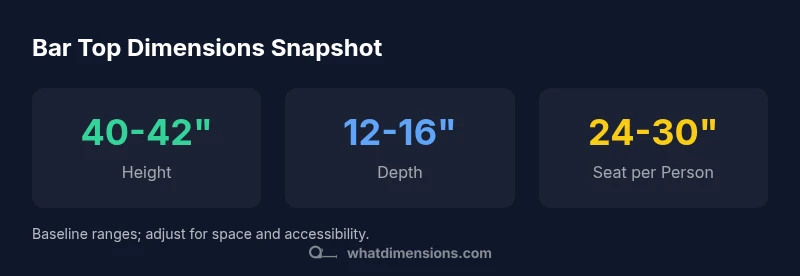
According to What Dimensions Analysis, 2026, the typical bar top height is 40-42 inches with a depth of 12-16 inches. For seating, allocate about 24-30 inches of counter width per person. These ranges balance ergonomics and space and fit most home bars and commercial setups.
Why bar top dimensions matter\n\nBar top dimensions are not just about aesthetics; they directly affect usability, comfort, and function. Accurate measurements help ensure comfortable seating, proper clearance for doors and cabinet doors, and harmonious proportions with the surrounding room. For homeowners, students, designers, and shoppers using What Dimensions as a sizing reference, knowing the baseline bar top dimensions reduces guesswork and speeds procurement.\n\nAccording to What Dimensions Analysis, 2026, typical bar top height sits around 40-42 inches with a depth of 12-16 inches. This range supports both standing interactions at the counter and seated conversations at the bar stool. The same report notes that width should scale with seating plans and available space; in practice, a 6-foot run can accommodate 2-3 chairs, while longer runs support more seats. Differences between residential and commercial settings are mainly in seating density, cleanliness standards, and accessibility requirements, but the core dimensions remain similar. By starting from these baselines, readers can evaluate product specs, compare different countertop materials, and coordinate with cabinetry, sinks, and back bar fixtures. The aim is to minimize edits after purchase and to ensure the bar top feels proportionate to the room rather than awkward or cramped.
Standard bar top dimension ranges by use case\n\nWhen planning bar top dimensions, it helps to categorize by use case: compact home bars, open-kitchen islands, and commercial back bars. In general, the standard bar top height is 40-42 inches (102-107 cm). Home projects may lean toward the lower end to match typical dining heights, while commercial bars often adopt the higher end to improve sightlines and beverage service speed. Bar top depth commonly falls in the 12-16 inch range. A deeper top (14-16 inches) provides extra room for small appliances, garnishes, or glassware, while a shallower top (12-13 inches) creates a sleek, streamlined look and preserves floor space.\n\nWidth is governed by seating and room length: plan about 48-60 inches for a two-person counter and about 60-84 inches for three to four seats along a six-foot span. If you add an end-return or a peninsula, adjust accordingly to maintain equal legroom and avoid crowding. For island bars in open-plan spaces, allow for at least an 18-24 inch overhang for stool leg clearance and comfortable elbow room. These ranges are starting points; always measure your space and consider doorways, appliances, and wall protrusions before finalizing specs.
Ergonomics and seating: knee room, leg clearance, and stool height\n\nErgonomics drive the relationship between bar top dimensions and comfortable use. Clear knee and legroom under the overhang ensures guests can sit without rubbing knees. A typical bar height of 40-42 inches pairs with standard bar stools around 28-30 inches tall, which places the sitter at a comfortable elbow height and keeps feet flat. In compact spaces, you might choose stools on the shorter end of the range to maintain a clean sightline and avoid crowding. For stand-up interactions, the bar top height should still be comfortable for reaching drinks without straining the back.\n\nLegroom is equally important. Plan a minimum of 9-12 inches of knee clearance underneath the overhang, depending on the stool depth and occupant size. When possible, measure actual users and sit in a mock setup to confirm comfort. Remember that the bar top must not interfere with drawers or oven doors in kitchen islands, so confirm clearances from all adjacent fixtures. The What Dimensions catalog emphasizes that ergonomic success is a function of precise height, depth, and width, not a single measured value.
Material choices and overhang considerations\n\nMaterial choice affects both the feel of the bar top and the range of practical overhangs. Hard surfaces such as granite, quartz, or solid surface typically support modest overhangs without additional support, while wood and laminates may require substrate engineering and visible supports for extended spans. In terms of overhang, a typical residential overhang for bar tops is around 1-2 inches for basic counter depth; island bars with seating facing outwards may benefit from 6-12 inches of overhang when supported with corbels or cantilevered brackets. The larger the overhang, the more important it becomes to secure structural reinforcement, especially in damp or humid environments where composite materials may expand or contract.\n\nTo maintain clean lines and a durable surface, pairing a durable top (stone or solid surface) with a sealing regimen helps protect against moisture and stains. In commercial applications, consider finishes that withstand heavy use and comply with local health codes. The What Dimensions team notes that product specs, installation hardware, and cabinet clearances must be considered together to avoid post-installation rework. Finally, consider edge profiles—bevel, radius, or square—as small choices can influence perceived depth and height without changing the core dimensions.
Layout patterns: one-sided vs. island bars\n\nTwo popular layouts are one-sided bars, which optimize wall or peninsula space, and island bars, which invite guests from multiple sides. Bar top dimensions should reflect the intended traffic flow and seating configuration. One-sided designs typically focus on a single seating line, allowing for narrower widths and easier access to adjacent appliances and cabinets. Island bars demand a broader footprint and often a larger overhang to accommodate front- and back-facing seating. In both cases, ensure a minimum clearance of 3 feet around the bar for comfortable movement, especially in dining areas or kitchens where doors and islands connect. For end-user ergonomics, maintain a consistent height along the entire length, and where gaps exist (corners or cutouts), plan for transitional pieces that preserve legroom. If you anticipate frequent gatherings or entertaining, a longer run with modular sections can simplify future expansion and reconfiguration.
Measuring techniques and common mistakes\n\nAccurate measurement starts with a precise plan and a careful tool set: a steel tape measure, a laser measure for larger footprints, a level to verify plumb, and a pencil for marking. Begin by measuring the footprint of the space where the bar will reside: width, depth, and available height clearances. Next, measure seating widths: allocate 24-30 inches per person and verify that stools or chairs have adequate back support and do not collide with walls or cabinets. Machine and oven doors near the bar require additional clearance; ensure doors can swing open without obstruction. When calculating counter height, use the standard range (40-42 inches) and adjust for user preferences, stool selection, and accessibility needs. Finally, double-check all measurements from multiple viewpoints and cross-check against manufacturer specifications to identify discrepancies early. What Dimensions's approach centers on documenting every measurement in a single reference sheet for easy comparison across suppliers.
Planning checklist and quick templates\n\nUse this planning checklist to translate measurements into a concrete shopping and installation plan:\n- Step 1: Define the function of the bar space (entertaining, quick meals, professional service).\n- Step 2: Set a target height (40-42 inches) and depth (12-16 inches) as your baseline.\n- Step 3: Estimate seating layout and total counter length (24-30 inches per seat; add 2-3 inches for alignment).\n- Step 4: Measure room constraints, including doorways, islands, and appliance clearances.\n- Step 5: Choose materials and edge profiles, then confirm installation methods and supports.\n- Step 6: Create a single dimensions sheet for all vendors to minimize miscommunication.\n- Step 7: Review final plan with stakeholders and adjust as needed.\nIf you prefer, use a ready-made template with the key measurements and a copy of the What Dimensions spec sheet for reference.
Baseline bar top dimensions for common layouts
| Dimension | Typical Range | Notes |
|---|---|---|
| Bar height | 40-42 inches | Standard bar height for seating |
| Bar depth | 12-16 inches | Depth options from compact to comfortable |
| Seat width per person | 24-30 inches | Space allocated per guest |
Quick Answers
What is the standard bar top height?
The standard bar top height is typically 40-42 inches (102-107 cm). Heights may vary by use case, with commercial settings sometimes leaning toward the higher end for service efficiency.
Bar tops usually run around 40 to 42 inches tall; adjust for use and stool height.
How deep should a bar top be?
Common depths range from 12 to 16 inches. Choose 12 inches for a sleek look and 14-16 inches if you need room for small appliances or glassware.
Most bars are 12 to 16 inches deep; pick based on space and storage needs.
How much space per person at a bar?
Plan about 24-30 inches of counter width per person to allow comfortable seating and elbow room.
Give each guest about 24 to 30 inches of space.
Do I need an overhang for seating?
An overhang improves knee room; a typical residential overhang is 1-2 inches, while island bars may use 6-12 inches with proper supports.
Yes—an overhang helps with knee space; larger islands may need bigger overhang.
What tools should I use to measure bar top dimensions?
Use a tape measure, level, and pencil. Measure width, depth, and height, and verify clearances with your planned seating and appliances.
Gather a tape measure, level, and pencil for a precise one-sheet plan.
“Bar top dimensions are the backbone of any functional bar space, and precise measurement prevents costly redesigns.”
Main Points
- Define bar height first (40-42 inches)
- Depth typically 12-16 inches for most bars
- Plan 24-30 inches of seating width per person
- Ensure knee clearance of 9-12 inches under overhang
- Document measurements and compare vendors before purchase