Counter Height Stool Dimensions: A Practical Sizing Guide
Discover precise counter height stool dimensions, including seat height, depth, and spacing. This expert guide from What Dimensions helps homeowners, designers, and students plan comfortable, functional island seating with confidence.


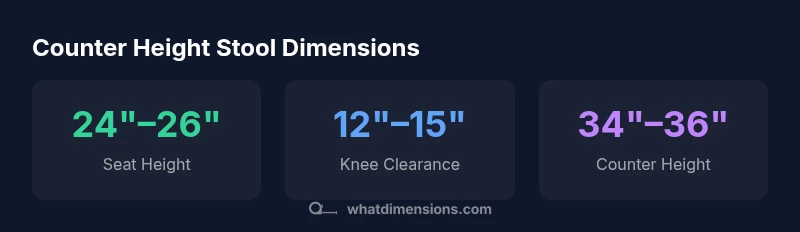
According to What Dimensions, counter height stools are designed for counters around 34–36 inches high. The typical seat height is 24–26 inches (61–66 cm) to provide knee clearance, with overall heights around 40–45 inches depending on backrest and leg design. For comfortable dining, allow 12–15 inches of leg clearance and match seat width to island depth.
Understanding Counter Height Stool Dimensions
The term counter height stool dimensions refers to the measurements that ensure a comfortable, ergonomic relationship between a seating surface and a kitchen island or counter. For most homes, the target is a counter height around 34–36 inches (86–91 cm). This height pairing translates to a seat height of roughly 24–26 inches (61–66 cm), which provides adequate knee clearance while keeping the diner at eye level with the counter. When planning a seating area, consider not just seat height, but also overall stool height, leg clearance, and the space required for leg movement. What Dimensions emphasizes that precise sizing reduces fatigue during long meals and enhances social interaction around the island. In practice, this means balancing the seat height with counter height, the seat width with island depth, and the footrest position with table height. For designs and shopping decisions, you should quantify these dimensions early and iterate with real users’ feedback.
Key Measurements: Seat Height, Overall Height, and Depth
Seat height is the most critical dimension for comfort at a counter. In addition to seat height (roughly 24–26 inches), consider the stool’s overall height which includes any backrest and legs, often pushing total height toward 40–45 inches. The depth (front to back) should be sufficient for thigh comfort, typically in the 14–18 inch range, while width should accommodate user shoulders without appearing bulky. A deeper seat can feel more comfortable for longer seating periods, but it increases the footprint. Back support can alter perceived height, so test stools with cushions or padding if your island seating will be used primarily for dining rather than quick meals. This section also covers how upholstery or foam adds to effective dimensions, and why cushion thickness matters when calculating final seating. Notes from What Dimensions Analysis, 2026 remind designers to account for cushion height in total seating height to maintain ergonomic alignment.
How to Measure Your Space Before Buying
Begin with the counter height itself—measure from the floor to the top of the counter surface. Subtract the desired knee clearance (12–15 inches is common) to estimate the seat height you need. Measure island width to determine how many stools will fit and leave space for at least 1–2 stools per side if circulation is a concern. Don’t forget to measure the distance to any walls or cabinets to ensure you won’t have cramped legroom or obstructed drawers. A common rule is to reserve at least 12 inches of clearance between the stool and any adjacent furniture or walls. Finally, account for any built-in footrests or decorative elements that could affect leg positioning. What Dimensions suggests a quick test by placing a temporary stool to visualize real-world clearance before committing to a purchase.
Design Considerations: Materials, Footrests, and Backrests
Material choice can influence perceived height and comfort. Hard surfaces like wood or metal may feel cooler than upholstered seats, which can affect comfort over long meals. A footrest should be located at a height that remains accessible regardless of the stool’s seat height. If you are using backrests, ensure they don’t crowd the user’s space or create obstruction when pulling up to the island. Cushions add height, so padding should be included in the final measurement. Opt for durable fabrics in high-traffic kitchens and consider stain resistance, as counter seating areas see more accidental spills. What Dimensions also notes that leg clearance should be verified with the user’s preferred footwear, especially in homes with children.
Practical Scenarios: Small Islands, Open Kitchens, and Shared Tables
In compact spaces, backless stools may offer flexibility, but a sturdy footrest is essential for stability. For open-concept kitchens with long islands, consider a mix of chair styles to encourage conversation while preserving circulation. For shared tables or breakfast bars, aligning seat height with adjacent chairs or benches helps create a cohesive look. In all cases, verify the final dimensions with a sample seat height and footrest configuration before purchasing multiple stools. These scenarios illustrate how counter height stool dimensions translate into real-world comfort and flow, a concept What Dimensions consistently emphasizes in its analysis for 2026.
Quick Guidelines for Designers and Shoppers
- Start with counter height and set a seat height target of 24–26 inches.
- Reserve 12–15 inches of knee clearance for most users.
- Verify island depth and stool width to avoid crowding.
- Consider cushion thickness and backrest height as planning variables.
- Test layouts with temporary seating before purchasing multiple units.
What Dimensions’ Take: Real-world Scenarios for Every Kitchen
A well-sized counter stool set transforms a kitchen into a functional, social space. Whether you’re outfitting a tall island for casual dinners or a compact breakfast nook, the dimensions you select affect comfort, movement, and aesthetics. The What Dimensions team has observed that precise stool dimensions correlate with better usability and dining satisfaction. When you measure and plan with these standards, you’ll reduce returns and enhance the room’s overall balance.
Reference table for common counter height stool dimensions
| Aspect | Recommended Range | Notes |
|---|---|---|
| Seat height (front) | 24"–26" in | 61–66 cm; standard for 34"–36" counters |
| Counter height (island) height | 34"–36" in | 86–91 cm; matches typical kitchen islands |
| Knee clearance | 12"–15" in | 30–38 cm; ensure comfortable leg room |
| Seat depth | 15"–18" in | 38–46 cm; depends on seating style |
Quick Answers
What is the typical counter height for stools?
Most counters are 34–36 inches high. To maintain ergonomic seating, choose a seat height of about 24–26 inches, and adjust for backrests or cushions. If the counter height varies, recalculate the seat height to preserve knee clearance.
Most counters are 34 to 36 inches high, so go with a 24 to 26 inch seat height for comfort.
How do I measure for counter height stools?
Measure the counter height, determine the desired knee clearance (12–15 inches is common), and check island width for how many stools will fit. Include cushion thickness if you plan padded seats and ensure backrests won’t interfere with wall or cabinet doors.
Measure counter height, then check knee clearance and island width before buying stools.
Can backless stools work in small spaces?
Backless stools save space and can be versatile, but you’ll want a sturdy footrest and stable seating. They’re ideal for very tight layouts when you need to slide stools under a counter. Always test for wobble and comfort.
Backless stools save space but require a good footrest and careful testing for stability.
What seat depth is comfortable for most users?
A seat depth of 15–18 inches is standard for most adults. Deeper seats need longer legs and more space; thinner seats can feel less supportive. Tailor depth to user height and the overall island width.
Most people are comfortable with 15 to 18 inches of seat depth.
How much knee clearance should I aim for?
Aim for 12–15 inches of knee clearance to accommodate most adults and provide comfortable movement during meals and socializing. If you have taller users, consider slightly higher clearance or a shallower seat.
About 12 to 15 inches of knee clearance works for most people.
Do cushioned seats affect stool dimensions?
Yes. Cushions add height, so include cushion thickness in your final height calculation. For extreme cases, use thinner cushions or select stools with adjustable heights to preserve ergonomic alignment.
Cushions add height; account for padding when sizing stools.
“Precise stool dimensions are the difference between a comfortable kitchen and a cramped one. Matching seat height to counter height optimizes posture and flow.”
Main Points
- Know typical counter height (34"–36" high) and seat height (24"–26").
- Allow 12"–15" knee clearance for comfortable dining and movement.
- Consider cushion thickness and backrest as they affect final height.
- Measure island depth and available width to ensure stool fit.
- Test a stool mock-up in real space before committing to multiple units.