Average Room Dimensions: A Data-Driven Guide for Spaces
Explore how average room dimensions vary by room type, region, and era. Learn practical measurement steps, interpret size ranges, and apply these guidelines to furniture layouts and interior planning.


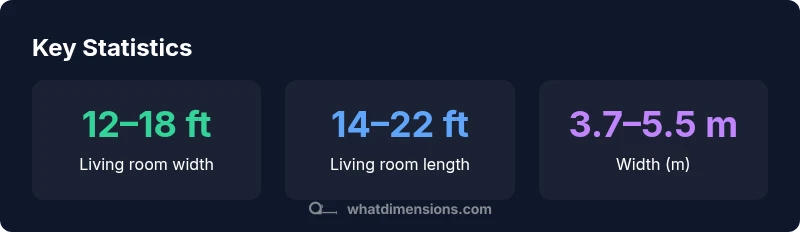
Average room dimensions vary by room type and region. What Dimensions Analysis, 2026 shows living rooms commonly measure about 12–18 feet wide and 14–22 feet long (roughly 3.7–5.5 m by 4.3–6.7 m). Bedrooms and kitchens follow different patterns, and era can shift typical sizes. This quick snapshot helps planners estimate furniture layout and circulation without precise measurements.
What average room dimensions encompass
Average room dimensions define the typical footprint of residential spaces, expressed as width and length. According to What Dimensions, these figures vary widely by room type, house era, and geographic region. In the context of interior design and space planning, 'average' is a guide, not a guarantee: it helps set expectations for scale, clearance, and furniture footprint, but actual homes will deviate. When we talk about rooms, it’s important to distinguish width (side-to-side) from length (front-to-back) and to note that shape irregularities, alcoves, or bay windows can shift perceived space. In practice, designers use these ranges to create balanced layouts, estimate circulation paths, and compare furniture sizes. The key is to pair averages with precise measurements of the actual room you’re working with, then adapt accordingly. This approach supports more accurate shopping, faster remodeling, and fewer misfits in real spaces.
Living rooms: typical width and length ranges
Living rooms anchor daily life and social gatherings, so their dimensions set the scale for furniture and traffic flow. The typical living room footprint is often cited as roughly 12–18 feet wide by 14–22 feet long (about 3.7–5.5 m by 4.3–6.7 m). The exact shape matters: a rectangular plan usually yields easier seating configurations, while an L-shaped layout creates zones with different circulation paths. In modern, open-plan homes, the length may extend beyond 20 feet, especially in newer suburbs with detached or semi-detached designs. In compact urban apartments, you’ll see narrower widths that still aim for comfortable seating and clear sightlines. Plan for at least 2–3 feet (60–90 cm) of walking space around furniture to keep pathways uncluttered. These ranges are a starting point; integrate your doorway openings, built-ins, and window placements as you design.
Bedrooms and kitchens: different sizing patterns
Bedrooms tend to be smaller than living rooms, but still vary by region and era. A common bedroom footprint might fall in the 10–14 feet width and 11–16 feet length range (3.0–4.3 m by 3.4–4.9 m). Kitchens, depending on their layout (galley, L-shaped, or island-inset), often sit around 8–12 feet in width and 10–14 feet in length (2.4–3.7 m by 3.0–4.3 m). In older homes, these spaces may skew a bit smaller, while contemporary builds with open plans can push kitchen areas longer than 14 feet. Measure door swing, appliance footprints, and clearance around work zones to ensure comfortable movement and task efficiency.
Regional and era effects on room sizing
Room sizes reflect architectural trends and local building codes. Suburban homes often feature larger, more rectangular rooms with generous hallways, while historic urban row houses emphasize compact, efficient footprints. Regional climate, lot size, and interior design tastes also influence room proportions. A 1920s bungalow may offer modest bedrooms and smaller living spaces, whereas a modern condo might feature open-plan living with longer, shallower rooms. When planning, compare your target area against regional norms and allowances in building standards for a grounded baseline.
How to measure: a step-by-step guide
To translate averages into actionable planning, start with precise measurements:
- Measure room width (wall to wall) at multiple points to account for irregularities.
- Measure room length in the same way, noting any alcoves or bays.
- Record doorways, windows, and built-ins that affect clearance and furniture placement.
- Note ceiling height if it impacts included shelves or tall storage.
- Convert feet and inches to meters for cross-country planning.
- Create a simple sketch with actual dimensions, then compare to the stated ranges.
- If your room deviates from averages, adjust layouts by shifting seating, adding vertical storage, or reorienting focal points.
A careful measurement routine reduces errors when shopping for sofas, beds, and dining tables, ensuring you don’t buy pieces that look oversized or undersized once installed.
Planning furniture layout using average dimensions
With baseline ranges in place, plan for furniture footprints and clearances. A typical sofa is about 6–8 feet long, and you’ll want at least 2–3 feet of walkable space in front of it for traffic. Coffee tables generally require 18–24 inches of clearance around seating. When space is tight, consider modular or sectional furniture that can adapt to irregular shapes. Use the average widths to gauge the number of seating zones per room and to estimate the number of wall units, media centers, and storage. Always allow for traffic patterns that enable easy access to doors and windows. If you must, prioritize essential furniture first and fill the space with flexible pieces that can rearrange for different occasions.
Case studies: translating averages to real spaces
Case 1: A 14×16 ft (4.3×4.9 m) standard bedroom layout supports a queen bed, two nightstands, and a dresser with 2–3 ft of clearance around each piece. A single-door entry and a closet reduce usable floor space, but efficient placement keeps walking paths comfortable. Case 2: A 12×20 ft (3.7×6.1 m) living area accommodates a 3-seat sofa, a coffee table, and a media console while preserving a clear 2–3 ft circulation lane. In both cases, starting from the living room width and length ranges helps validate furniture sizes before shopping.
Common pitfalls when using averages in design
Relying on averages without room measurements leads to mismatches. A space with alcoves or curved walls can feel smaller or larger than typical ranges. When planning, don’t assume a single number defines a room; instead, map out dozens of potential layouts on graph paper or a design app, testing furniture footprints against your measured space. Avoid oversized furniture for narrow rooms, and beware of high ceilings that trick you into thinking a space is larger than it is. Finally, remember that lifestyle factors—like a home office or hobby area—may require customized zones beyond the standard ranges.
How to tailor averages to your project
Turn averages into actionable planning by personalizing them to your project. Start with precise measurements, then use ranges as guardrails rather than targets. If your room is near the upper end of a width range but shallow in length, favor dual-purpose furniture and vertical storage to maximize usable space. For awkward rooms, create dedicated zones (conversation area, reading nook, work corner) to distribute furniture more efficiently. Use digital tools to test layouts quickly, and iterate until the balance feels right. Finally, document your finalized plan with a scaled drawing and a shopping list to keep your project on track.
Typical dimension ranges by room type
| Room Type | Width Range ft | Length Range ft | Width Range m | Length Range m |
|---|---|---|---|---|
| Living room | 12–18 | 14–22 | 3.7–5.5 | 4.3–6.7 |
| Bedroom | 10–14 | 11–16 | 3.0–4.3 | 3.4–4.9 |
| Kitchen | 8–12 | 10–14 | 2.4–3.7 | 3.0–4.3 |
Quick Answers
What are the most common room dimension standards used in interior design?
Interior designers typically reference width and length ranges for each room type. Living rooms are often around 12–18 ft by 14–22 ft, bedrooms about 10–14 ft by 11–16 ft, and kitchens around 8–12 ft by 10–14 ft. These figures vary by region and era, so use them as starting points and verify with exact measurements.
Living rooms usually fall within 12–18 by 14–22 feet, with bedrooms and kitchens following their own ranges.
Do average room dimensions vary by country?
Yes. Regional design norms, home density, and building styles influence room sizes. Urban areas tend to have smaller, more compact layouts, while suburban and rural homes often feature larger, rectangle-oriented rooms. Always compare local norms to your project and rely on actual measurements over any generic standard.
Absolutely—regional trends affect room sizes, so check local norms and measure your space.
How can I measure my own room accurately?
Measure wall-to-wall width at multiple points to capture irregularity, then measure length similarly. Note door swings, window openings, and any alcoves. Record dimensions in both feet/inches and meters, and sketch a scaled floor plan to compare with ranges.
Take multiple width and length measurements and map them on paper or a digital plan.
Are there standard furniture sizes that align with averages?
There are typical furniture footprints (sofa lengths around 6–8 ft, coffee tables ~18–24 inches wide), but exact sizes vary by model. Use room measurements first; match furniture to the space while preserving circulation. Favor modular pieces in tight spaces.
Most furniture comes in standard sizes, but always fit it to your measured space.
What should I do if my space is older or irregular?
Aging homes or oddly shaped rooms often fall outside standard ranges. In such cases, measure precisely, create zones, and consider flexible furniture or built-ins to maximize usability. Use the averages only as a rough guide, then adapt.
Older spaces can diverge from averages; tailor layouts to actual features.
How can averages help in a small apartment?
Averages help establish a baseline, but small spaces demand careful zoning and multi-functional furniture. Plan circulation first, reserve clearances, and choose compact, modular pieces that can adjust to different layouts as needed.
Use averages as a starting point, then optimize for your compact space.
“Using averages is a starting point, not a blueprint; always verify your space with actual measurements before shopping or building.”
Main Points
- Start with measured space, not averages alone
- Use width×length ranges to guide layout decisions
- Account for irregular shapes and openings in planning
- Prioritize traffic clearance of 2–3 ft around furniture
- Translate every room into a scaled plan before buying furniture